
“Will a song be heard even in the age of darkness? Yes—a song of the age of darkness.” — Bertolt Brecht
On a cold and long night, in a land of stories and sorrows, a lamp went out—a lamp bright with wisdom and warm with love. His heart was as vast as legends, carrying our thousand-year suffering. In our unlit nights, he kindled a blazing torch made of words.
The sound of the drums and reed instruments of ta’zieh rises and fills the air. The narrator steps forward.
You who want us silent, know that this voice will never fall silent. From Ferdowsi to Beyzaie, whenever one Simurgh takes flight into the sky, another Simurgh will open its eyes in this land and tell our story.
We are the people whose book of war was written in our blood and engraved upon nameless gravestones. Every lash that struck our backs became a cry in the wind, and every chain laid upon our feet became a song in the night. For centuries we have been the reciters of our own suffering.
Everyone has gathered around the stage.
A poetic passage through the gate of time: farewell at the dawn of a birthday, in exile and in the innermost soul of the homeland.
Farewell, storyteller of suffering and hope...
Farewell, old lover of Iran and the language of the ancestors...
We have carved your name with pride upon the brow of this soil.
The span of your life is not limited to your own time, just as exile never made you distant from the homeland. The span of your life is the long years that will arrive after you; your home is in our hearts and the hearts of our children.
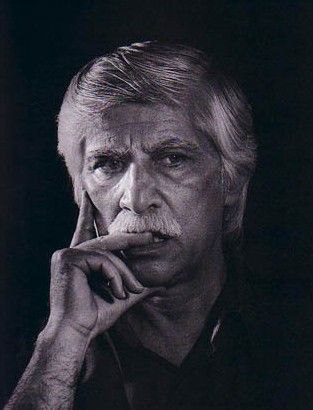
The lamp grows brighter. His image, with sky-coloured eyes and white hair, appears upon the wall of the stage. Everyone present pays tribute to the great figure. A whisper becomes a murmur among the gathering: he did not leave—he became narrative. The sound of the ney turns into a familiar melody...
You saw: silence was broken, and darkness became light.
Aydin Areta
Comments
Loading…
Leave a comment