
Everything that disturbs us about others and the external world does so because we also carry it within ourselves. Children do not see the darkness and ugliness of the external world because they have not yet been contaminated by it within and carry none of its darkness and evil inside themselves. Every evil we can see and recognise is visible to us because, in some sense, we have already been touched by it ourselves.
Every form of evil we see in the external world is evidence of evils, weaknesses, and negative motives within ourselves, and a reflection of the dark shadow within us of which we are unaware. The more good, innocent, and luminous we imagine ourselves to be, the sharper we draw the boundary between ourselves and the darkness of the external world, and the more certain we become of that boundary, the denser the darkness we accumulate unconsciously within ourselves. Throughout history, this unawareness of inner darkness has initiated hatred, wars, and crimes in our external world.
The person who speaks with intensity, fury, and anger about the tyrannical, bloodthirsty, criminal “other” outside and regards themselves as absolute truth and the other as absolute falsehood has closed their eyes to the tyrant, the bloodthirsty one, and the criminal within. When such a person acquires power, eyes that have remained blind to inner darkness will recreate externally the same tyranny and crime against which that person imagined they were fighting.
Entering the inner darkness and confronting it is not easy. That is why “the other” outside us must always be to blame. Confronting inner darkness requires growth and psychological maturity that many of us never reach, even by the end of life. To make this encounter, one must first grow enough to accept one’s loneliness and suffering courageously, once and for all. Only then can we find the courage and strength to enter our own dark side.
Through this descent we can arrive at an insight in which the boundary between light and darkness is seen not between human beings and nations but through the heart of every human being. Once we reach this understanding, how could we respond to the darkness of other human beings with anything but compassion and forgiveness? We know that all the darkness we see outside also exists within “me.” This is why our struggle is against darkness, not against human beings. Only after returning from the darkness within can we free ourselves and then rise to help free our tribe from darkness.
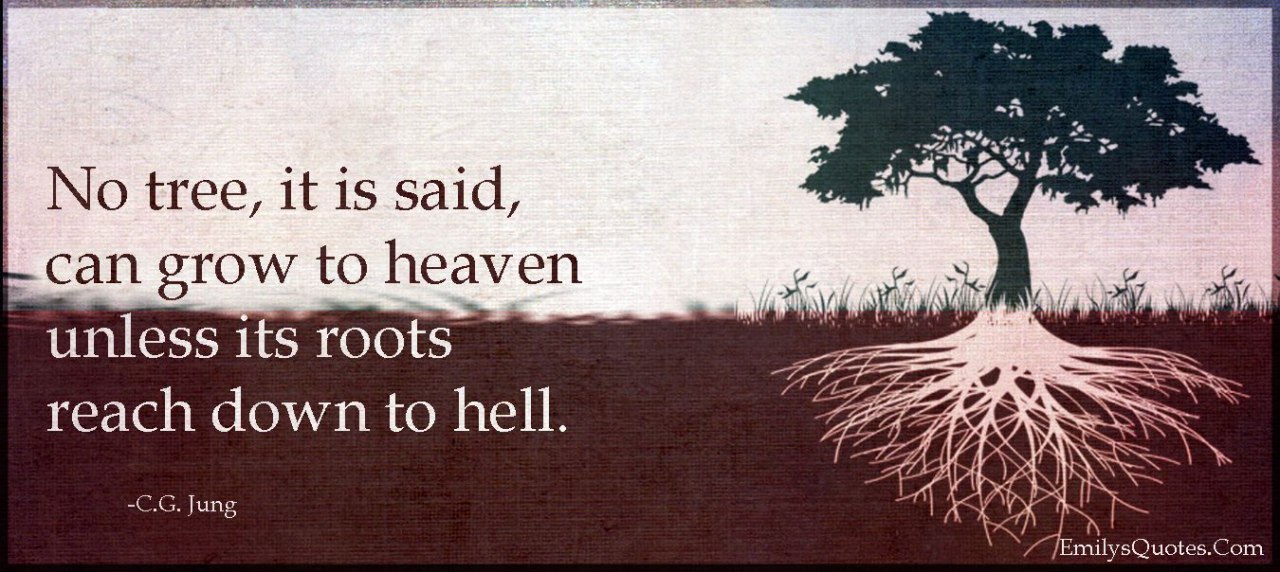
There is no law higher in the world than compassion and kindness. But this compassion is not the product of weakness, nor this kindness the product of powerlessness. They are the reward of a struggle whose first conditions are accepting loneliness and having the courage to bear the burden of one’s own suffering and the suffering of the world. Only through this insight can we understand the meaning of Jung’s statement that no tree can grow to heaven unless its roots reach down into the depths of hell.
Aydin Areta
Comments
Loading…
Leave a comment