
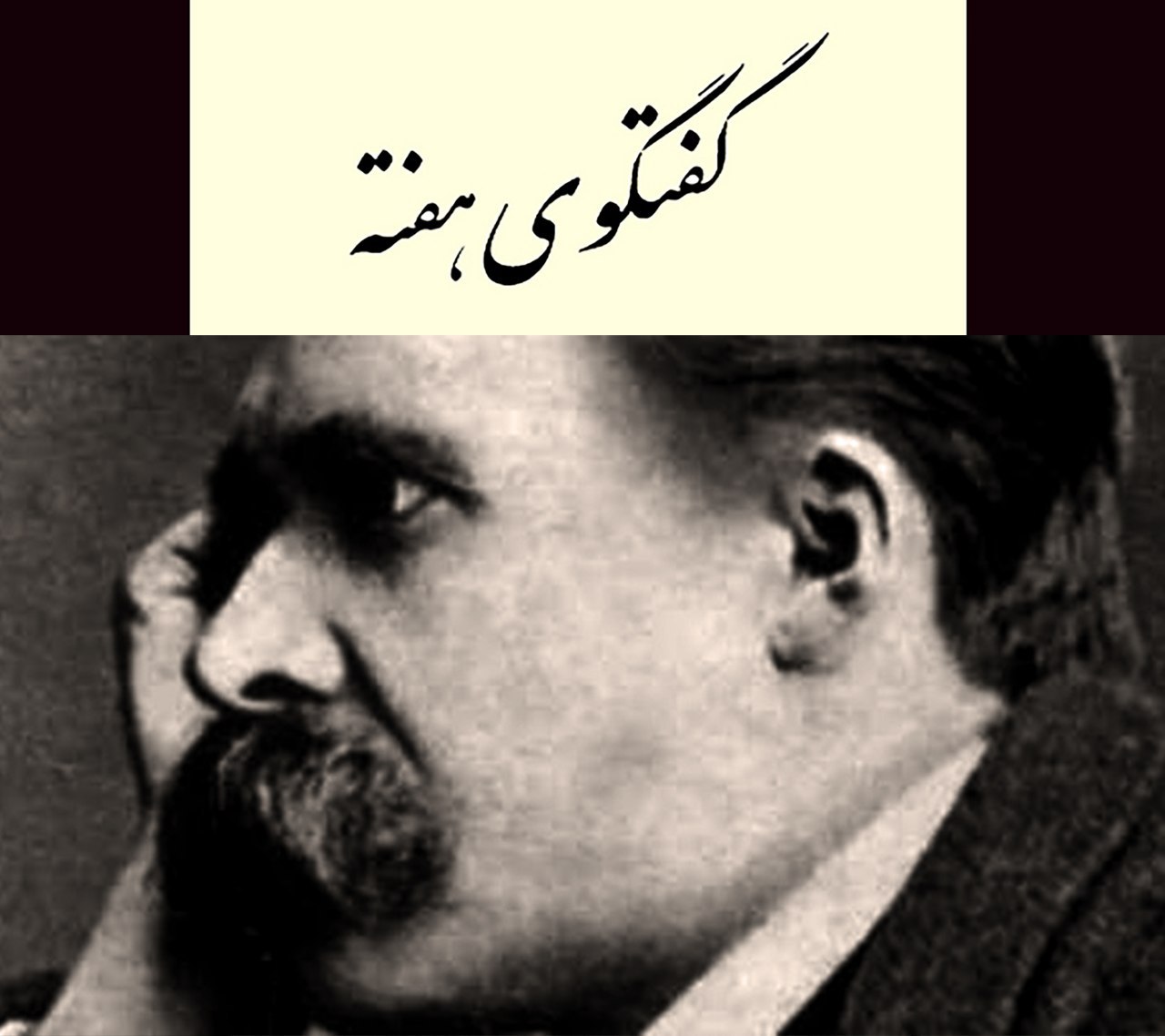
Weekly Discussion: Friedrich Nietzsche and His Philosophy
Join the discussion:
https://t.me/joinchat/Br1R4BRZa9lS8HYgpsyV6w
Nietzsche and Wittgenstein were the two philosophers who received the highest votes this week as topics for discussion, ahead of Heidegger, Hegel and Derrida. The thought of both has been highly influential in the history of modern philosophy. Nietzsche was ultimately chosen by a small margin. Given the complexity and importance of his ideas, I think we might devote not one but the next two weeks to his philosophy, especially because 25 August, less than a month away, marks the 120th anniversary of his death.
Nietzsche was appointed to a professorship at the University of Basel at the age of twenty-four and only ten years later resigned from teaching in order to devote himself to writing his books. Ten years after that he descended into the mental collapse that remained with him until the end of his life, eventually dying at fifty-six in poverty and solitude. Between the ages of twenty-four and forty-four, in only twenty years, he exerted a profound influence on the history of philosophy.
Perhaps no philosopher in recent years has attracted as much attention among a new generation of Iranian thinkers as Nietzsche. Iranian philosophy and philosophical-discussion pages are filled with his presence. This attention may have several important causes.
Nietzsche is an exceptionally direct critic of Christianity and, beyond it, religion more broadly. At the same time he is not simply a modern philosopher supporting the project of modern Enlightenment and its rationality. Many regard him as an anti-modern thinker and an early initiator of postmodern thought. His poetic, metaphorical and prophetic language also unites philosophy with an impassioned literary voice.
Iran is a country struggling between tradition and modernity. Many of its thinkers, particularly among younger generations, seek a third path between the projects of tradition and modernity. At the same time, although the postmodern project and its rejection of grand narratives may initially appear a powerful discourse for confronting both tradition and modernity, the Iranian mind—shaped for millennia by grand narratives and also searching for a philosophy of its own future—may find in Nietzsche a third road with a distinctive attraction.
The poetic form of Nietzsche's expression also resonates with an Iranian spirit for which poetry has for millennia been a music of thought. Finally, the summit of Nietzsche's philosophical writing in Thus Spoke Zarathustra is voiced through a prophet whose name resonates for Iranians with the depth of their own history.
Nietzsche was born into an age whose foundational values rested on a Christianity that was, in his view, collapsing. He saw both the void left by those values and the inability of modernity to recreate them. He recognised the approaching waves of nihilism, ideology, violence and war. His project was to destroy inherited values and create new values for a human being whose hands, in his image, were stained with the blood of the highest previous values—values intended to make the human being freer, stronger in relation to different ideologies, and more resistant to the enormous wave of meaninglessness and nihilism approaching.
My personal relation to Nietzsche combines admiration, respect and a fundamental critique. It is at the question of the meaning of the self and becoming one's higher self that the philosophical path I am trying to articulate diverges sharply from his.
In my view, no one has diagnosed the great problem of modern humanity with Nietzsche's sharpness and force, even to the present day. But his route towards a remedy led, in the source's formulation, towards his unfinished work The Will to Power, and he himself found no way through the unavoidable impasses of his thought.
I am wholly with Nietzsche in his passionate defence of human individuality. I value his analysis of the place of suffering in human life and his affirmation of suffering, and I share his love of fate and the idea of eternal recurrence.
I hope you too will find something valuable in these two weeks of discussion on Nietzsche and his philosophy as we approach the 120th anniversary of his death.
With thanks,
Aydin Areta
Join the discussion:
https://t.me/joinchat/Br1R4BRZa9lS8HYgpsyV6w
Comments
Loading…
Leave a comment