
To End “Othering”, to End “Disconnection”
Fear a political power that constantly divides its society by creating “labels” so that it can turn every citizen into an “Other”. Whenever political power begins to address an individual or a group within society by a special label, know that repression, discrimination, organised violence and catastrophe are on their way for that person or group.
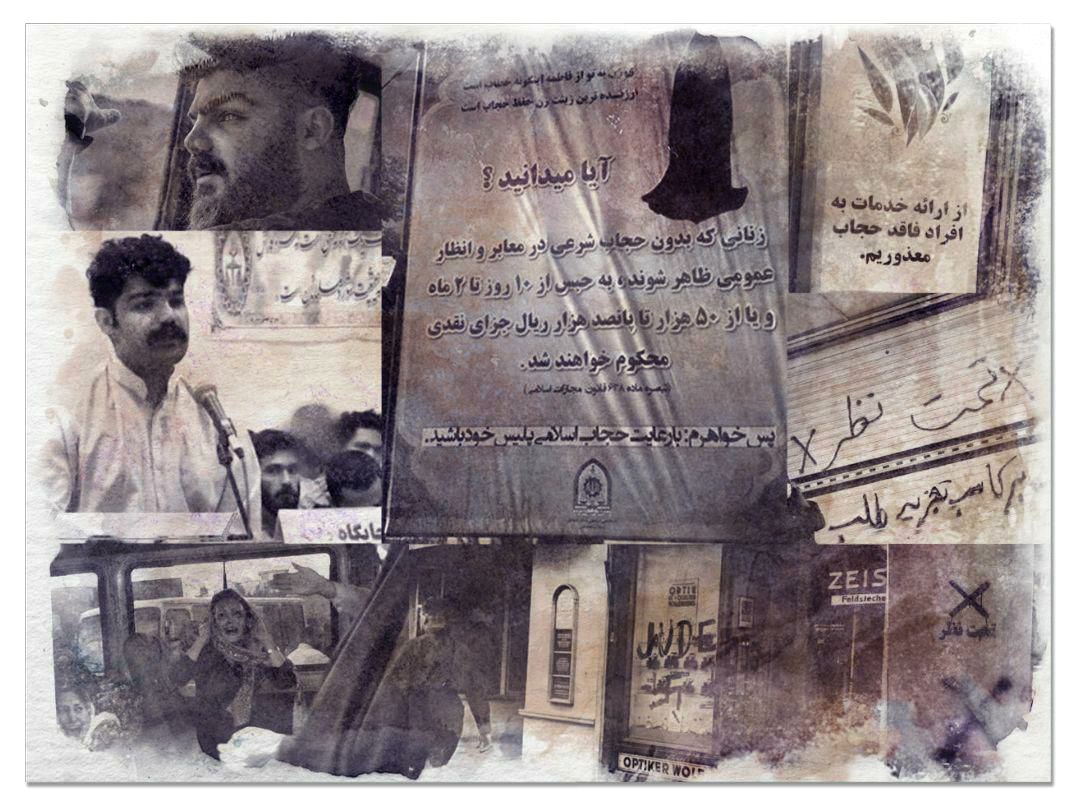
Our society has a deep historical familiarity with such labels: labels such as improperly veiled, poorly veiled, promiscuous, prostitutes, rioter and thug. They are used with a specific purpose: to reduce the humanity and human rights of a person who has incurred the anger of power to a “label”, and by separating them from society, to turn them into an “Other”.
If, in the trial of Saman Yasin, the composer and singer from Kermanshah, you see that—contrary to his usual appearance—his beard is shaved and he is placed behind the lectern with a thick moustache and close-shaven face, in an appearance associated in the public imagination with toughs and street thugs, only one purpose is being pursued: to make an “Other” of him before taking away his human rights.
The construction of labels and the process of othering always allow power to enable its supporters and followers to participate, with a clear conscience and even heartfelt willingness, in violence and repression. If European colonisers had not called the Indigenous peoples of America, Canada and Australia “primitive savages”; if Israeli soldiers did not call Palestinian women, men and children holding stones “terrorists”; if communist countries had not called dissidents “enemies of the people”; or if Hitler and the Nazis had not called Jews “dirty pigs”, would it ever have been possible to persuade obedient agents of power why they should participate, with an easy conscience, in whatever crime power demanded of them?
There must first be, in the mind of the person who is to bring down the baton, pull the trigger or release the execution platform, a sufficient justification for stripping the person targeted by power of their humanity. Only then can they do, with a justified and untroubled conscience, whatever power desires.
Why do you think they insist every day among themselves on using words such as “promiscuous” and “prostitute” in order to make what kind of treatment toward women who reject compulsory hijab appear permissible? Or why use the label “pink religious person” for those believers who refuse to surrender their conscience, heart and human understanding absolutely to power? The use of “pink” to humiliate someone who belongs to the in-group yet feels empathy for those outside it reveals how fundamental this process of “othering” is to freeing oneself from a conscience that might occasionally make repression difficult.
A power that ought, as an embodiment of the father archetype, to protect and unite the internal elements of its society instead divides compatriots pathologically with separating labels in order to turn them into Others.
It does so to place brother against brother and to create sufficient justification for violence and repression against citizens who stand outside the circle of absolute obedience to power. In such a society every citizen is potentially an “Other”, ready to be decorated, at the required moment, with the label that allows their human rights to be taken away easily. Even the insider is merely a potential “Other”, a potential outsider who, when the time comes, can be deprived of social rights through the necessary label.
What all of us must remember and never forget is that the force which allows an ordinary person—someone who is themselves a father, a husband and a family man—to fire dozens of pellets into the face of a compatriot, crush the body of an elderly woman beneath baton blows, take the life of a young man such as Mehrshad Shahidi through thoughtless and merciless violence, and then mockingly defend the execution of young compatriots, is the same force that sends Jews to labour camps with an easy conscience, drops the atomic bomb on Hiroshima, straps explosives to a body and detonates them among ordinary citizens, or kills a captive journalist before a camera.
Comments
Loading…
Leave a comment