
Before arriving at this personal intuition, there had been moments when he was so angry that he wanted—and felt able—to curse humanity, the world and God. He said there was little room for faith in the heart of a father whose greatest love had been taken into death through his own hands, while the world remained brutally indifferent to his suffering. How could one believe in a justice that assigned such a fate to innocent people? What had he done to deserve this grief, suffering and guilt? What had his three-year-old child done to deserve death, his elderly father to deserve such torment in the final years of his life, or the child’s wounded mother to deserve this sorrow?
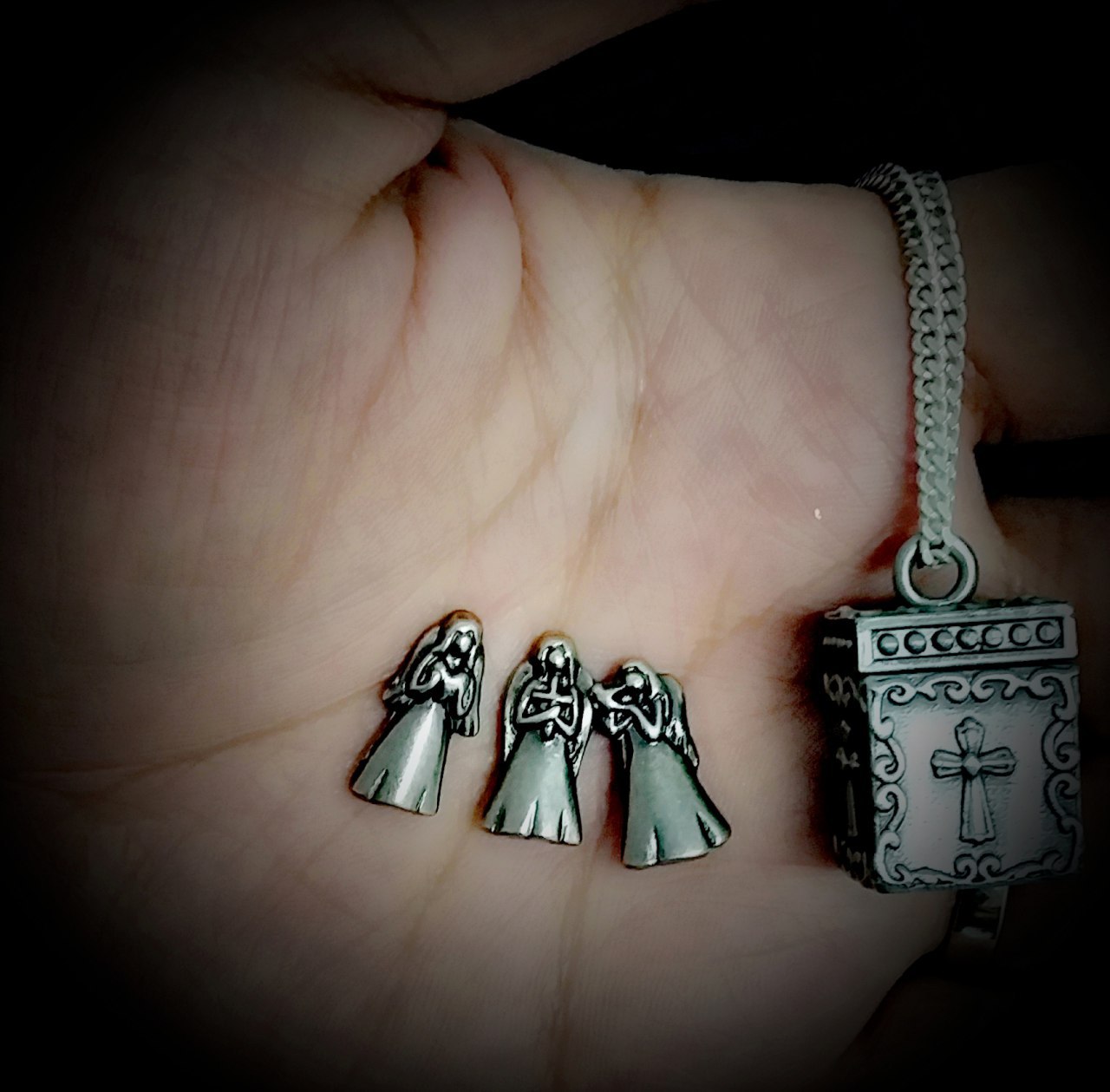
Yet among all these endless questions, he began to feel that the little silver angel that had slipped from his hand three times might be trying to tell him something and remind him of something.
He told me he had made many mistakes in earlier years that he was not proud of, but after this event he felt he could no longer live as he had lived before. He looked at me with an unguarded simplicity and said, “I cannot be a bad person in my life anymore, and I cannot be an indifferent person.” He said he might never understand why this happened to his little Benjamin, but he felt that Benjamin was the angel who had entered his life to give him something he had never truly possessed in the depths of his heart: faith.
“I always wanted to become successful and wealthy,” he said, “and today I feel that neither matters to me. Yet I am more determined than at any other point in my life to succeed, so that perhaps I can make the lives of other Benjamins better in the future. Maybe my Benjamin came to this earth and left so that there would be no road left for me except to become a good human being.”
Before me I saw a young man who, in the face of one of life’s most crushing forms of suffering, had decided to carry his own cross, the suffering of those he loved, and his guilt, regret and shame together; to climb some of life’s steepest hills; and to create goodness from the greatest tragedy and pain of his life—a better world for himself and for others.
He had every reason to curse the world, fate and God, to remain broken, bitter and depressed for the rest of his life, and perhaps even to create suffering in the lives of others and secretly find satisfaction in seeing their misfortune. Like Goethe’s Mephistopheles in Faust, he could have come to believe that God embodied injustice, humanity embodied corruption, the world was a bath of blood and death, and that one might as well add to the decay and hasten it. Instead, he chose those three small silver angels—love, hope and faith—over resentment, despair, fear of loneliness and hatred.
Before he left, he accepted the prescriptions I gave him, but I knew that the prescription he had chosen to keep in his own heart would be far more powerful in soothing his pain than anything I could write. I embraced him and said: “Love, hope and faith. I will try not to forget them either.”
That afternoon one of my colleagues brought me a small package and said the patient I had seen that morning had left it for me and asked that it be placed in my hands. I opened it. Inside was the same necklace with the three angels, together with a few words on a card: “From Benjamin.”
I look at the three small silver angels in the palm of my hand and think that, on one of the hardest days of my life, little Benjamin had a gift for me—and perhaps, through me and through the writing of this story, for all of us. We are free, even when facing the bitterest, most brutal and painful tragedies, injustices and sufferings of our lives, still to choose love, hope and faith.
Aydin Areta
22 December 2018
Comments
Loading…
Leave a comment