
The Courage to Say “No” — Part Two
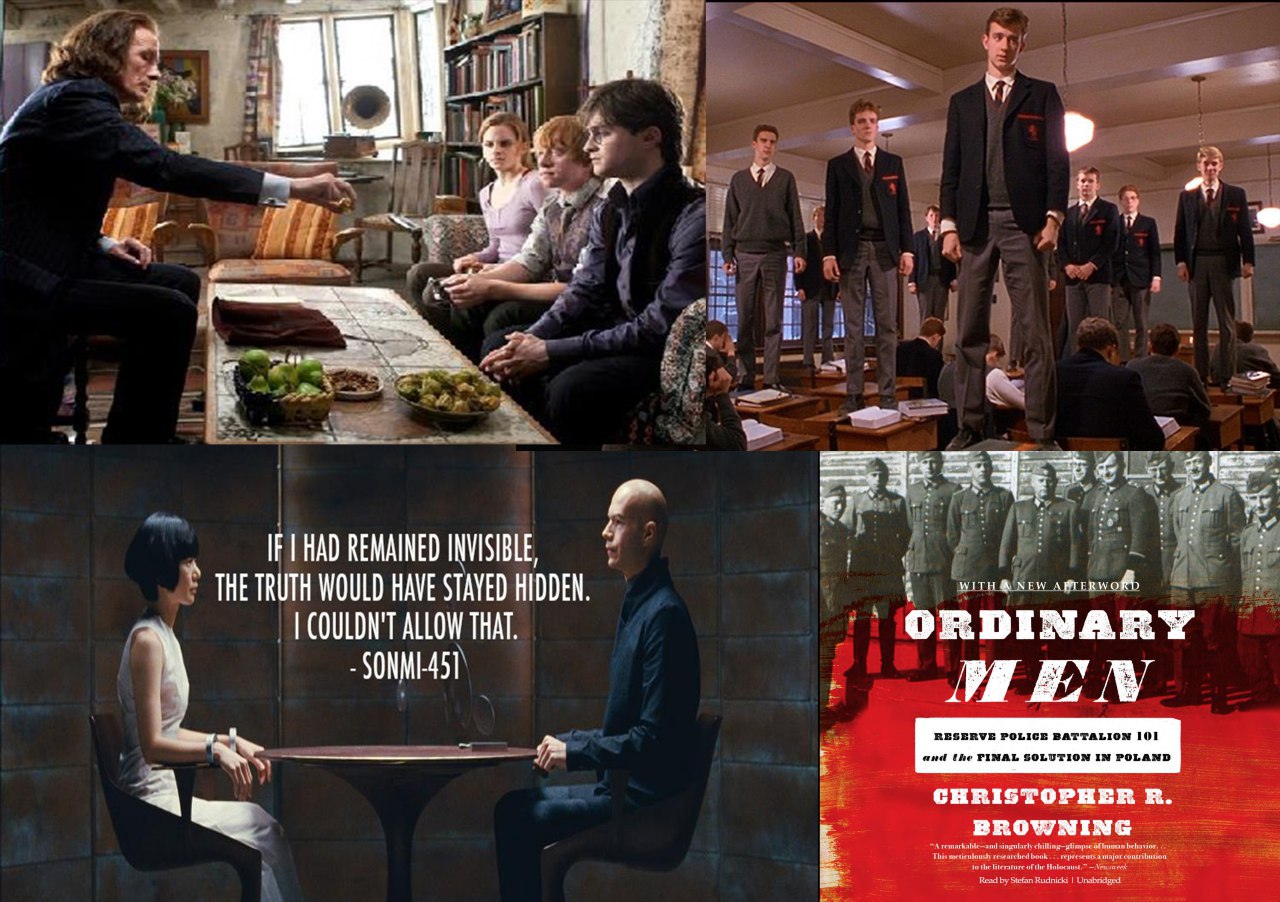
There is a book called Ordinary Men by Christopher Browning. It tells the story of ordinary German policemen during the war—men who, in many cases, were good fathers, husbands and friends to their families and those close to them—and describes how they were first sent to Poland and how, step by step, they eventually became the kind of soldiers who could drag a pregnant woman naked across the snow and shoot her from behind. The road towards the deepest and most terrifying darkness is travelled one step at a time, while we lie to ourselves and try to diminish the significance of those steps in our own eyes, or even justify them.
In The Brothers Karamazov, Dostoevsky writes through Father Zosima: “Above all, do not lie to yourself. A person who lies to himself and listens to his own lies will eventually reach a point where he can no longer distinguish truth from falsehood, either in the outside world or even in his own heart. Little by little he will lose respect both for himself and for others. And when respect is lost from his heart, he loses the capacity to love. When his heart is emptied of respect and love, he will inevitably drown himself in his own dark and destructive side.”
In The Idiot, Dostoevsky writes again that lying to ourselves is rooted even more deeply in our nature than lying to others. In his view, if our dream is of a world in which truth and truthfulness prevail, we must first allow truthfulness to prevail over our own being.
Aleksandr Solzhenitsyn, the exiled Russian writer whose valuable words I have previously shared with you, writes in his disturbing work The Gulag Archipelago: “The simple step of courageous individuals in society is that they do not join the lie. A single drop of truth can sometimes destroy an ocean of lies.”
This statement by Solzhenitsyn, along with several others attributed to him, is repeatedly evoked in the beautiful film Cloud Atlas, starring Tom Hanks. In one scene, a genetically engineered woman, Sonmi-451, who develops from a servant into a prophet whose influence extends across generations, is being interrogated before her execution. The archivist recording her final words asks: “Why did you condemn yourself to death by openly saying what you knew would kill you?” She replies: “Truth is singular, and different versions of truth are nothing other than untruth. If I had hidden, truth would never have become visible, and I could not permit myself that.” The archivist then asks in astonishment, “But what if no one believes this truth of yours?” Sonmi looks into his eyes and says: “Someone Already does!”
Finally, I would like to share with you a beautiful scene from Dead Poets Society. Robin Williams plays John Keating, a courageous and independent-minded teacher who has transformed the lives of his students. After the students have been pressured into signing a statement against him, he is dismissed and returns to the classroom to collect his belongings before leaving the school. In the scene, all the students, crushed by fear, shame and repression, keep their heads down. One of them, Todd, rises and stands on his desk. Defying the climate of repression and tyranny, he speaks the truth and salutes Keating by invoking the poem “O Captain! My Captain!”
At that moment the other students, none of whom had dared even to raise their heads, begin to rise one after another and stand on their desks, joining the first student—the hero who broke the silence.
The powerful message of this moving and memorable scene is that “precisely where there is no hero, we must rise and become that hero.” Standing proudly beside truth and truthfulness can break the pervasive silence of darkness. But to acquire the strength to stand and say “no” alone, we must first stop lying to ourselves and continually repeat to ourselves this statement attributed to Solzhenitsyn: “If I cannot prevent lies and untruth from entering the world, and even if the lie ultimately prevails, I will not allow it to prevail through me.”
Aydin Areta
Comments
Loading…
Leave a comment