
The courage to say “No” — Part One
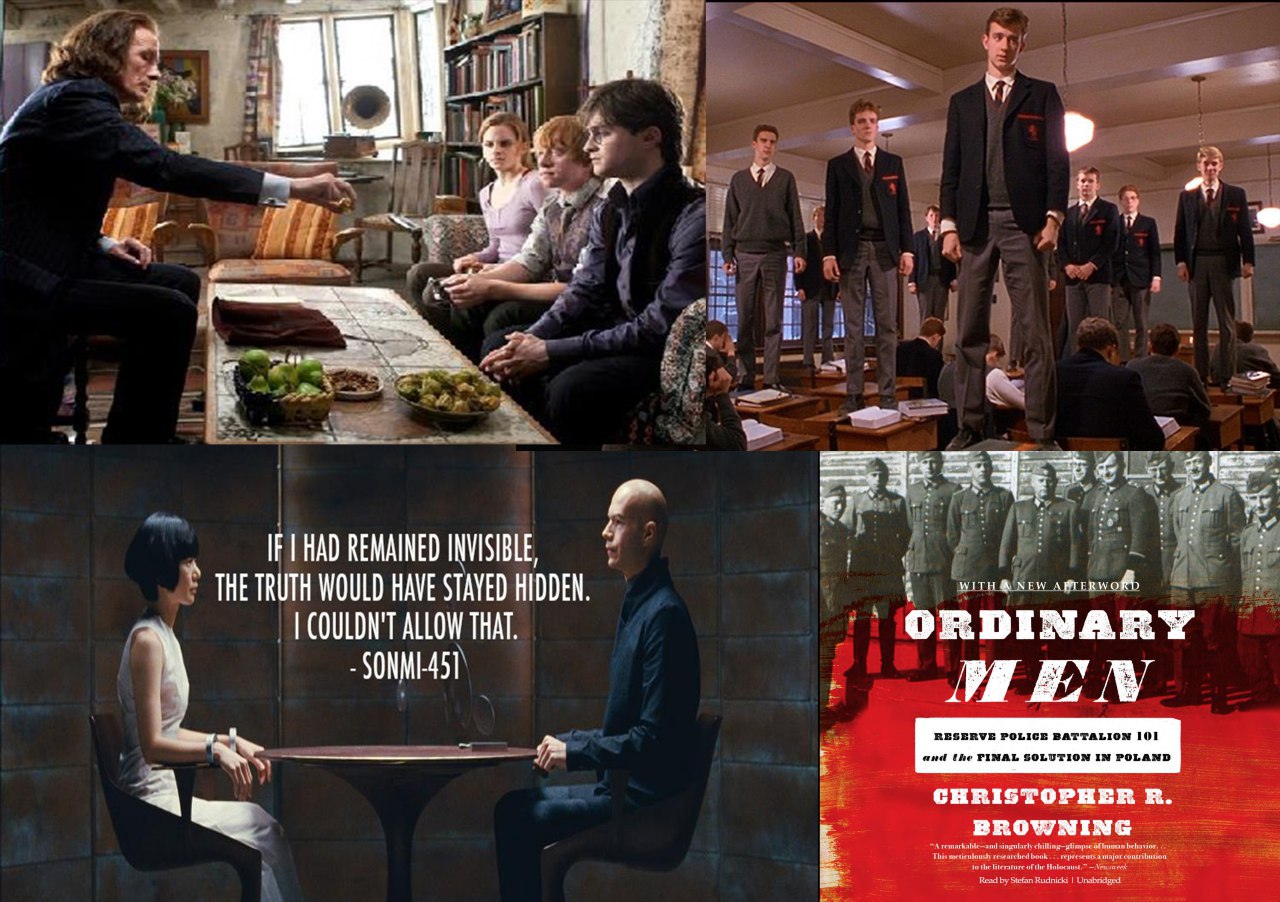
Near the end of the Harry Potter story, when Lord Voldemort—the full embodiment of evil and darkness—is growing stronger by the moment, death, corruption and lies have spread everywhere, and even the Ministry of Magic, the highest political authority in the story, is itself sinking into incompetence and corruption, there is a scene in which the Minister for Magic, Rufus Scrimgeour, comes to Harry. Speaking from a position of authority but in persuasive language, he suggests that since people now see Harry as “the Chosen One”, Harry should visit the Ministry so that people can see him and gain hope.
Harry responds with a decisive “no”. He is neither intimidated by the Minister’s political position, seduced by proximity to power, nor deceived by the polished language and superficially benevolent reasoning of the proposal. Harry tells the Minister that accepting would amount to endorsing the corruption and error that have consumed the Ministry. He understands that the Minister wants to use Harry’s popularity to give political authority a more acceptable public face.
It would be easy to pass over these lines, or we can pause and consider how much easier it would have been for Harry to tell himself a plausible lie and choose the easier option: “yes”. Saying “no” means creating a powerful enemy at a time when society and everyone’s life are already threatened by something larger, and when a greater evil awaits him.
Harry is only an adolescent. When the Minister enters the modest house in which Harry is sitting around a table with his friends, the author carefully describes how astonished and excited everyone is simply to see the Minister in person. Harry could have justified his “yes” to himself in a thousand persuasive ways. Yet for someone whose values are clear, a lie never becomes equal to truth.
Have you ever wondered why good people do bad things? How can an apparently harmless and decent person become a piece, an instrument and eventually a servant in the hands of darkness?
How does someone become a guard at Auschwitz? How can a soldier, obeying a superior, lead an innocent person before a firing squad, remove the stool from beneath their feet, or open fire on defenceless captives in war while conscience is shouting that the order to kill them is wrong and evil?
Or, in apparently smaller and less dramatic situations, how can a person see injustice done to a colleague at work and remain silent, even smiling at the boss to show agreement? How can a passer-by see an obvious injustice committed against a fellow citizen in the street and simply walk faster? How can someone watch an official humiliate another citizen, see that person driven away in disgrace, and then—as the next person in line—place their own papers on the desk with a wide smile so that no trace of disgust appears on their face and they do not become the next target?
You may think there are enormous differences between these examples and that, although you or I might sometimes do the smaller things, we would never become an Auschwitz guard or a soldier firing upon prisoners. If we think this merely because we regard ourselves as good and harmless, then we have not yet become conscious of our dark side or of the terrifying depth of the shadow each of us carries within human nature. We have not yet understood how easily, through an inability to say “no” to darkness, a person can travel step by step along the road that ends at the door of a crematorium.
When we look back at historical events whose light and dark sides seem clear according to our values, we imagine that had we lived in those periods we would certainly have stood on the side of light. Yet the bitter statistical reality, as I see it, is that those among us who can truly say “no” to darkness are never more than a few among thousands. Otherwise, in every age there would not be an obvious darkness somewhere in our lives staring into our eyes and asking for our loyalty and consent.
Aydin Areta
Comments
Loading…
Leave a comment