
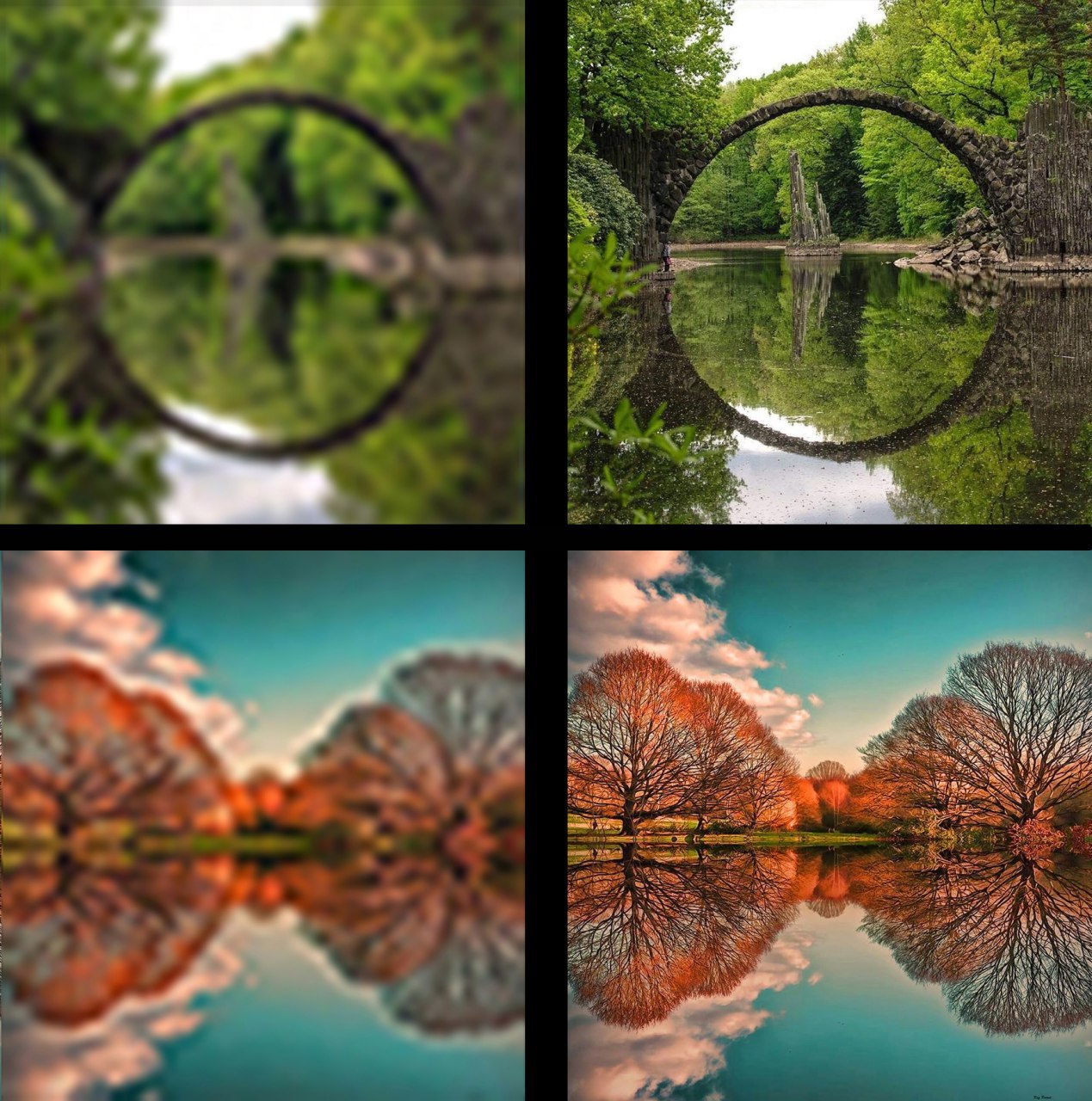
Seeing the World More Clearly — Part Two
How important is it to have a higher-resolution picture of the structure of life and the world? Can a more precise image of the life and world before us change the form of our searching in life? Might it help us find greater meaning in our suffering? Could we even help other people see the world more clearly? Could we reduce the suffering in the world and make it a better place?
I asked what increases the clarity of our vision in life. She said that our years of living and our age play an important role. I could see in this answer a positive step in the development of trust: I was clearly more than twice her age, and this alone could be read by her as confirming that I had a clearer view of life. But that was not the answer I wanted to reach, so I had to challenge its generality.
After several minutes of conversation, we both agreed that there are many people whose picture of life changes very little in clarity as the years pass, and who reach the end of life still seeing only a low-resolution outline of reality while imagining that they know what life is.
Something more important must exist in life that can increase the resolution of our picture of it. What is it that changes the clarity with which we see life and the world?
Knowing is never equivalent to not knowing. An examined life is never equivalent to an unexamined one. For us as human beings, the world is not made only of “things”; it is also a field of action. Whether we like it or not, at every moment of life we are compelled to decide to do something that affects both ourselves and others.
Is there a kind of knowledge that can help us see the world more clearly and choose our path more wisely at each moment of decision, so that through what we do without knowing and without thinking we do not turn our own world and the lives of others into hell?
The knowledge that increases the resolution of our picture of life is knowledge of life and living. I wanted the young woman sitting before me to understand the value of psychology, philosophy and thinking, because I knew that if there was a path out of the hell in which she found herself, it could only pass through knowledge. And, like the path that had led her into hell, it would have to be travelled step by step. She could not take that path unless she came to understand its value and could discover in it a love as powerful as the love she had found in the “immediate and transient pleasures” of the steps that had taken her towards hell.
We can reduce philosophy to philosophical information, psychology to psychological information, and religion to jurisprudential information, but none of these reductions will increase the precision with which we see the world. The only thing that transforms us is “deep knowledge,” not superficial knowledge; and the task of such knowledge is not to guide us towards paradise, but to transform us into paradise. Our world is filled with darkness and hell because each of us carries a hell within.
Comments
Loading…
Leave a comment