
Response to Question Two (2–2)
One relatively recent development in the history of thought is postmodernism, whose aim—as Jacques Derrida, one of the key postmodern philosophers, explicitly states—is the “destruction of logocentrism.” In this view there is no grand Metatheory and no dominant Metanarrative. There is no single truth; there are truths, and fundamentally no overarching system of values.
To be Platonic, then, means more than believing in Forms and ideals. It also means being logocentric and oriented towards truth. In such a way of thinking, above and below, inside and outside the cave, are not equivalent. The shadows on the wall are not equal to the world outside the cave. The philosopher's movement is not only an exit from the cave towards the Logos—the eternal light of truth—but also entails accepting the responsibility to return and liberate others.
2) In the Platonic view, the human Mind itself is of the same order as the Logos, or the eternal light of truth, and this is precisely why it can apprehend the world of Forms. The implication is that there is within the human being a truth that makes us akin to, and capable of knowing, the world of Forms through the same light that gives those Forms their truth. Leaving the cave is therefore not only the discovery of the world of eternal Ideas, but also the discovery of one's own Self and the final Form of that Self.
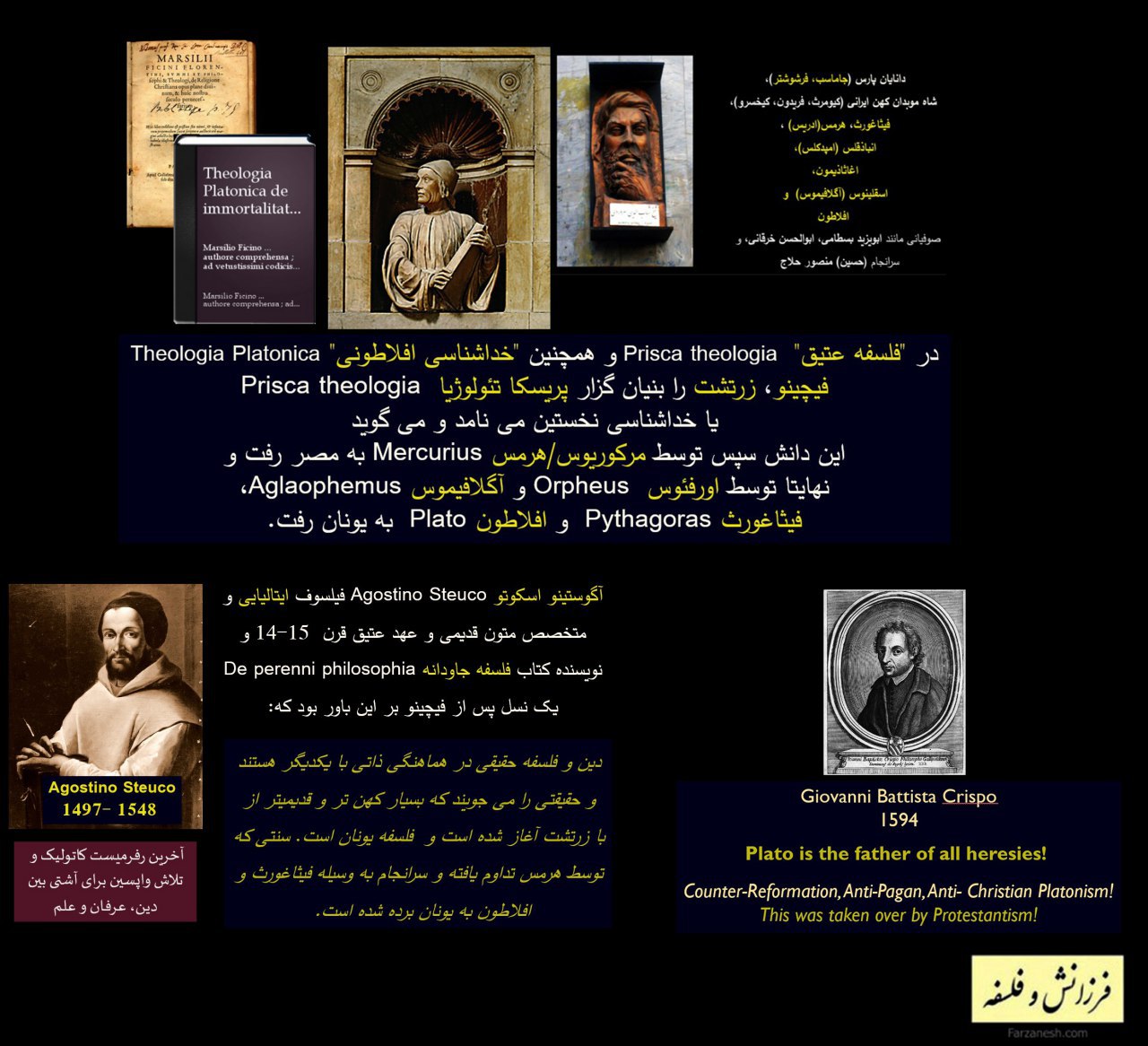
This thought also runs deeply parallel to Mazdayasnian ideas in which the human being is understood as “embodied light,” and in which the Iranian mystical tradition can be read as the realisation of this inner light: the passage out of darkness and union with the Light of Lights.
As you can see, this is not simply a theory about a world of Forms. It is a particular orientation towards understanding the human being, the world and the purpose of life.
Comments
Loading…
Leave a comment