
Questions on Platonic Transcendentalism
Question One (Adel Madani):
1. What difference in meaning does “existence” have for Plato and Aristotle?
2. How does the difference between Platonic and Aristotelian views of existence affect these two philosophers' approaches to the theory of the world of Forms?
3. Given this difference in the meaning of existence, is the criticism that Plato's world of Forms is separated from the world of reality justified?
Response to Question One (1–1):
Platonic thought is Non-Spatiotemporal, independent of time and space, whereas Aristotelian thought is Spatiotemporal and accepts and understands Existence only within that framework.
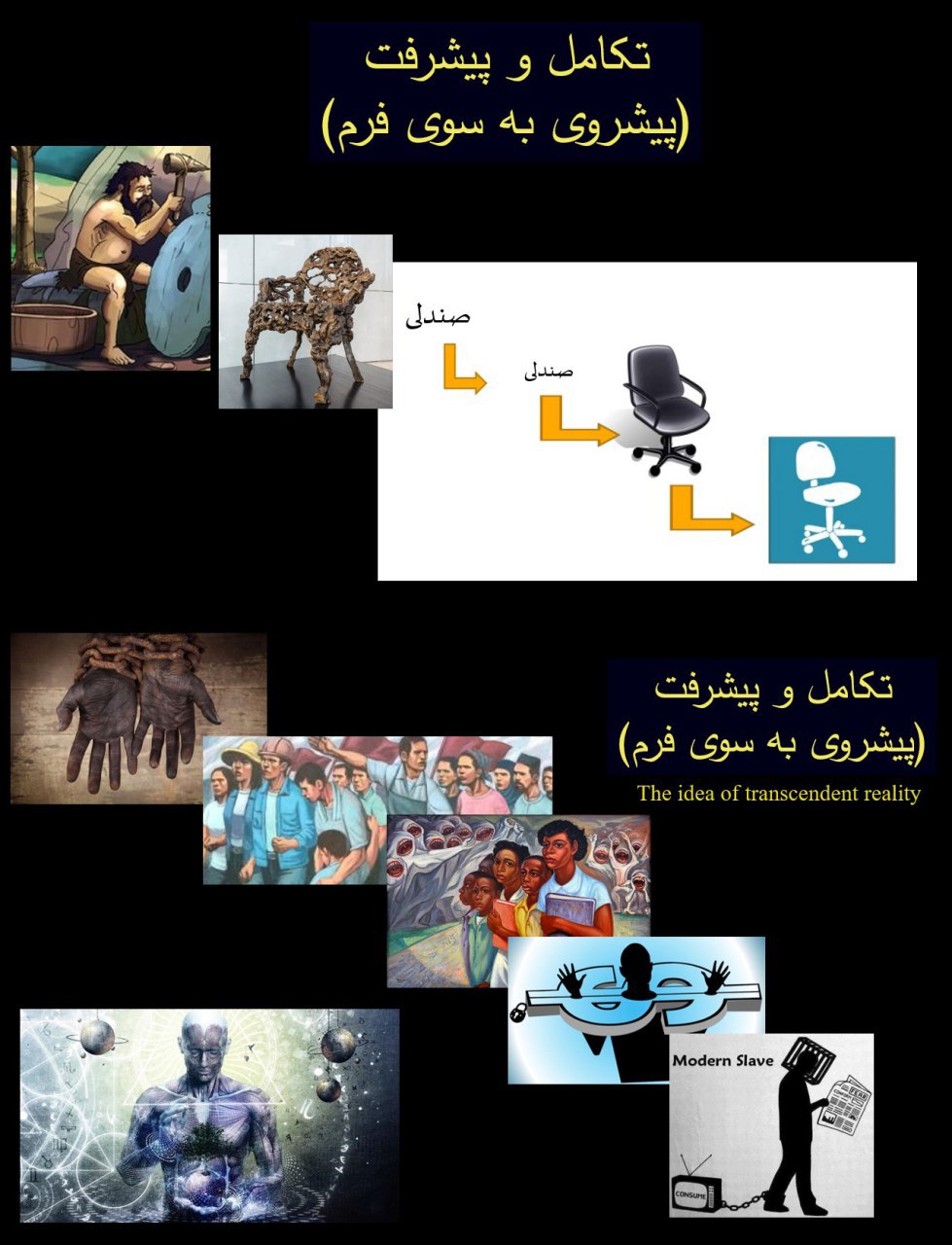
Platonic thought sees the existence of phenomena in the material world as the temporary embodiment of something beyond the material world, something the human mind is able to represent and apprehend because mind itself belongs to that same realm. Precisely for this reason, the Platonic world is a world of the “Becoming” of phenomena that are only material Representations of something existing outside the time and space of the material world.
Aristotle understands the world and Existence not as a spatiotemporal entity shaped and set in motion by a force outside time and space, and not in the form of Becoming, but in the form of Being.
For example, “Socrates the wise” in Plato's view is simply the spatiotemporal embodiment of the timeless and spaceless Form of “wisdom.” Even if Socrates and every wise person in the world were to disappear and no wise person remained, wisdom would still exist in its timeless and spaceless form in the world of Forms and Ideas. From this perspective Plato believed that the world of Forms and Ideas was even more real than the material world.
Plato did not restrict this world of Forms and ideals to ethical or mental matters such as justice and beauty. Numbers, shapes and other things belong there too. If, for example, every material circle in the world were removed, the idea of the circle would remain. If no entity or phenomenon anywhere in the world existed in a quantity greater than 999, the number 1000 would still remain in the world of Forms.
This means that even what is neither seen nor found in the material world exists within the realm of Ideas, and mind is the only thing capable of apprehending it. Through this path the world is elevated. The human mind continually apprehends a more perfect form in the timeless and spaceless world of Ideas and creates it in the material world. Mind itself comes from the realm of eternal Forms, and this is why we are able to understand them.
Comments
Loading…
Leave a comment