
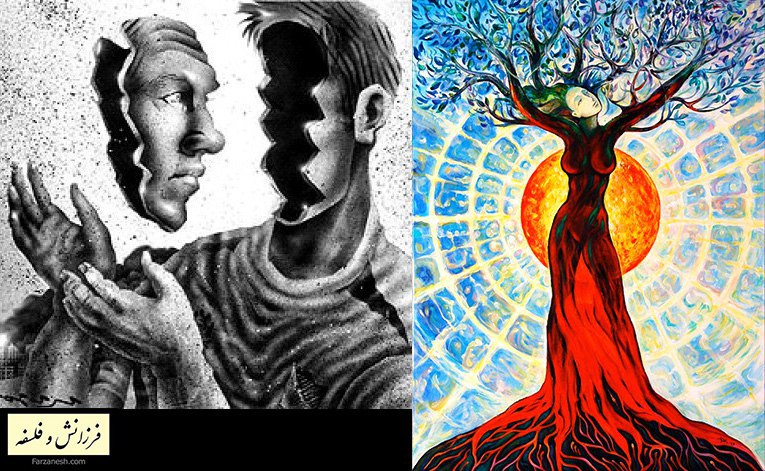
Philosophy, Imagination and Poetic Language
Reconsidering the Inner Relationship between Philosophy, Psychology and Art
Some time ago I published an essay entitled “Encountering the Cyclops Within.” A few days ago I received a letter about it from a respected friend, who wrote that by publishing almost anything under the name of philosophy—and even psychology—I was not only blurring the field in which I work but also allowing irrational domains to intrude upon philosophical rationality.
In my view this criticism raises an important and valuable question. For me personally it recalls the bitterness of the endless misunderstandings I had with my academic supervisor, who was firmly committed to analytic philosophy and believed that my method of working was beyond repair—that my fluid and unruly approach could never become coherent work.
Nietzsche once warned that what threatens knowledge is the domination of the “scientific method” over the “search for knowledge.” It is a statement one could sit with and think about for hours. Many mockingly call Nietzsche more poet than philosopher, without recognising that he understood deeply that philosophy itself is also threatened when a “secondary function of language”—logical language in the service of linear rationality—comes to dominate the mind's more primary function: imagination, which manifests itself through images and poetic language.
Let us begin with this fundamental disagreement: the natural activity of the human mind is the production of imagination and images, not the production of logical and rational thought and language. The greatest difference between us and other beings is not that we can speak, but that we can create a creature such as a unicorn in our minds. Music, poetry and the images we create are distinctively human capacities. Philosophy therefore cannot be emptied of the primary activity of the human mind: imagination and its fluidity. This is why, in the later years of his life, Heidegger increasingly called for philosophy to return to imagination and poetic language, including in his essay “The Nature of Language.”
Heidegger once warned that the great problem of the modern world is not simply that it pursues technology or is built upon technology. The deeper problem is that the modern world has compelled human beings to look at nature, the world and even our own past through the lens of technology and technological thinking, rather than through imagination, mind and poetic language—the most fundamental features of our humanity.
The function of imagination and poetic language is not merely aesthetic. Within language and understanding, imagination can make leaps of which language in its logical and rational function is incapable. For this reason, one may regard the language of philosophy as fundamentally “pre-dialectical” (Pre-Dialectic) and “pre-logical” (Pre-Logical).
Einstein's famous statement that “Imagination is more important than knowledge” rests on the idea that what has continually expanded our knowledge is a nonlinear form of thinking. It is precisely this form of thought that the modern world tries to confine to the realm of art by dividing the mind into “rational and irrational,” “logical and illogical,” consequently “scientific and unscientific,” and finally “philosophical and non-philosophical.” In this way Nietzsche is called a poet in order to exclude him from the world of philosophy, just as my respected correspondent calls my own approach to philosophy non-philosophical.
Science and the rational, language-centred philosophical tradition divide the world into “subject and object.” The technological and linear outlook produced by this way of knowing reduces human beings and human experiences to “things out there,” objects of rational subjectivity and scientific method. In this situation, “imagination and poetry,” as the unique and primordial activity of our minds, may show us a way out of this dangerous outlook, whose result is a world in which all existence and all human beings are reduced to a “world of things.”
As James Hillman puts it in simple language in his remarkable lecture celebrating Jung's Red Book: just as the natural function of a hen is to lay eggs, the natural function of the human mind is imagination and fantasy. He argues that modern philosophy after Descartes has suppressed this natural function of mind even within psychology, so that the analyst sits before the patient and attempts, with his own wrong mind—the rational mind—to treat the patient's wrong mind—the patient's rational mind. In Hillman's account, Jung's project was an attempt to revive the fundamental power of imagination and to recognise the true human mind and its natural function within psychology, just as Heidegger, in his final years, began a comparable project within philosophy.
Comments
Loading…
Leave a comment