
Our Unconscious Mind and the Ancient Myth of the Antihero — 2
We all recognize this narrative structure, even if we have never considered it through the lens of archetypal myth.
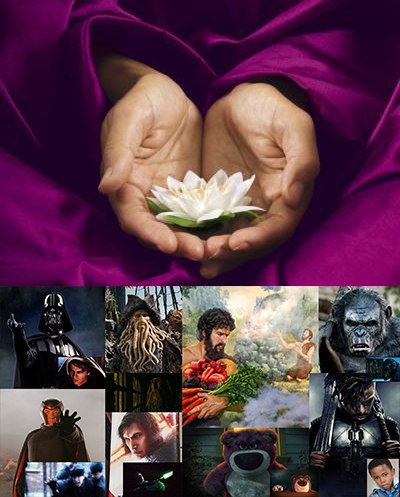
— In Marvel’s film Black Panther, the story’s antagonist, Erik Killmonger, is a young boy whose father is killed during his childhood by his own brother, Black Panther, the king of the mythical land of Wakanda, in an unintended incident. He spends a painful childhood alone and without any support from his wealthy family, growing up in a poor neighbourhood in New York. He is an orphan who, throughout childhood and adolescence, experiences with his whole being the injustice suffered by Black people in American society. These bitter personal encounters with the darkness of the world cultivate within him a deep anger and hatred toward all those who are not Black and who oppress Black people, as well as toward his own family and, above all, the legendary Black Panther. This prepares him to release his anger against those he hates.
— Koba in Planet of the Apes: an ape captured and brutally tortured by human beings and therefore filled with hatred of them—a hatred that drives him toward madness and crime.
— Lord Darth Vader and, two generations later, Kylo Ren in the Star Wars films. In the first case, Anakin Skywalker, after his mother is killed by the Sand People, surrenders to his anger and, in his path of revenge for her death, kills all the Sand People—men, women, and children. By departing from the way of the Jedi and turning his back upon all his ideals, he becomes Lord Darth Vader, the embodiment of the power and revenge of demonic forces. Two generations later, in the newer Star Wars films, we see the continuation of this hatred in a similar story in Ben Solo. Through resentment and anger toward Luke Skywalker, his teacher, and the misunderstanding that Luke had intended to kill him, Ben enters a similar path whose end is a fall into anger, revenge, and despair, bringing about his transformation into Kylo Ren, the principal antihero of the newer Star Wars series.
— Magneto in X-Men likewise transforms the hatred, anger, and resentment born from the injustice suffered by him and his family in the concentration camps of the Second World War into a demonic and destructive force of revenge.
— In Pirates of the Caribbean, Davy Jones, the story’s most terrifying antihero, was a young sailor who fell in love with Calypso, one of the sea deities. Resentful of her broken promise, he nurtures a hatred in his heart that transforms him into a terrifying demon. Yet because he cannot free himself from his love for Calypso, he removes his heart from his chest and locks it inside a chest. The image of Davy Jones’s heart locked in a chest symbolizes the transformation of a disappointed and enchanted lover into an embodiment of the domination of darkness and fear over the seas.
— Even in children’s stories and cartoons we repeatedly see this ancient myth in antiheroes such as Lotso in Toy Story, who believes he has been discarded and that his love and affection have been betrayed. He therefore first nurtures hatred toward children and then toward the other toys, and from an image of himself as a victim is transformed into a merciless monster.
Perhaps one of the oldest myths reflecting such an antihero is the story of Cain and Abel. The root of Cain’s hatred of Abel is in fact his resentment and aversion arising from what he perceives as God’s injustice toward him. When both brothers offer their gifts and sacrifices to God, Abel’s sacrifice is accepted for no reason made clear to Cain, while Cain’s is rejected. Cain is the older brother and believes that he is not only more deserving but has worked hard, yet it is always Abel who receives the love of others and of God. Thus Cain allows the resentment born from his sense of injustice to continue until his hands are stained with the blood of his own brother. And whenever we look at the history of Cain’s descendants in the Bible, we see how this resentment and despair become an enduring and demonic hatred in human history, to the point that in the Old Testament the first maker of a weapon for war is from the line of Cain.
Comments
Loading…
Leave a comment