
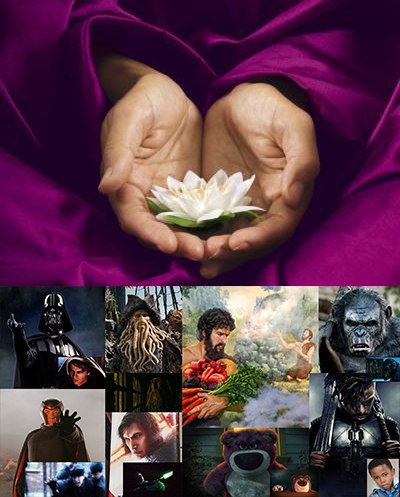
Our Unconscious Mind and the Ancient Myth of the Antihero — 1
Think about these words and the feelings they create in you: Persian, Arab, Turk, Hezbollah supporter, reformist, Revolutionary Guard, Basiji, monarchist, Mojahed, taghuti, liberal, conservative, homosexual, rich kid, dervish … You can think of any group of human beings whom, for whatever reason—because of personal experience or belief—you dislike. Now, whatever your own ideas or inclinations may be, read this text to the end.
As we leave childhood and grow older, sooner or later all of us encounter the blackness and darkness of the world and are wounded by it. The injustice and oppression inflicted upon the wounded child within us can first produce resentment toward other people and the world, then aversion and anger. Eventually this aversion and anger can create a hell in our hearts capable of bringing forth a monster within us, ready to make the hell we feel in our heart real in the external world.
When we are hurt and disappointed by other people, somewhere within our imagination and unconscious mind, without knowing it, we begin to cultivate thoughts of their suffering and destruction. First resentment and anger grow in our hearts, then a hidden desire for revenge. In the depths of this resentment and hatred, Ahriman opens the doors of darkness and hell upon our hearts.
In the creation story as told in the Bundahishn, when Ahura Mazda drives Ahriman back into the heart of darkness, Ahriman creates his first creature, Akoman, the demon of anger, to oppose Ahura Mazda’s first and highest Amesha Spenta, Vohuman, the divinity of Good Thought.
Anger is the first Ahrimanic offspring, giving existence to all the demons that follow it.
If you imagine that there is no Ahriman of anger, no Akoman, within each of us, look again with awareness at your passing thoughts: at the moment when you are wounded, allow resentment to grow in your heart, and create revenge in your imagination. If you imagine that the guards of Auschwitz, the fighters of ISIS and the Taliban, and the hundreds and thousands like them throughout history are made of some substance other than our own, you have not yet opened your eyes to your dark side.
Talk with people and you will discover how far, in their hidden fantasies and in their hatred of those against whom they hold resentment, they can cultivate images of violence and crime in their minds and then carry them forward first in imagination and then in speech. And of course there is always a reason. There is always a grievance about injustice, and a hatred that allows the person committing anger and violence to justify it.
The image of a fall into anger is the image of a human being who once carried ideals and aspirations that, somewhere in life, were destroyed in an encounter with the world’s darkness. Disappointment, resentment, anger toward others, and the belief that one is a victim follow. Eventually that person surrenders to resentment toward others and hatred of life, and the first things betrayed in this surrender are the very ideals and aspirations once held in the heart.
Comments
Loading…
Leave a comment