
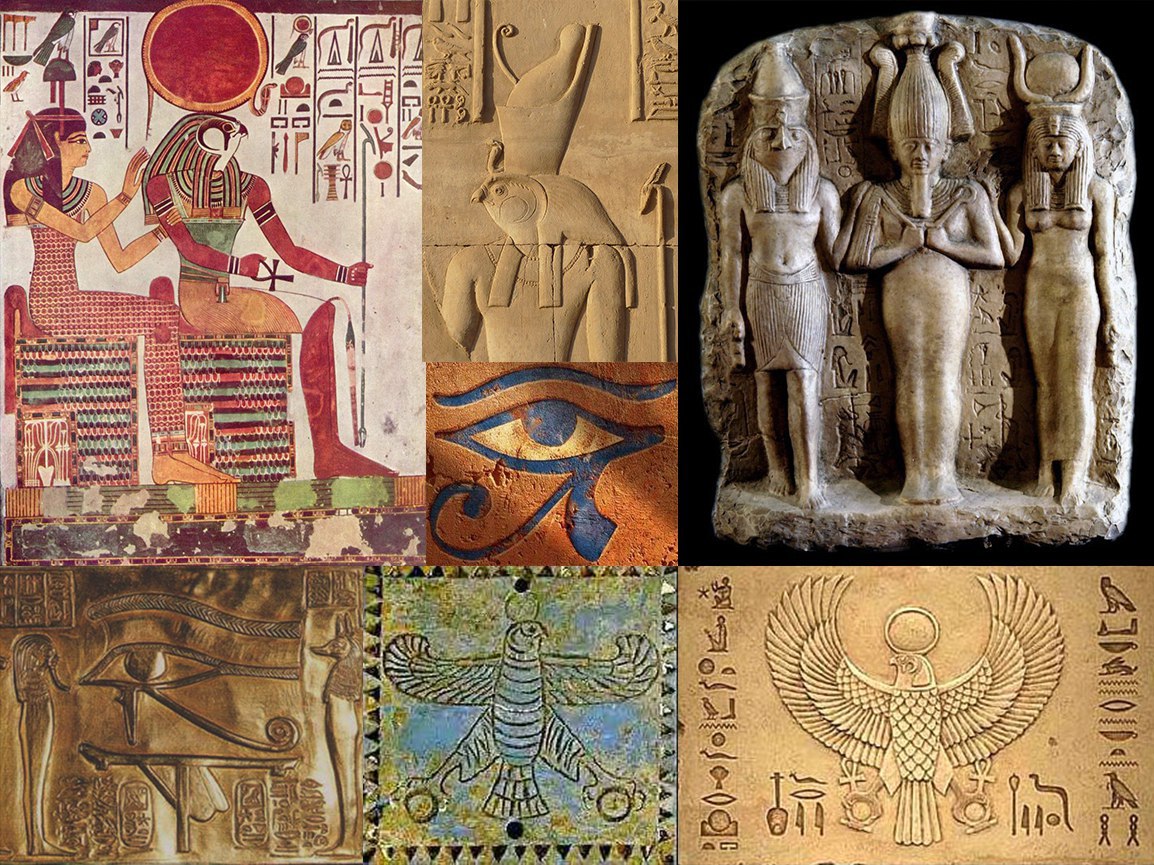
Our Relationship as Iranians with Our Cultural Past and Historical Civilization — Part One
(Through the myth of Osiris and Horus in ancient Egypt)
In response to a short piece I wrote a few days ago about the need to understand the past and the importance of cultural rebirth, a dear friend wrote several lines of criticism to me. It was not only an honest criticism; it rested on an important truth that I think has undoubtedly crossed the minds of many others among us.
In that piece I began by revisiting words attributed to Churchill:
“One of the most important characteristics of a successful society is its effort to preserve its history and safeguard a heritage that must be transmitted from one generation to the next. If one generation fails to pass this inheritance—its stories, legends, heroes, and the preservation of a nation’s history and culture—to those that follow, or refuses to do so in the name of modernity, the next generation will unquestionably suffer from a lack of ideals, direction, and understanding of its own identity, and the roots of that society will begin to decay. The truth is that cultures which take an axe to the roots of their own history are not dying—they are already dead, because they no longer have a story and will have no epic to sing.”
Then, looking at Nietzsche’s ideas, I emphasized his belief that we must know our history and its philosophy in order to understand how the past still lives and flows through the veins of our present, and how hundreds of waves arriving from the past set this present moment in motion.
My dear friend’s reply, in brief, was this:
“I have a different view. I think Iranians have become so immersed in their past, history, stories, and epics that their realistic view of present problems has been overshadowed and distorted. They have in a sense separated themselves from the rest of the world and become enclosed upon a cultural island. It is as if, beyond this authenticity, culture, and Iranian history, they have nothing else to say. It is as though they have become so empty that they have nowhere to live except in dreams of their glorious past. It is as though they see themselves in an endless war with the West and its culture.”
Because of the importance of this point, and the truth it contains, I decided to write a response. Yet it occurred to me that revisiting a highly valuable and important mythological story, and looking at the layers of meaning within it in which I deeply believe, might help me express my position and my response to this valuable criticism more clearly. Whatever I may write cannot possess the power of a story that has endured in human history for nearly five thousand years. In this piece I will first retell the story and then try to set out ten valuable meanings that, as I understand it, are hidden within it.
The myth of Osiris and his son Horus may be the most important and central mythological story of ancient Egypt. In mythical narration, its beginning is as old as the history of the world itself and far older than the emergence of the land of Egypt.
The ancient Egyptians believed that Osiris, the firstborn of sky and earth and king of the world, ruled the whole earth with goodness and justice and travelled throughout the world. They believed it was he who first gave the Egyptians agriculture, religion, and knowledge.
Isis, the healing goddess of the living and guardian and receiver of the dead, is the wife of Osiris and plays a central role in this myth. Osiris also has a brother named Seth, who symbolizes chaos, darkness, and destructive forces.
Aydin Areta
Comments
Loading…
Leave a comment