
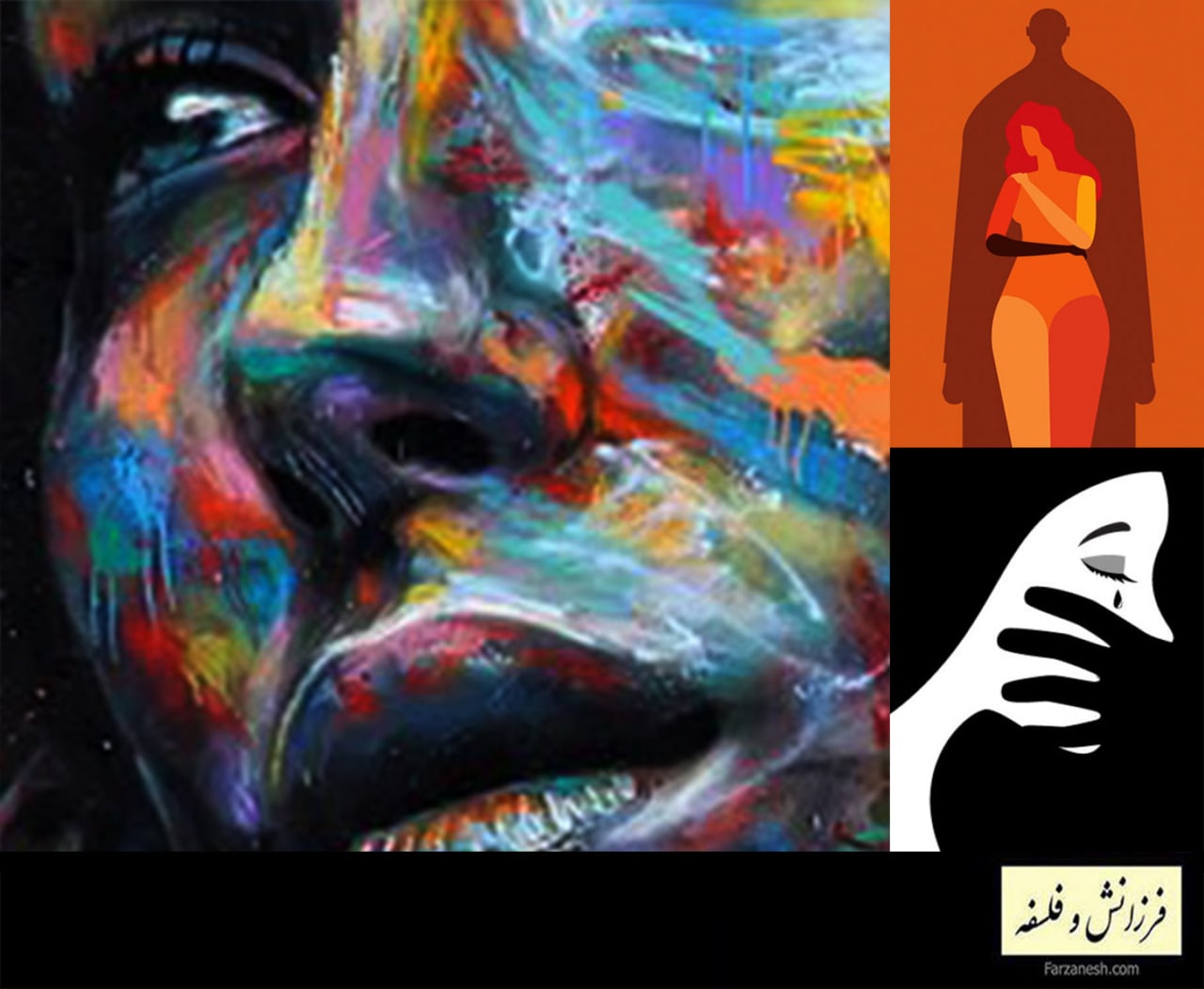
Masculinity and Prejudice
25 November is the International Day for the Elimination of Violence against Women. Continuing the series of pieces I have begun on masculine archetypes and their role in the development of individuation, I want to address something that, in my view, is a form of systemic and cultural violence in our society and has for years targeted the truth of our masculinity and chivalry.
My question to the men of today and tomorrow in our country is this: between rādmardi—nobility and chivalrous manhood—and what is called nāmus and gheyrat, which is the genuine value we should receive into our human being and individuation?
The bitter reality that women in Iranian society face organised violence is not hidden. Struggling against it is not merely struggling against a limited and ugly social phenomenon; it is an attempt to remove a widespread violence represented by a large part of our present society and culture.
If there is one social or political issue on which the dominant social culture across our different classes finds itself in remarkable agreement, even unity, with the most dogmatic sections of Iran’s political establishment, it is our social view of women and their social rights.
From economically and culturally disadvantaged groups to the traditional middle class and even educated sections of society, when the issue becomes women and their social rights, there is an astonishing and largely unexamined harmony in reproducing this systemic social violence in the name of nāmus and gheyrat. Were it otherwise, the oppression suffered daily by our Iranian sisters and women could not continue even for one day.
This widespread violence has taken the form of a dominant cultural pattern through the painful reduction and inversion of historically valuable ideas of rādmardi and javānmardi—nobility and chivalry—into gheyrat and nāmus, and it is sustained by a large part of our society.
If rādmardi and javānmardi, which were genuine historical values in our culture, had not given way to such an ominous substitute, it would not be possible for men to show swollen veins and rage toward the women in their own households while meeting the suffering inflicted daily upon the women of their country with a silence that amounts to approval.
It is interesting to note that for centuries both gheyrat and nāmus often appeared in Persian literature in critical or negative senses.
“His enemies tear him apart from gheyrat [jealousy and envy] ...
his friends too carry away his days.”
— Rumi —
“From shame and gheyrat [jealousy and envy] he did not sleep at night ...
Tai laughed the next day and said ...”
— Saadi —
“A beloved whose beauty arouses the gheyrat [jealousy and envy] of the full moon.”
— Hafez —
Can genuine love ever arise from jealousy and envy, from possessiveness, fear of loss, distrust, fear and suspicion?
How did this pathological jealousy come to replace and become equivalent to honour and chivalry?
How did the man, instead of questioning his own moral virtues and overcoming his own darkness, choose the easier path of imprisoning the other half of himself within home and society?
The history of the inversion of the word nāmus followed a similar path. In one historical sense, nāmus referred to a hidden code, practice or convention of a person or group, and throughout much of our literature it often carried a negative resonance. Yet suddenly, like gheyrat, it became part of the unexamined identity of the Iranian man.
“O remedy for our arrogance and nāmus ...
O you, our Plato and our Galen.”
— Rumi —
“The heavens, with all this nāmus and deceit ...
possess an old black-and-white steed of night and day.”
— Nezami —
“How long this nāmus, pretence and hypocrisy? ...
Repent of all three and become truly religious.”
— Attar —
“If you remain caught in name and nāmus ...
you are no man of the path; you are a hypocrite.”
— Naser Khosrow —
“With a glance break the splendour and nāmus of the Samaritan ...
cast one coquettish look and shatter the market of sorcery.”
— Hafez —
“Cursed be this impure generation ...
who are nothing but name, nāmus, pretence and wind.”
— Saadi —
Nāmus, gheyrat and prejudice are unspeakable taboos in our society today. It is not only others who fear questioning nāmus and gheyrat; you and I too have become afraid, within this inversion of our historical culture, to ask these questions.
Ours is a society in which even being “without prejudice”—which should be a first condition of freedom, liberation and learning—is treated as an insult, let alone being called without gheyrat or nāmus.
A society so caught in the dark magic of a distorted and inverted understanding of honour and chivalry that many of its men justify repression, discrimination and violence against their sisters, mothers, wives and daughters in the name of gheyrat, nāmus and prejudice.
The Prophet raised his head and looked at the people ...
Silence and stillness had fallen over them.
Then in a deep and resonant voice he said:
...
Love neither possesses nor is possessed,
for love is sufficient unto love.
Wish that you may experience the pain of being excessively kind.
Wish that you may be wounded by your understanding of love,
and that your blood may fall willingly and joyfully upon the earth.
Aydin Areta
Comments
Loading…
Leave a comment