
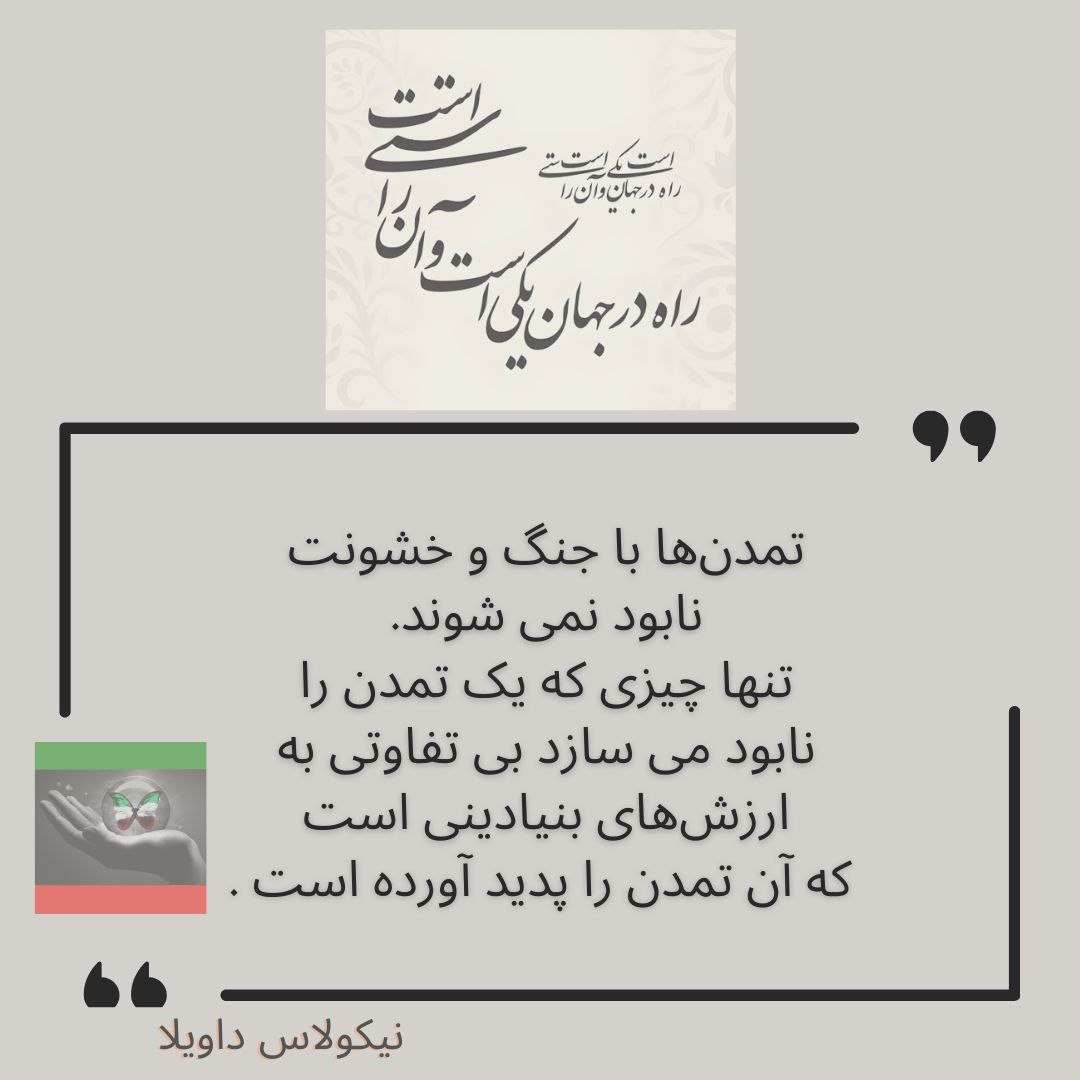
Many civilisations were destroyed by the invasions of foreign peoples and the passage of time, and did not survive history’s test of endurance.
What enables a civilisation to endure the destructive storms of history?
The Colombian philosopher Nicolás Gómez Dávila is presented here as giving an answer: indifference to the foundational values that brought that civilisation into being.
What are the foundational values of our civilisation?
Herodotus, in the first book of his Histories, section 136, writes that the first lesson Persians teach their children is “truthfulness.”
Despite Herodotus’s many partialities, he records here the most important value that stood at the centre of Iranian civilisation: “There is one path in the world, and that is the path of truth.”
For Iranians, living according to truth was something far greater than merely refraining from lying. They called this truth Asha, the law of truth and right order in the world, and sought to align their thoughts, words, and deeds with its path. Thus, in section 3 of the inscription at Persepolis, Darius the Great’s prayer is presented as asking Hormazd to protect Iran from the Ahriman of falsehood.
The first foundational value of Iranian civilisation, then, was truth and living according to the path of truth.
Hegel, in the first part of his Philosophy of History, in the section on the Oriental world, is rendered here as writing of the Persians:
“Among the Persians we see for the first time that freedom becomes a principle and human individuality is recognised.”
He continues:
“Persia is the first empire in which the concept of the state is born from an organic union of peoples who have freely united with one another, and this is a great turning point in history in the development of the concept of freedom.”
We may therefore regard respect for freedom of choice, individuality, tolerance, and the internal unity of the peoples of Iran as further foundational values of Iranian civilisation.
Iran survived some of the greatest tests of history because it rested on values that were visible even to observers outside Iranian civilisation.
This does not mean that these were the practices of the rulers of this land in every age. It means that these were values respected by Iranian society, and that their seeds were preserved within it.
Today we stand at the heart of some of the greatest storms of our history. What will carry us through is remembering the values that built our land and preserved it on its difficult historical path:
truth, tolerance, freedom, and human individuality.
Aydin Areta
Comments
Loading…
Leave a comment