
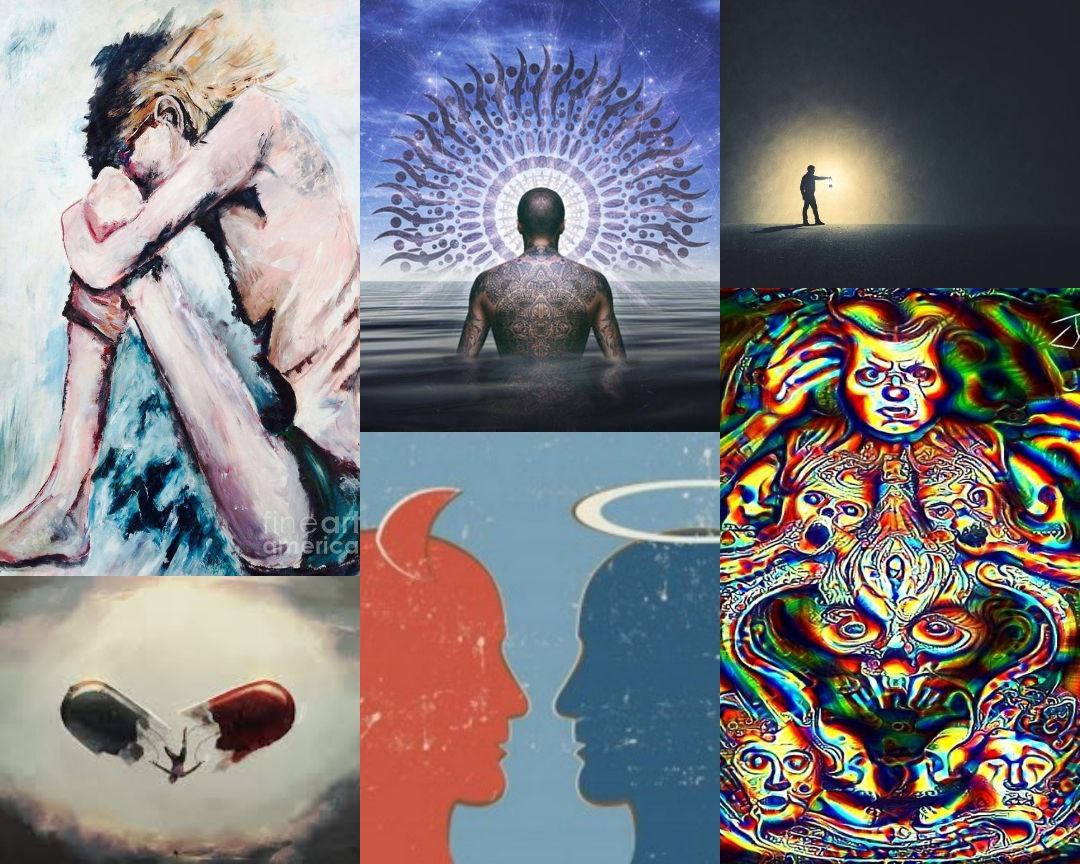
In childhood we are blind to the darker side of ourselves and of the world. The lack of awareness of the external world that accompanies childhood disappears as we grow, and as this pleasurable unawareness recedes it is replaced by a painful consciousness of the realities of suffering, the cruelty of nature, our limitations, mortality and death. In adulthood we are compelled to carry the burden of existence and to live with this growing suffering and pain. Suffering is the first truth of our lives.
At the heart of the suffering of people who are victims of different psychological problems and addictions to alcohol, drugs and psychoactive substances, there is often an unsuccessful attempt to return to the lost original unawareness of childhood.
Carl Jung believed that what creates our suffering is not consciousness itself but our “limited consciousness”, and that the suffering of existence is reduced not by falling back into unconsciousness but by trying to overcome the limitations of our consciousness. Yet this elevation of consciousness must begin with recognising the darkness within us. If we are blind to our inner darkness, our consciousness remains divided between darkness and light, half asleep and half awake, and the darkness of the unconscious mind can take control of part—or even all—of our conscious life. But by bringing that darkness into conscious awareness, it remains held within the bonds of our awareness.
Nietzsche called the ordinary morality of people cowardice, not because he believed that living morally was itself cowardly, but because people often hide fear and weakness under the name of morality, concealing their weakness even from themselves. Yet when they acquire the power to express their darkness, their dark side may become capable of any destructive act without their having the courage even to see and accept the destructive consequences of their behaviour. There is no virtue in weakness, and virtue does not consist merely in refraining from vice but in having no desire for it. A person can become indifferent to vice only by standing above it. When we have succeeded in containing the demon within ourselves, we can experience a deeper respect for ourselves.
The difference between a good person who has integrated the unconscious dimension of personality with conscious life and a naïve person who has never looked at the darkness within and merely imagines themselves to be good is this: the good person’s decisions and actions are considered in full awareness of their own capacity for evil. Such a person knows the roads by which the inner demon travels, is conscious of them, and with that knowledge still chooses not to follow them.
Aydin Areta
Comments
Loading…
Leave a comment