
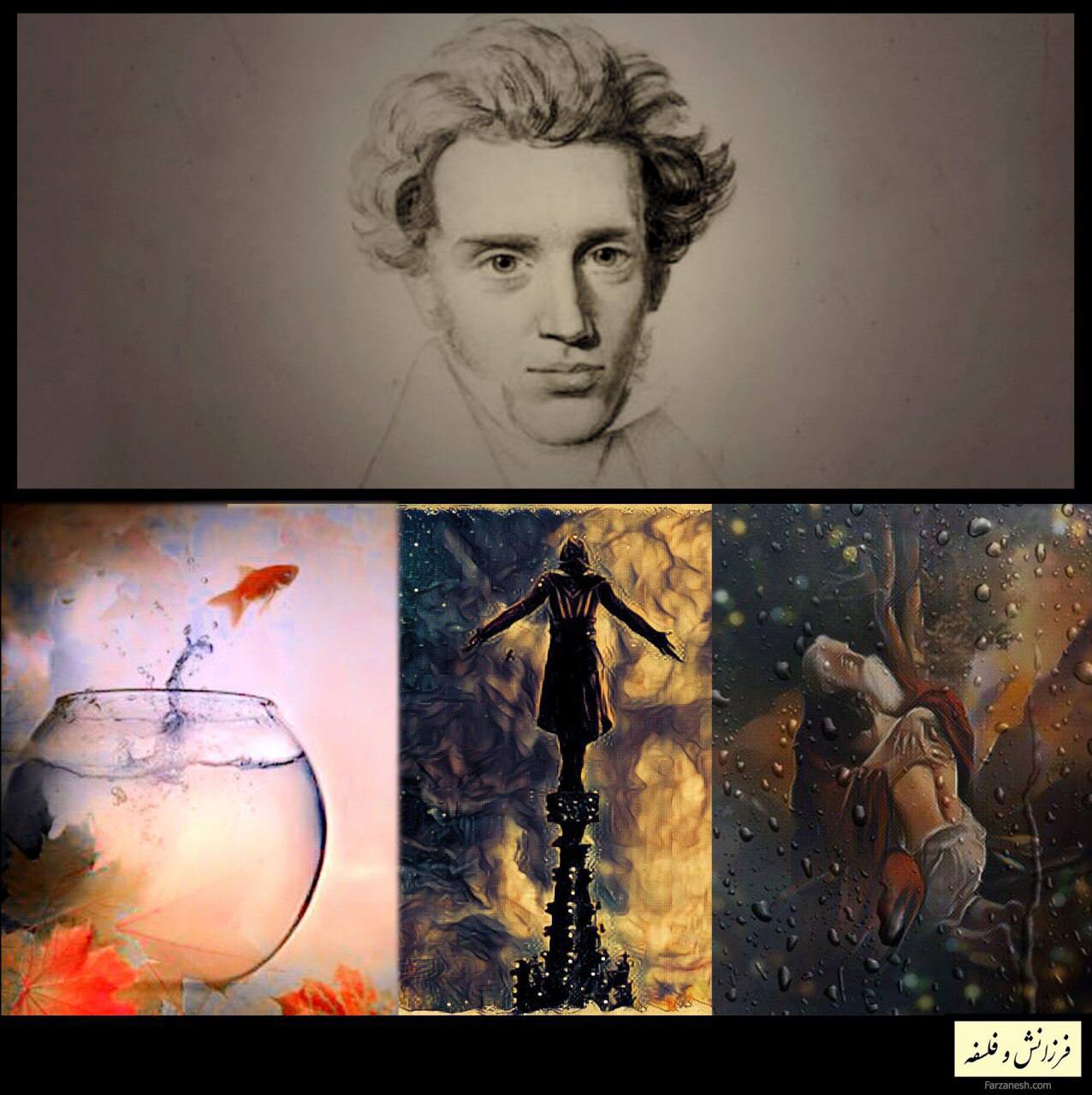
In Kierkegaard's philosophy, in addition to the truth that exists in the external world and is the subject of scientific study, there is also an inward truth: your own inner truth. Although no scientific instrument can measure it, it is true for you. This truth is not a matter of “belief” but of “action,” and for that reason it must be lived in one's individuality; living it requires a “leap of faith.”
Faith is a leap into the unknown and into darkness. It may conflict with ethics, social conventions and even outward religious beliefs. The leap of faith is not the recognition of truth but the surrender of oneself to it, something that is in its essence irrational and beyond discussion. It is filled with passion and a will that rises from within rather than submitting to something external. The leap of faith is the overcoming of every hesitation and doubt that we take to be rational.
In Kierkegaard's thought, faith is neither asceticism nor belief. It is an irrational leap beyond good and evil, and within this incomprehensible leap into the depth of darkness there is something infinitely personal and beyond discussion—something known in the heart only by the one who chooses the leap of faith.
Aydin Areta
Comments
Loading…
Leave a comment