
In Memory of Teresa
Death, an Ornament on the Tree of Life
This morning I went to the funeral of one of my patients. Not because anyone had invited me, but because of the respect I sincerely felt for her. I cancelled my morning appointments and made my way to the farewell ceremony for Teresa, which was being held at ten-thirty.
Although the central topic on the Farzanesh and Philosophy Conversations page (link to join the conversations: https://t.me/joinchat/Br1R4BRZa9lS8HYgpsyV6w) for the coming two weeks is “the meaning of death for life,” and I am also trying soon to publish my conversation on this subject with Ms Forouzmand, a psychologist living in the United States, even if none of this had been the case I would still have wanted to write a few lines out of respect for my patient Teresa. After years of enduring the suffering of scleroderma—a connective-tissue disease that can cause the skin and soft tissues to become hard and inflexible—she died a few days ago at the age of sixty-one.
Through my work as a physician I have encountered the deaths of patients many times. With many of them, before their deaths, I have discussed the process of dying and what they wanted medically to be done for them. Many times I have stood before the lifeless bodies of people whose eyes had once been full of life, and I have had the privilege of being able to attend the farewell ceremonies of some of them.
If you have never attended a farewell ceremony for someone outside Iran, I will try to draw for you a picture of this morning’s ceremony as one example of such ceremonies in Australia.
The ceremony was held in a function hall. After parking my car, I walked toward the hall, which was surrounded by beautiful flower-filled gardens. In front of the entrance stood the black ceremonial hearse carrying the coffin, and two formally dressed people beside it welcomed me. A third person guided me into the hall and gave me a small booklet. Two photographs were beautifully placed on its cover: an image of Teresa in her youth looking toward another photograph taken in the final days of her life. Inside the booklet was a beautiful poem she herself had selected for those who would come to say goodbye, as well as the order of the ceremony and the programs that would take place.
All the chairs faced a flat platform raised only slightly above the level of the seating. In its centre stood a white coffin covered in colourful flowers, in which Teresa’s body rested. Teresa had lost her hearing at the age of thirty-two. For this reason, half the people sitting on the left side of the hall were deaf, and beside the lectern stood an interpreter translating spoken language into sign language.
After the opening introduction and a musical program, part of which Teresa herself had selected before her death, a part of the ceremony took place to which I have always wished our own culture could give greater attention and perhaps make room for within funeral rituals—which are, in truth, also meant to console those left behind. It is a practice that can transform a funeral into a celebration honouring the life of the person who has died.
This part of the ceremony is called the eulogy. First, several people who knew the deceased very closely speak about that person’s life, characteristics, and achievements. Then those present are asked whether anyone else would like to speak, and several people from the gathering volunteer.
I believe the eulogy is a very beautiful practice. It helps those present not only to form a clearer picture of the life of the person who has died but also to remember, for the last time, a beautiful and admirable image of them. A eulogy carries great emotional weight and is often accompanied by tears from both speaker and listeners, but it is not lamentation. At the same time, it often includes humour, sweet memories, and amusing moments from the deceased person’s life, bringing laughter to the speaker and those present. It makes possible a farewell that, like life itself, can be celebrated on both sides of sorrow and joy.
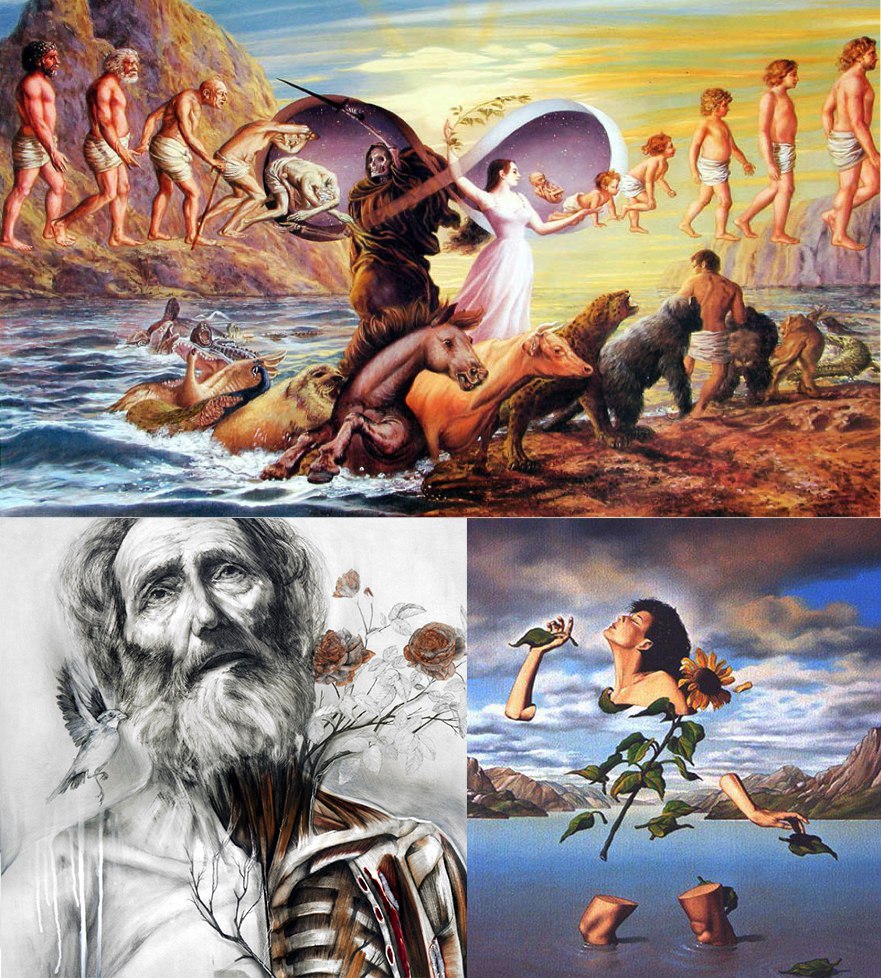
Joseph Campbell, the great American mythologist, is quoted as describing death as an ornament on the tree of life, giving it a unique beauty beside which life itself can be celebrated. The eulogy places this final ornament on the tree of life so that the life may be remembered as a magnificent and meaningful celebration. There is respect in it for the person who has gone, consolation for those who remain, and many lessons for those present—lessons one may continue to think about for days and months.
Comments
Loading…
Leave a comment