
How we relate to ourselves, to other human beings, and to the world is rooted above all in the way we understand and define the boundaries of our identity.
If we understand ourselves as the product of what we know and define the boundaries of identity through our beliefs, we will ultimately become merely believers and ideologues. Regardless of the content or direction of our belief, our functioning is then guided by a powerful belief and dogma; the more rigid and inflexible our conviction in that knowledge, the more limited and authoritarian we become.
If we define ourselves only through what we do not know—through our ignorance and questions—we may become seekers of truth, yet this rootlessness and being lost in darkness can throw us in any direction and make it difficult to create an identity that can endure and be relied upon. A person who allows themselves to be thrown toward every region of darkness is not a traveller on the path of truth but someone lost in chaos.
And if, finally, we define ourselves as identical with our failures and calamities, we will fall into the incurability of our painful wounds and remain imprisoned in the underworld of our psyche without finding a path toward any light.
A deep understanding that we are neither our beliefs and knowledge, nor our questions and unknowns, nor limited to our suffering and failures, allows us to avoid falling into the ideology and dogma of knowing, into agnosticism and the wandering of not knowing, or into meaninglessness and nihilism.
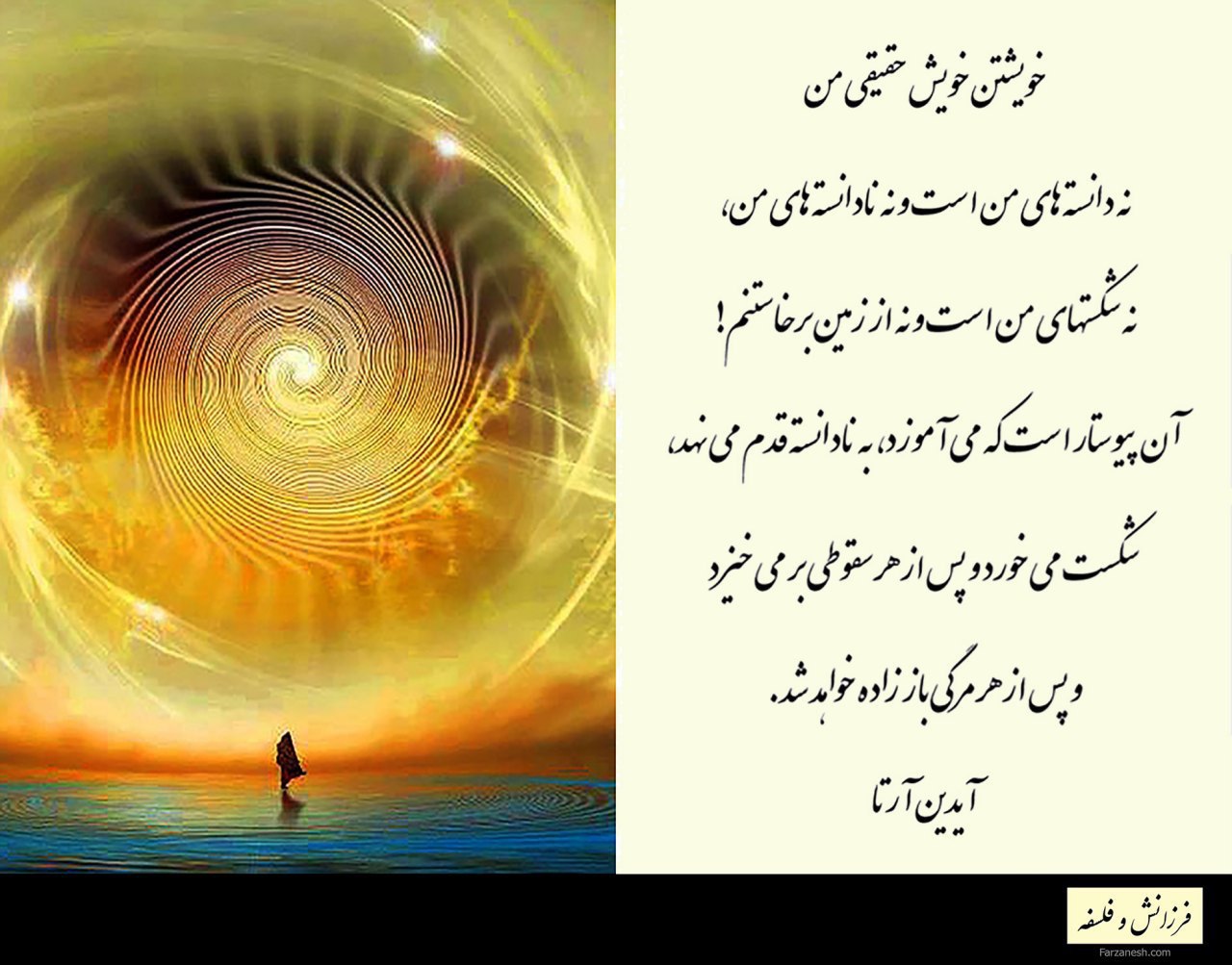
My true Self contains all of these things but cannot be reduced to any one of them. It is the continuity that learns, steps into the unknown, fails, rises after every fall, and is reborn after every death.
Aydin Areta
Comments
Loading…
Leave a comment