
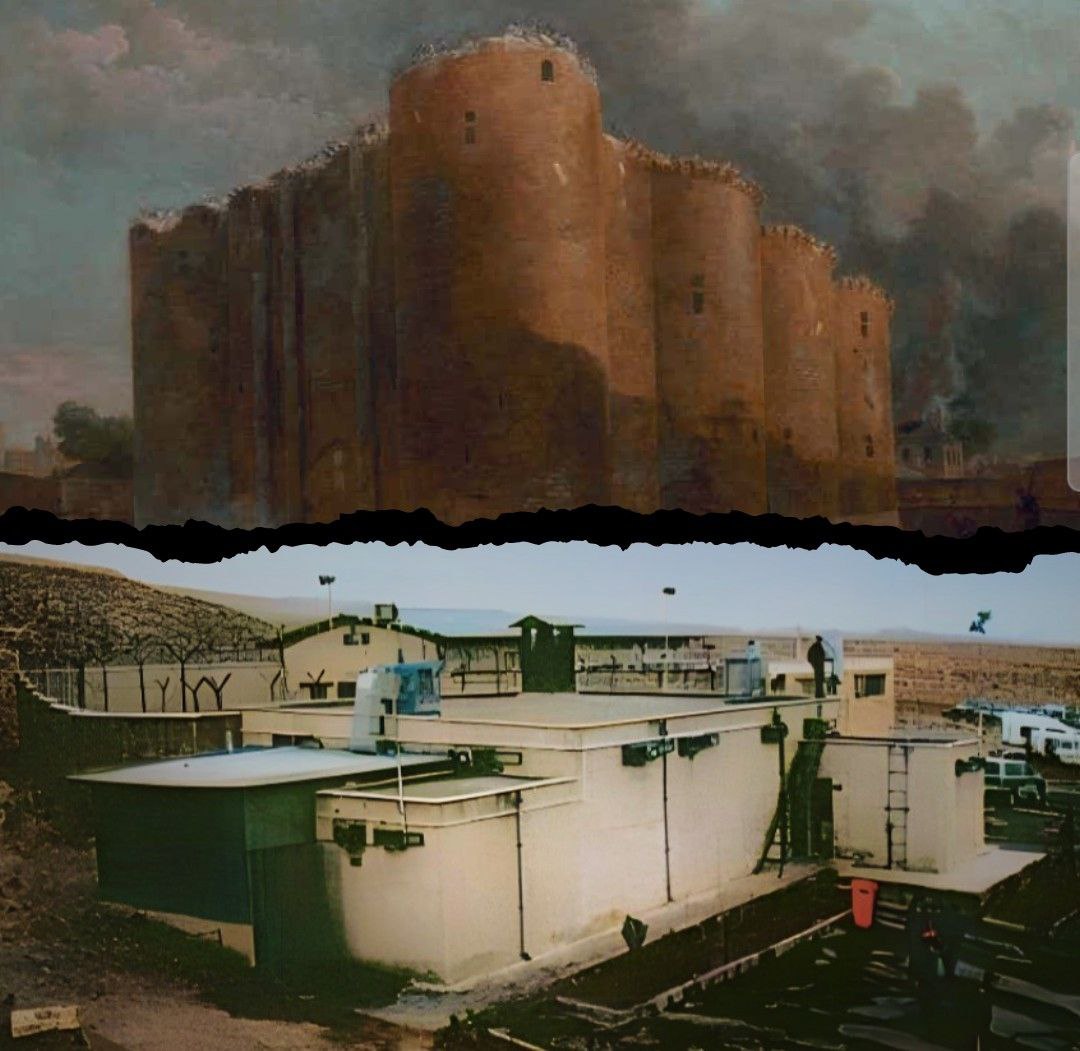
From the Bastille to Kahrizak
Aydin Areta
Today, 14 July, is the day on which the Bastille prison—once a symbol of terror and the boundless power of Louis XVI—fell.
Today is also the day on which Mohsen Rouholamini died in Kahrizak detention centre. It is difficult even to read what happened during those five days, in which five people died, to the more than one hundred people transferred to that detention centre.
After his release from Robben Island, following twenty-seven years of imprisonment, Nelson Mandela said in describing the relationship between prisons and the people of a country:
No one truly knows a nation and the culture that governs it unless they have been inside that nation’s prisons.
Mandela’s statement echoes a thought attributed to Dostoevsky in *The House of the Dead*, his account of the suffering he endured during his years of imprisonment in Siberia.
He too believed that the level of civilisation of a society can be judged above all by entering its prisons.
He regarded Russia’s prisons as an embodiment of the darkest corners of the Russian soul.
Alexander Solzhenitsyn, who himself spent long years exiled in forced-labour camps in Siberia, likewise believed that anyone who wished to begin reforming their society should begin with that society’s prisons.
Prison is an embodiment of the tortured soul of a nation: a place where, in a Jungian formulation, the psyche that has been the victim of torture takes the position of the torturer. Prison is the darkest corner of the collective shadow of a nation and of the political system that governs it.
Prisons and detention centres are spread across an entire country. Tens of thousands of people are employed within these structures. What occurs in institutions of such breadth inevitably reflects collective shadows within a society that are often hidden from its people.
Their roots can be seen in the family, the school and the everyday streets of that society, yet they are denied within each of us.
This is precisely where everything a society conceals from itself becomes visible—everything “we” conceal from ourselves becomes visible.
We have a Kahrizak within our collective psyche, and it will be healed only when it is healed within the psyche of each one of us: the tortured person who has come to accept violence within themselves as justice.
If we are capable of seeing justice in execution, then somewhere within us we are prepared to cross the boundaries that create Kahrizaks. If, for any reason, we consider another person deserving of violence, then somewhere within ourselves we have said yes to the possibility of creating Kahrizaks.
If we sometimes regard even verbal violence as permissible, then somewhere in the depths of our being we share values with those who withhold no sexual insult or abuse from a person held in their custody.
Whenever we bring these shadows within ourselves into consciousness, the dark corners of our collective psyche will no longer have a place in which to continue living.
Comments
Loading…
Leave a comment