
Escape from Freedom — Part One
The Jonah Complex is the term Abraham Maslow, the prominent twentieth-century psychologist, used—drawing on the myth and archetype of the prophet Jonah—to raise the problem of “our human fear of freedom, of accepting responsibility for our inner power and capacities.”
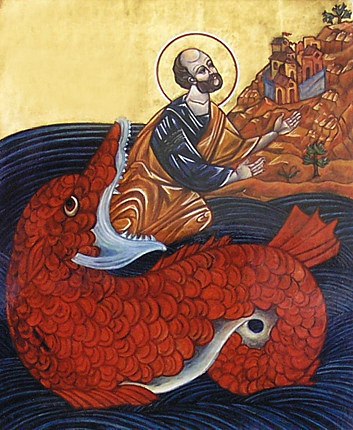
As told in the Old Testament, the story of the prophet Jonah concerns a prophet who, when God commands him to go to Nineveh and guide its people toward goodness and righteousness, flees out of fear of accepting the burden of prophecy among a people immersed in sin and darkness. As a result, he is swallowed at sea by a whale. Only after three days and nights of prayer in darkness does God release him. This time he accepts his destiny and goes to Nineveh to guide its people. By standing firm in his responsibility, he succeeds in transforming the people and even the king of the city.
For Maslow, our freedom and our individual power to change ourselves and the world constitute a responsibility from which we continually try to escape.
Maslow used to ask his students: which of you will change the world? They would become embarrassed, laugh, and lower their heads. Maslow would then ask: if not you, then who? If you deliberately settle for something less than your abilities, have no doubt that you will remain deeply dissatisfied for the rest of your life.
Referring to the story of Jonah, Maslow emphasizes that we are afraid of freedom and of the flashes of power we see within ourselves. Our godlike capacities fill us with delight and exhilaration, while at the same time making us tremble with anxiety.
Kierkegaard describes the fundamental anxiety of life as something like vertigo when we stare into the depth of a valley. For Kierkegaard, life’s fundamental anxiety is the dizziness produced by gazing into the terrifying depths of human freedom.
Yet according to the story of Jonah, in the end we have no choice but to accept our freedom and power, just as Jonah ultimately had no choice but to accept the burden of his prophetic calling. We are free to flee as Jonah did, but the inevitable consequence of escape from freedom is that we will be swallowed by the whale.
Jonah’s being swallowed by the whale symbolizes his fall into darkness. For Jung, the fish is a symbol of life and also of the Self. The fall into the darkness of the whale’s belly is a fall into the darkness of the unconscious, which ultimately becomes a new birth and resurrection.
If we human beings refuse responsibility for our freedom, our unconscious and our darkness will eventually swallow us. After enduring the suffering of that darkness and emerging from it, we will be compelled, step by step, to accept our freedom. In truth, the human story is nothing other than enduring the suffering of darkness in the belly of the whale of history because we have refused freedom and responsibility for our godlike power on earth—until the day we accept that freedom and responsibility and are born anew.
In our ancient Iranian myth of Jamshid, we can also identify a story resembling the central idea of the myth of Jonah. Ahura Mazda entrusts Jamshid simultaneously with the responsibilities of prophecy and kingship over the world, but Jamshid ultimately accepts only kingship and the guardianship of the world, refusing prophecy.
Ahura Mazda gives Jamshid a golden ring as a sign of the covenant he has made with God, perhaps in the hope that one day he will remember and accept his responsibility. With this gift from Ahura Mazda, a balanced and deathless world begins, but a terrible winter sent by Ahrimanic forces is approaching, and Ahura Mazda warns Jamshid of the danger.
Jamshid constructs the Var of Jamshid and gathers there specimens of all animals. Yet as the winter grows harsher, the king who refused responsibility for prophecy eventually becomes sinful, teaches people to eat meat, is overcome by pride, and allows darkness to enter him. His farr then flies from him in the form of three birds—kingship, bravery and courage, and eternal wisdom. These three forms of farr are ultimately united in Saoshyant, who accepts both kingship and the salvation of the world. With the loss of the divine farr, Azi Dahaka (Zahhak) finally defeats Jamshid, and darkness and Ahriman come to rule the world.
Comments
Loading…
Leave a comment