
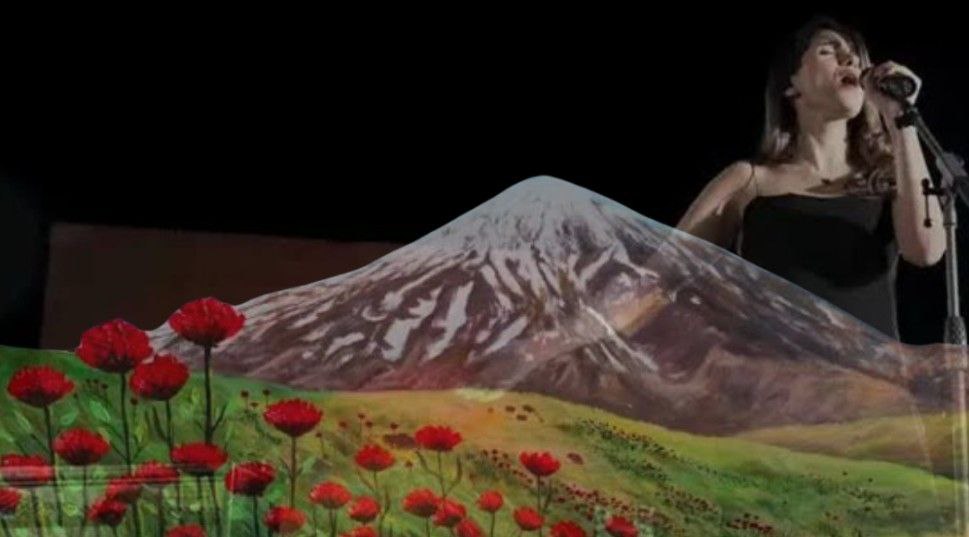
Enduring songs are an important part of our collective memory. To be compatriots, it is not enough merely to have been born within the same geographical borders. An important part of what connects us is knowing and singing shared songs: our capacity to sing together.
Singing these songs together is a strange experience. It reminds us where we have come from and what history we have lived.
Among them are songs whose music or poetry crosses generational boundaries. They connect generations, and few forces possess such power to awaken the feeling of belonging to the same homeland irrespective of the generation to which we belong.
Since the day I heard Parastoo Ahmadi perform “From the Blood of the Youth of the Homeland, Tulips Have Bloomed,” these lines by Aref Qazvini have not left me. What a beautiful choice: a poem in whose mournful verses generations of Iranians, past and present, have lived their shared pains, dreams and courage for more than a century.
From the blood of the homeland’s youth, tulips have bloomed,
from mourning their cypress-like stature, the cypress has bent.
With everyone’s tears, turn the earth upside down;
if you have even a handful of your homeland’s soil, cast it upon your head.
Have honour, and darken the days of the enemy;
before the enemy’s arrow, make your breast a shield.
My lament at the enemy’s hand rises from the depth of pain;
whoever thinks of death with fear is no man.
The self-sacrifice of lovers is no game of dice;
if you possess courage, now is the time for battle.
Poetry has always expressed a feeling that can neither be silenced and forgotten nor have the power within it conveyed to an audience through a train of words arranged as written prose. When that power joins with music, it creates a song capable of breaking the silence of generations so that they may cry out their historical pains and turn song into struggle and solidarity.
Aydin Areta
Comments
Loading…
Leave a comment