
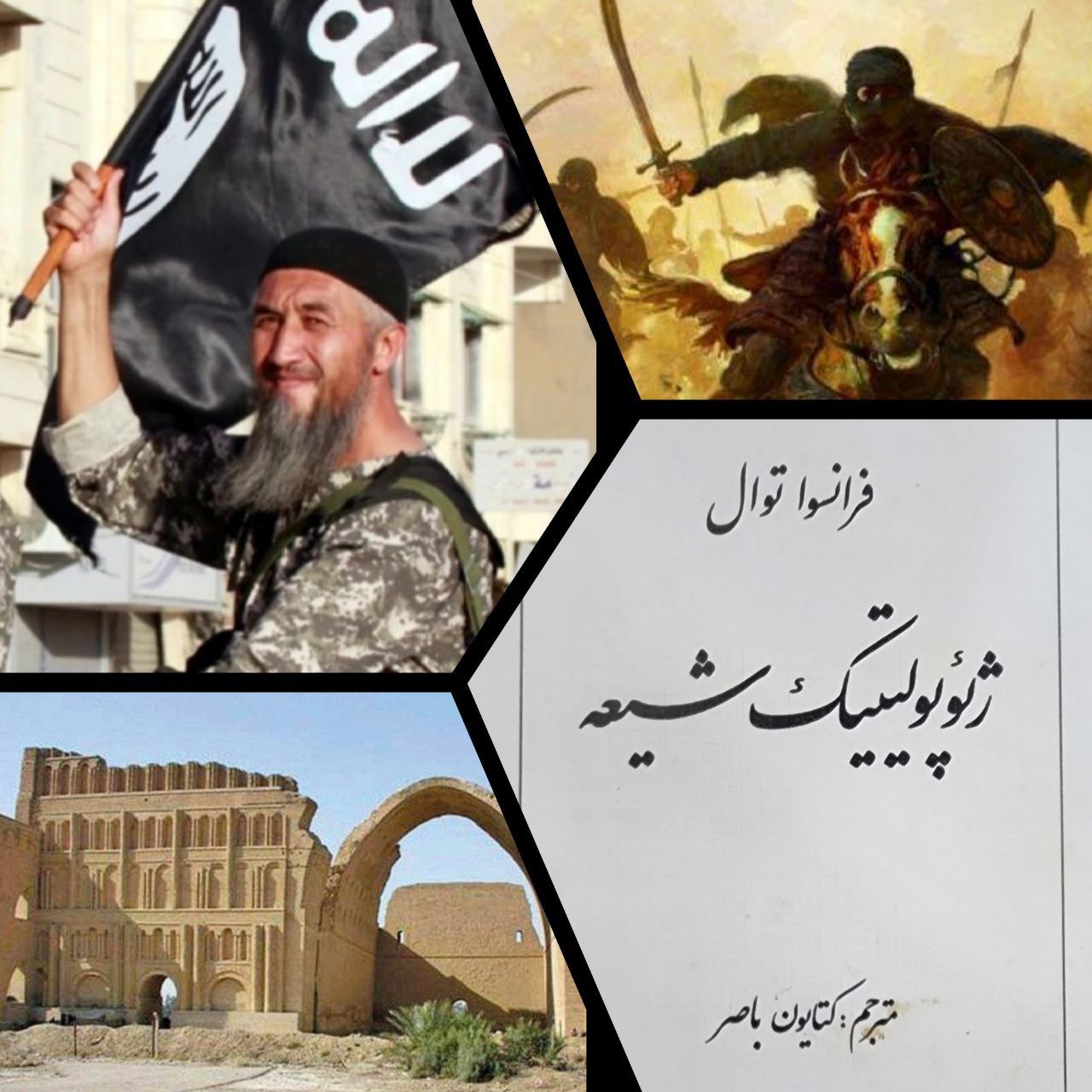
Civilisational Borders and Historical Threats
Aydin Areta
I hope the suffering of the Syrian people, who have passed through one of the longest civil wars in contemporary history, has come to an end with a new beginning. Yet history bears witness to another possibility.
Every movement and revolution ultimately carries with it a shadow of the method by which it came to power. Every government will rule through the same methods by which it achieved victory. Words such as freedom, justice, unity, religion and homeland can, precisely because of their semantic ambiguity, become bridges of unity at the height of a movement or revolution, while beneath that superficial unity many fundamental disagreements remain concealed.
All armed movements turn these concepts into bridges linking different currents opposed to the ruling power. Only after victory do their differences become visible.
Every revolution is a combination of revolutionaries who do not share identical views about the principles and methods of government. These different currents fight alongside one another, embrace each other the day after victory, and then the most radical group among them—often the group most willing to use greater violence—begins eliminating the more moderate groups. Their method is often the gradual, staged elimination—“salami slicing”—of their former comrades within the new government, a process that continues until the most totalitarian perspective prevails. These advocates of violence will themselves, after several generations and at enormous cost, divide among themselves, and over the years their ultimate fate will be determined by the cultural development of that society.
Today Syria’s victorious opponents—from former soldiers to Uyghur and Turkmen fighters, remnants of ISIS and al-Qaeda, nationalists and freedom-seekers—are congratulating one another. Yet what begins tomorrow may become another bitter story of purges, revenge and, ultimately, the purification of power. It is difficult to imagine a situation in which fighters from al-Qaeda and Jabhat al-Nusra would be willing to live within a democratic structure.
I hope this does not happen and that another suffering is not placed upon the exhausted and wounded body of the Syrian people. But if another Taliban emerges in West Asia, it is impossible not to think about the danger that could threaten Iran.
Those who imagine that the only reason for hostility toward Iran is Iran’s Shi‘ism forget that the first time such forces sought to overcome Iran, Iran was not Shi‘a. Ctesiphon and al-Mada’in, in today’s Iraq, were at the heart of the Sasanian Empire, while Antioch, on the Syrian–Turkish frontier, was the western gateway to the Iranian realm. The Battle of al-Qadisiyyah likewise took place in the region of Ctesiphon and today’s Iraq, and the fall of the Sasanians began with that defeat.
Centuries may pass, the dust of history may settle over ancient borders, and lands may assume new shapes and names, yet along historical civilisational lines Iran cannot remain indifferent to its western borders. Syria will always remain the western gateway of the Iranian plateau, and Iraq a fault line upon which the stability of Iran’s western borders depends.
From ISIS to Iraq’s Ba‘ath Party, “al-Qadisiyyah” has repeatedly functioned as a symbolic code for movement toward the conquest of the Iranian plateau. Iran’s Shi‘ism is not the sole reason for this impulse, because Yazidis, Christians and Kurds have also faced the same forces that may harbour similar ambitions toward Iranians. Within this context, the shared destiny of Iranian peoples in the face of a common historical danger can become a point of shared unity and resistance. But recognising the necessity of this unity first requires understanding why Iran, beyond any single ethnic group, has endured throughout history as the shared destiny of all the peoples of this plateau.
I read the book whose cover I have attached above many years ago. It was published thirty years ago, and after three decades it remains worth reading. The point is that, regardless of what government holds power in Iran, the importance of Iraq and Syria becomes clear when radical Sunni groups gain power in those countries and reach Iran’s borders. Every country naturally draws upon its important cultural and civilisational resources to preserve its stability, and Iran is no exception. Sometimes only the loss of such a possibility makes its importance visible. Iran can attain security and stability only through the internal unity of its own people, extended outward as far as Iran’s cultural and religious borders continue.
The most important factor in Iran’s stability and continuity is therefore the internal unity of the people of this land. Those whose mistaken policies—such as the highly dangerous Hijab and Chastity Law—target society’s internal stability and solidarity and recklessly intensify public dissatisfaction fail to understand the historical importance of “good governance” for the stability of a territory as internally and transnationally complex as Iran. The danger that may threaten us following the fall of Damascus can, when combined with poor governance, become a genuine threat to Iran.
Comments
Loading…
Leave a comment