
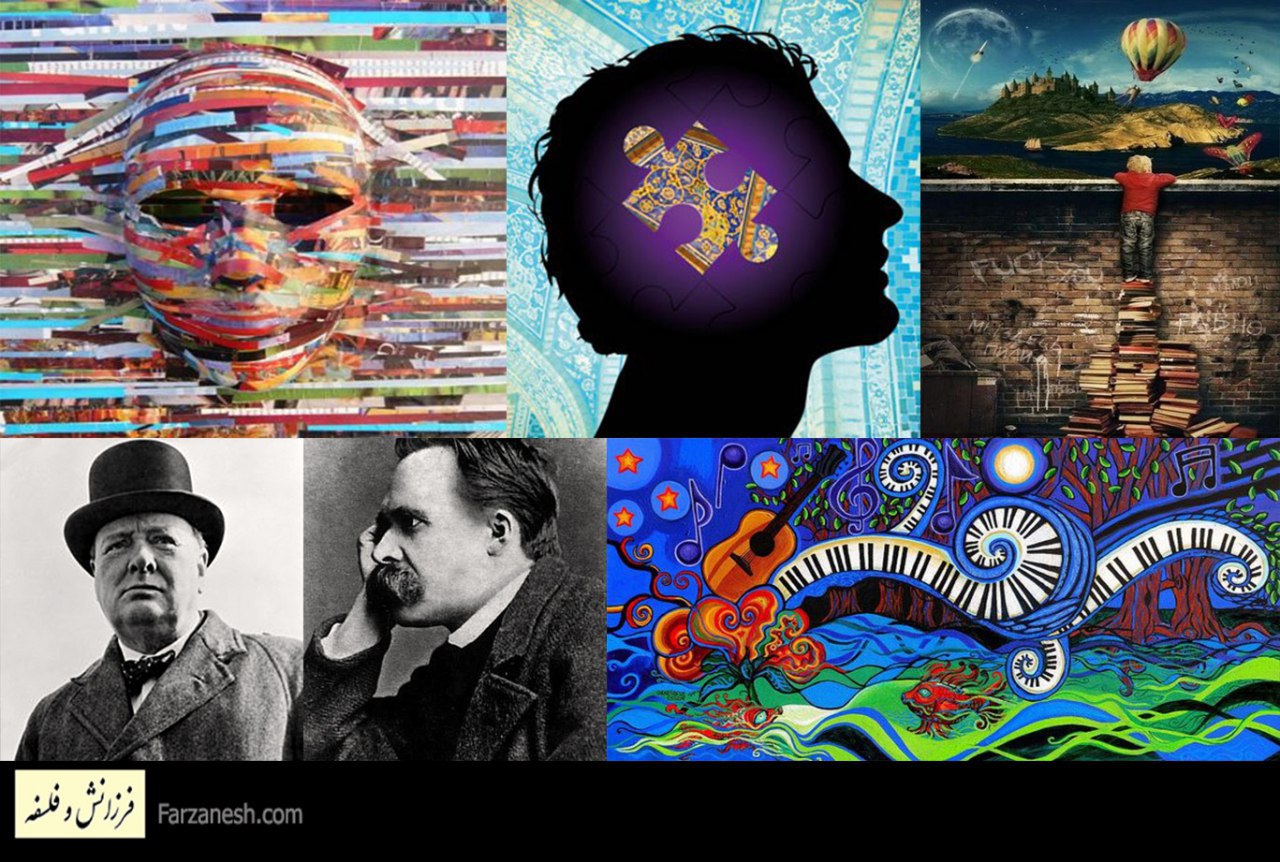
Churchill once said in an address to the people of England:
“One of the most important characteristics of a successful society is its effort to preserve its history and safeguard a heritage that must be transmitted from one generation to the next. If one generation fails to pass this inheritance—its stories, legends, heroes, and the preservation of a nation’s history and culture—to those that follow, or refuses to do so in the name of modernity, the next generation will unquestionably suffer from a lack of ideals, direction, and understanding of its own identity, and the roots of that society will begin to decay. The truth is that cultures which take an axe to the roots of their own history are not dying—they are already dead, because they no longer have a story and will have no epic to sing.”
Nietzsche likewise warns in Human, All Too Human that we never reflect sufficiently on historical forces and their influence upon the selves we are today. We must know our history and its philosophy in order to understand how the past still lives and flows through the veins of our present, and how hundreds of waves arriving from the past set this present moment in motion.
Nietzsche believed that those who pursue novelty after novelty while dismissing their historical roots as unimportant have not yet understood that the form, health, and beauty of leaves depend upon their “roots.” We always grow from our roots, mature, flower, and give our fruits and seeds to the future.
It is a great sorrow that you and I, and all of us, have largely ceased producing culture and art connected with our own history as a nation. A simple search shows how rarely we have retold our history through stories, songs, paintings, opera, and cinema.
Search the internet and see how many distinguished paintings you can find depicting the heroes of the most readily available epic poem of our history, the Shahnameh. How many animations, plays, and films can you find that narrate history for us and our children? How many statues of our historical heroes have we created? Who has drawn upon our old myths to write a modern Harry Potter for the next generation, using the power of imagination and fantasy to recreate culture and archetypes? Who has created a book or animation from the One Thousand and One Nights? How many musical works and operas have we created to keep alive in the souls of future generations, through art, the turbulent world of the people of this land across thousands of years? How many stories and films have we made about Mani and Zarathustra and Suhrawardi, or about historical heroes such as Shahrbaraz, Shahin, Babak, and Ariobarzanes, or about the thousands of world-shaping events of our history—such as the philosophers expelled from Plato’s Academy seeking refuge at the court of Khosrow Anushirvan, or Themistocles, commander of the Greek forces in the war with Iran, later fleeing and finding refuge at the court of Artaxerxes—and hundreds upon hundreds of other subjects?
Culture, art, and philosophy are signs of the life of a nation. At times a single book such as the Shahnameh can rescue a language and a history from destruction and burial beneath the rubble of history and bring them back to life. Precisely at such decisive moments in history, when a nation seems no longer to have the strength to write, read, or sing, some individuals among us must rise and continue the journey into darkness, down to the deepest roots of our motherland, so that upon their return they can offer new flowers, fruits, and seeds to our future generations.
If you and I are not those individuals, who will be? Perhaps if we rise and do whatever lies within our power, we will be able to have greater respect for ourselves, for our lives and deaths, and for the generation in which we lived. Perhaps even our children will be able to take pride in what we did. Our small waves in this immeasurable stillness and silence can travel far into the future—to a day when we will no longer be here even to apologize to our children and future generations for what we did or failed to do.
This is not a call to remain in the past or blindly sanctify it. It is a call to recover and reread the spirit of our heroes and ancestors, and to give these archetypes new life in our own psychological lives. Doing so reconnects us not only with our history and culture but also with one another. By giving life to each hero in history, we understand more deeply the value and price of our own individuality, keep the spirit of heroism and steadfastness alive within us like a flame, and pass it to those who come after us. As a nation we will have shared stories to tell, and a shared lullaby for our children—one that is not quite so sorrowful.
Aydin Areta
Comments
Loading…
Leave a comment