
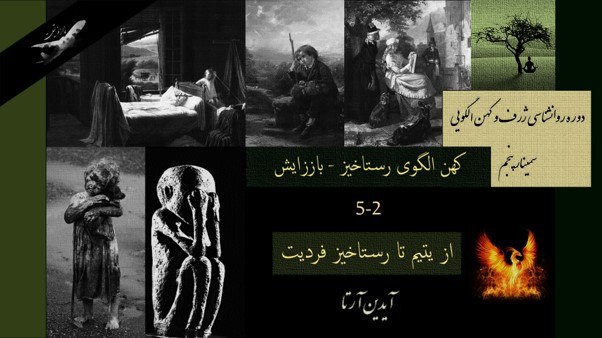
A Look at Part Two of Seminar Five
From the Orphan to the Resurrection of Individuation
Hannah Saatchi
What we learn from the orphan archetype and carry with us on our journey of individuation is deeply valuable and necessary.
How does the orphan archetype prepare us for our journey? In what capacities do the powers of the orphan archetype lie? And how does the orphan bring about the resurrection of our unique individuation?
The tale of the Stone Child, told at the beginning of this seminar, recounts the story of an orphaned child whose only inheritance from his lost parents is a worthless stone that appears trivial and insignificant in the eyes of others.
The stone symbolises the Self and our unique individuation, which at first may appear insignificant and unimportant.
The Stone Child, whose only refuge is this piece of stone, warms it with the warmth of his heart and, despite the mockery of others, never casts it away.
One day, utterly exhausted and heartbroken, he holds the stone in his arms and weeps. His tears flow over it; warmed by the child and his tears, the stone breaks open, and from its cracks a maiden is born who enters into a bond of life with the orphaned child and becomes one with him.
The story beautifully shows how remaining connected to our individuation can bring about the rebirth of our spirit. The orphan’s suffering unites him with himself.
Remaining with the sufferings and pains of the orphan who lives within us reveals the orphan’s hidden powers.
The orphan possesses a still form of strength that is sometimes more powerful than the active strength of the warrior, and even more difficult to acquire, because moments arise in life when refraining from action is many times harder than acting.
Through the orphan we learn endurance, patience, compassion, love, and movement toward our individuation; by overcoming the pain and suffering of the orphan we experience reliance upon the Self and discover the capacity to realise our personal possibilities.
Above all, the orphan experiences loneliness in its entirety. Loneliness is not an absence one can fight, although human beings often try artificially to fill their loneliness. This is why they carry their loneliness and orphanhood into relationships, hoping someone will accept the orphan and put an end to its loneliness and defencelessness. This unrealised need connects the inner orphan of many people—not their individuated Self—to different organisations and ideologies, as though the orphan might find a home and the inner void might be filled by something the collective gives them.
The painful loneliness of those who carry their orphan everywhere in search of a caregiver does not mean that other people are absent from their lives. It means that a meaningful relationship with the Self is absent. If we can establish a meaningful relationship with ourselves, loneliness can become a doorway to individuation. If we cannot find a way to build that relationship with the Self, the orphan becomes only a gateway to the hell of shadow archetypes.
Becoming conscious of what we seek refuge in to endure the pain of becoming an orphan is therefore extremely important, because that choice may remain our refuge from orphan suffering for the rest of our lives. If we take refuge in learning, reading, art, and creativity, we may have chosen the harder path, but we make our journey more traversable. Taking refuge in medication, parties, and entertainment cannot give meaning to our loneliness.
Although the orphan experiences loneliness fully and deeply, that loneliness will forever remain a point of connection with others. Until we become lonely, we will not be capable of truly connecting with others or discovering compassion and empathy within ourselves.
From the orphan we also learn how to be present in the world, because through separation from the self the orphan encounters what it means to be present in the world. The person absorbed in ego and superficial persona cannot experience genuine presence. Only through separation from persona and ego do we see others and the world as fully present in our own world and find a genuine presence within it.
Orphanhood is the blackness of alchemy and is of great value because without it one cannot enter the later stages of alchemy or draw the gold from the copper of one’s being. The fall into orphanhood is a burning which, if undergone in the manner of the phoenix, allows our unique individuation to rise from it in resurrection.
With thanks.
Comments
Loading…
Leave a comment