
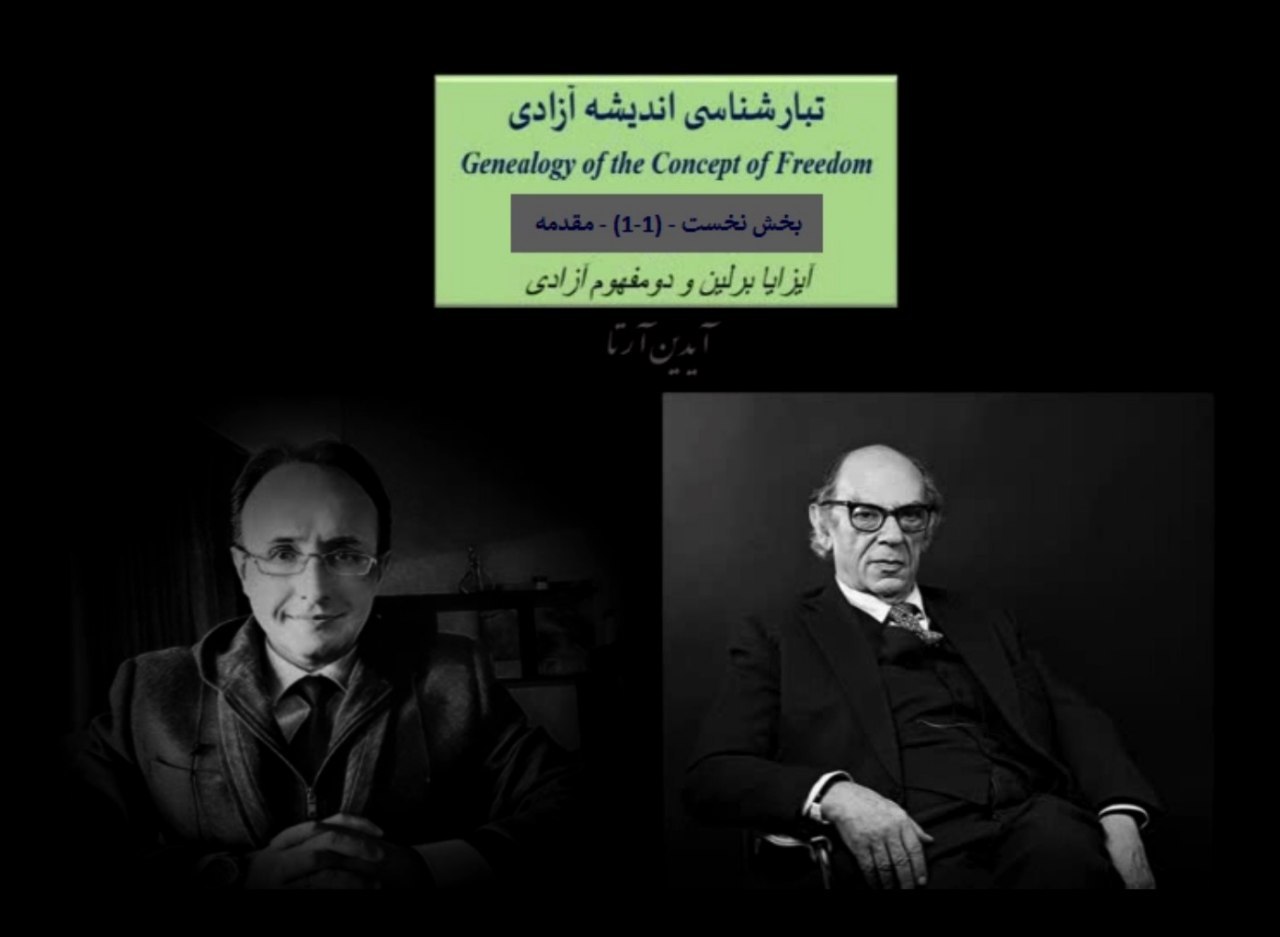
A Genealogy of the Idea of Freedom (audio with slides) — Part One: Introduction
Freedom is such a fundamental concept that it is difficult to find a thinker who has passed it by without reflection. For thousands of years it has been sought, struggled for, and yet has remained elusive. Perhaps no word or concept in history has been praised, desired and fought for as much as freedom; perhaps for no other word has so much blood been shed, and yet it has remained so distant. How many poems have been written in its name; how many epics recorded in its name; how many crimes committed in its name; and how many tyrannies established under its banner.
Even today, Rousseau's statement written nearly 250 years ago, in the midst of the European Enlightenment and at the opening of his historical masterpiece The Social Contract—“Man is born free, but everywhere he is in chains”—still appears true and contemporary to modern human beings.
Hegel believed that human history is nothing but the progress of human consciousness of the idea of freedom. The human desire for freedom is the historical spirit of our struggle, and the importance of freedom to those who fight for it may be sensed in this statement attributed to Gandhi: “I know no price for freedom, because freedom is the spirit of life. What price would we not be willing to pay in order to live?” Within such a belief, “a human being's being free is as self-evident as a human being's being human,” and for those who struggle for it, attaining freedom, like the right to life itself, has a price as precious as life.
Yet the disputed question throughout history has been: what is freedom? Although freedom is so basic and fundamental a concept that few philosophers or philosophical schools have failed to interpret it, disagreements over its definition are so profound that what one group defines as freedom may be regarded by another as the very definition of slavery. Isaiah Berlin's observation that more than two hundred definitions of freedom have been offered therefore seems entirely plausible.
In this series, which I have called “A Genealogy of the Idea of Freedom,” I aim to examine the historical development of thinking about freedom in the West over the past three hundred years. Freedom is treated here as a multidimensional concept, and the series attempts to examine these different dimensions rather than political freedom alone.
The project is still being completed, and its ultimate aim is to bring together the research undertaken into a work bearing the same title.
The slide presentations I have prepared also contain short video clips, including excerpts from films, documentaries and interviews with contemporary philosophers.
Because of the difficulties associated with internet speed in Iran, I have divided the files into segments of ten to fifteen minutes so that they can be downloaded and used more easily.
The present audio file, which lasts twelve minutes, introduces the route that the entire series will follow; it considers the definition of “genealogy” as Nietzsche and Foucault understand it, as the method I use in this series; and finally it looks at freedom as a multidimensional concept.
Future instalments of this series will gradually be offered to dear friends.
With thanks,
Aydin Areta
September 2018
Comments
Loading…
Leave a comment