
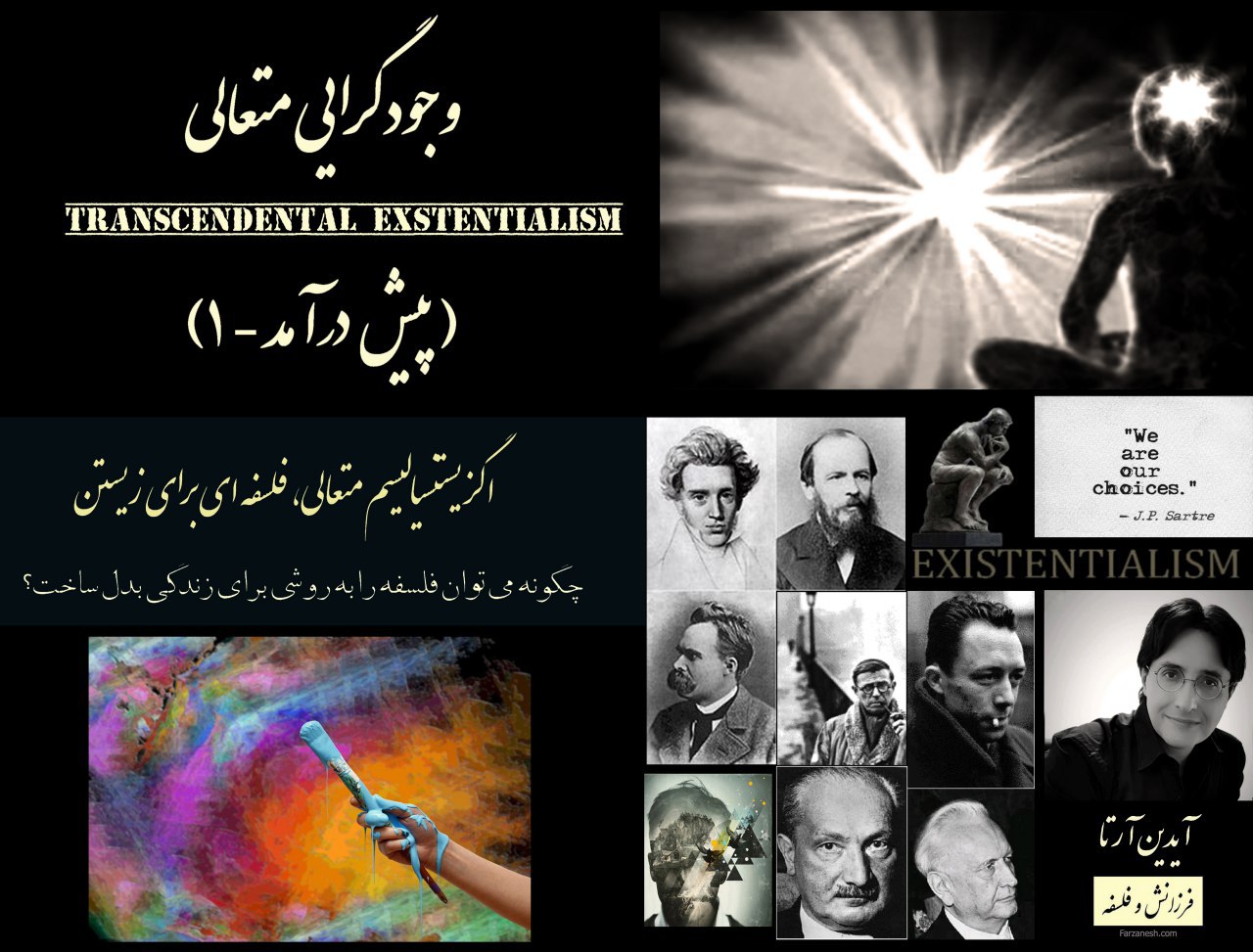
Transcendental Existentialism
Prelude (1) — How Can Philosophy Become a Way of Living Better?
Is it possible to connect philosophy to life in practice and to live it? Is it possible to find, within elaborate, verbose and difficult philosophical systems, a path towards living better? This is a question that has occupied my mind for years, from the very beginning of my encounter with philosophy. I knew, and still know, many people for whom philosophy is something like chemistry or biology: a body of knowledge to be mastered; something “out there” of which one can become an expert and critic; something that can be added to the collection of possessions belonging to “me.” Is there another way—a path on which we do not conquer truth, but allow truth to conquer our lives; a path we can travel and along which we might become better human beings?
All of us have allowed a way of living to govern our lives. Whether we are conscious of it or not, this way of living is our personal philosophy of life. We all therefore have a philosophy, but to be a philosopher is to think consciously about the way of living we have chosen.
If you are listening to this talk now, there is a possibility that you are familiar with the work and writing I began producing and publishing six months ago, and that you know the general space and direction of my thought and philosophy. You may, for example, have noticed that the principal themes of this philosophy are drawn, on one side, from major themes in existentialist philosophy:
— the precedence of existence over essence
Existence Precedes Essence
— individuality/individuation as an achievement
Individuation (becoming an individual) is an achievement
— freedom and responsibility
Freedom and Responsibility
— temporality and death
Death as the ultimate possibility
— suffering and anxiety
Suffering and Existential Angst
— living one's own truth
Authenticity
— action taking precedence over belief
Action is more important than thought
— the central place of ethics
Paramount place of morality in Existentialism
On the other side stand Platonic transcendence or Platonic idealism, the importance of consciousness, and a particular attention to the psychoanalytic tradition, archetypes and the psychological foundations of myth—especially in the tradition of depth psychology associated with Jung.
During this period I have written separately about each of these subjects or prepared audio and video works like this one, all of which can be found on the website, the YouTube channel and in the library of my Telegram channel.
You may also have noticed that I believe these ideas can be brought together within an ancient philosophical tradition that has strong roots in our own land of Iran. Across history this philosophy has been called, among other things, Perennial Philosophy and Primordial Tradition. I have chosen the Persian expression “perennial wisdom” for this philosophical tradition. If you look at the series of videos I have produced under the title A Genealogy of Perennial Wisdom, you can become familiar with my inquiries into its history, genealogy and historiography.
I also invite you to look at the three-part series A Genealogy of Perennial Wisdom, The Liberating Power of Platonic Philosophy, A Genealogy of the Idea of Freedom, Conversations on Perennial Wisdom, and the five-part series concerning Jungian psychology on my YouTube channel.
For several months I had been thinking about how I might gather the central headings of this philosophy—the main lines of which I had considered in earlier work and writing—into a more coherent series in which its fundamental principles could be discussed more precisely. For this purpose I chose a more familiar and modern name for this philosophical tradition, one that would allow me to examine its constituent elements in a language more contemporary and more closely connected to the mind and life of people today.
The name I have chosen for this philosophical tradition—or for perennial wisdom—is Transcendental Existentialism. It is a compound term that brings together two philosophical traditions: 1) existentialism, and 2) transcendentalism. The form of transcendentalism I have in mind is oriented both towards Platonic philosophy and towards the better-known transcendentalist school associated with Ralph Waldo Emerson.
The present video is a prelude introducing the foundations of this philosophy: Transcendental Existentialism / perennial wisdom.
Aydin Areta
Comments
Loading…
Leave a comment