
Three Great Book Burnings in Iranian History and Their Historical Effects on Iranian Heritage and Culture
How can one think about the immense body of knowledge lost in the three great book burnings of Iranian history without being overwhelmed by regret and sorrow?
The First Book Burning
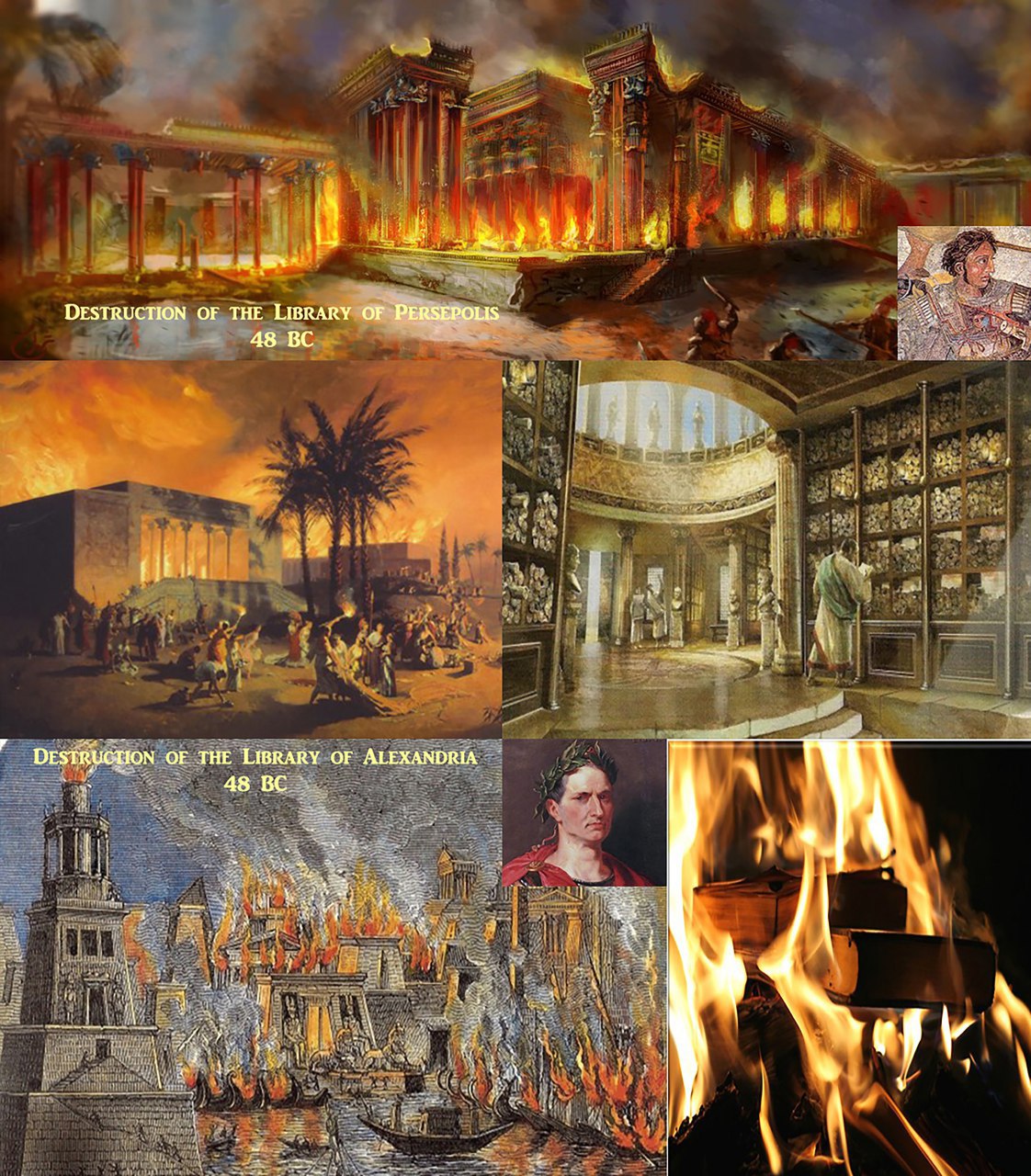
In the first catastrophe of book burning, according to the Denkard, written in Middle Persian Pahlavi, Alexander burned all the nasks and books of the Magi except those concerning medicine and astronomy, translated what remained into Greek, and transferred them to the Library of Alexandria.
The Bundahishn, which survives in Pahlavi and is devoted to explaining the metaphysical outlook of the Zoroastrian tradition, likewise refers to this great book burning by Alexander.
The Arda Viraf Namag, written in Pahlavi in the third century CE, refers to Alexander’s destruction of all the manuscripts kept in the royal library, as well as the Avesta and the Zand, all of which had been written in gold ink on cowhide.
In the tenth century CE, Abu Rayhan al-Biruni again recorded this event in his writings on the history of nations, together with his grief at the loss of such a valuable treasury.
Whenever I encounter the word “Great” beside Alexander’s name, I think: if history had been reversed, and an Iranian king in the third century BCE had destroyed all the surviving books from Thales to Plato and transferred only a selection of them to Pasargadae, by what name would the Western world remember that conqueror?
Comments
Loading…
Leave a comment