
The Second Book Burning
Existing historical accounts suggest that even after the first burning, the selection Alexander transferred to Alexandria remained a valuable treasury.
Hermippus, the Greek philosopher from Smyrna in the third century BCE, had, according to Pliny—the celebrated Roman historian of the first century CE—conducted a very detailed study of Zoroastrian texts. Pliny states that these amounted to more than two million lines, or the equivalent of 800 rolls, consisting of writings attributed to the Magi as well as to Zarathustra himself, preserved in a separate section of the Library of Alexandria. Hermippus believed that Greek philosophy and thought had their roots in the knowledge and rites of the Magi.
Pliny also mentions one of Hermippus’s pupils, Callimachus, who compiled an exact list of all these books and placed it in the Library of Alexandria. Both that catalogue and Hermippus’s book are now among the lost works of history, destroyed with the Library of Alexandria.
Diogenes Laertius, writing in the third century CE in Lives of the Eminent Philosophers, states in relation to Hermippus that he also composed a multi-volume work entitled Peri Magon, On the Magi. This book too is today one of history’s lost works.
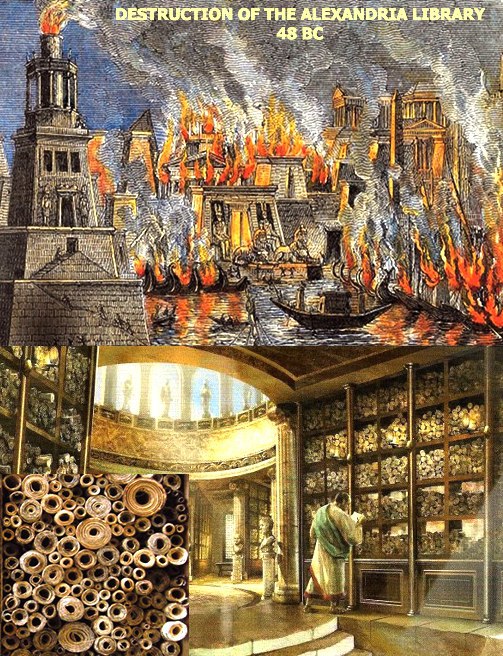
Finally, the great catastrophe of the burning of the Library of Alexandria by Julius Caesar in 48 BCE destroyed the remaining texts that had survived from Iran before Alexander’s invasion.
In 2004, a Polish-Egyptian team of archaeologists announced that they had succeeded in discovering remains of the legendary Library of Alexandria. It was news that Iranians should have considered important to follow, yet one could scarcely find even a passing reference to it among the news reports, because few people were aware even of the historical relationship between this library and the historical heritage of the Iranian lands.
Comments
Loading…
Leave a comment