
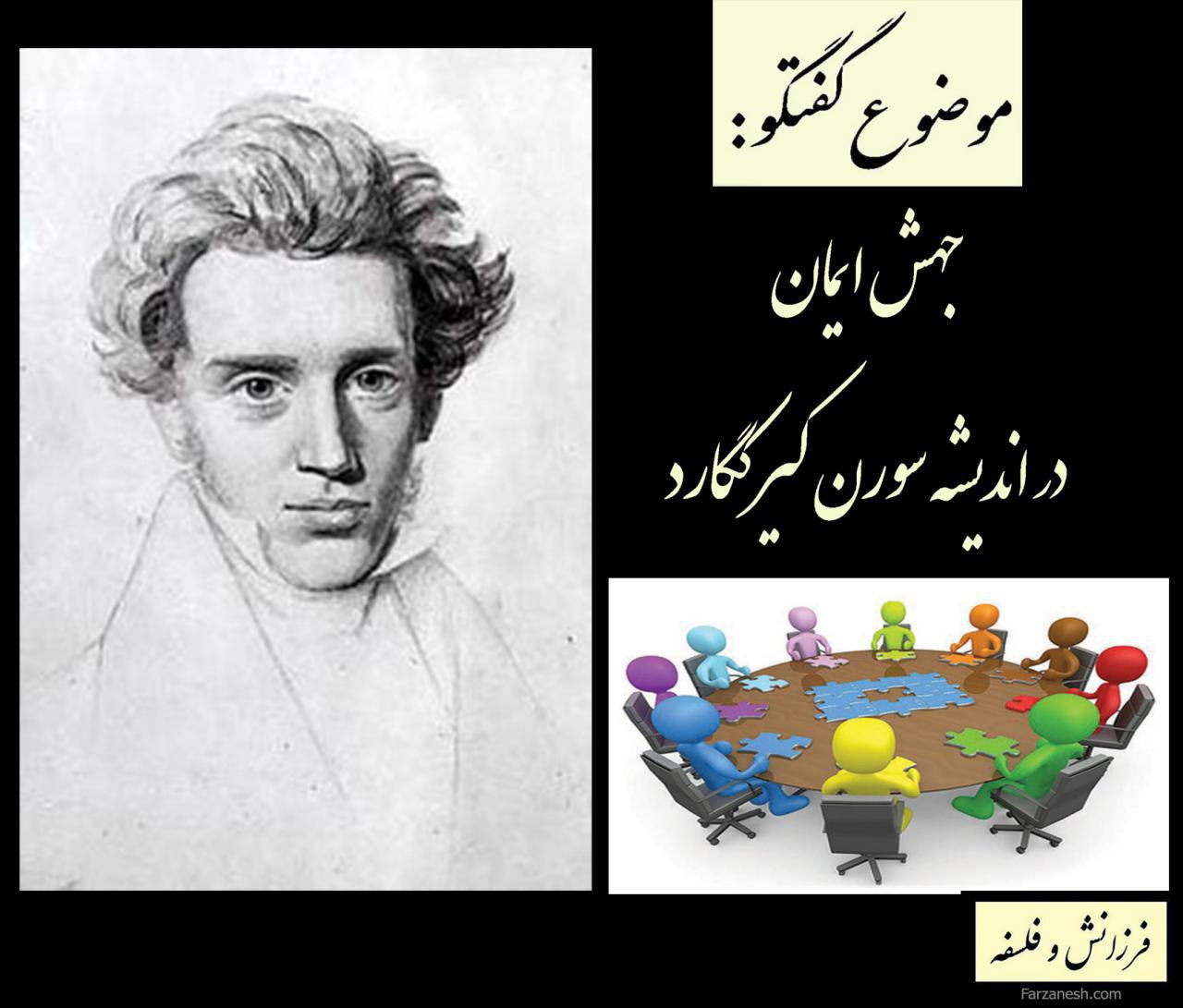
The Leap of Faith as a Way of Living in Søren Kierkegaard's Philosophy
This week's discussion concerns the idea of the “Leap” in Kierkegaard's philosophy as a way of living. Kierkegaard also calls this leap the Qualitative Leap, and it later became widely known as the Leap of faith.
Søren Kierkegaard is a philosopher whose writing has a power, directness and intensity of feeling comparable to what one experiences when reading Nietzsche. It is therefore unsurprising that, given the deep humanism visible in the thought of both, the two philosophers are regarded as nineteenth-century forebears of modern existentialism.
Despite a difference as fundamental as Kierkegaard's theism and Nietzsche's atheism, neither philosopher hesitated to stand against public opinion, speak his convictions plainly, or defend human individuality passionately against the collective. Neither solitude, poverty nor the pressure of public opinion prevented them from expressing what they believed, and until the end of their lives both continued forcefully to live their philosophies.
Kierkegaard was a fierce defender of recognising “individual inner experience” — Subjective Truth — as a truth to be lived alongside “external objective experience” — Objective Truth — as a truth to be known.
During his lifetime Kierkegaard simultaneously opened three fronts of attack in his society:
1) an attack on the Christian Church, condemning it for destroying human individuality and religious faith;
2) an attack on journals and newspapers for attempting to make public opinion uniform and erode individual thought and the importance of thinking;
3) an attack on Hegel's philosophy, the dominant and virtually unrivalled force in the nineteenth-century European philosophical tradition, for removing the individual human being from philosophy and reducing humanity to human history.
Kierkegaard paid a heavy price for fighting on all three fronts. During his lifetime his critics and enemies included powerful figures in the Christian Church, proprietors of newspapers and public journals, and philosophers of his time. He naturally became a kind of public enemy, yet he never ceased passionately defending individual human beings whose individuality, as he saw it, was being crushed beneath the hammer of Church, mass media and the Hegelian philosophical system.
In his private papers dated 14 May 1847, Kierkegaard wrote this wish:
“My wish is that on my grave you write only: ‘The Individual.’”
In his philosophy Kierkegaard believed there were three ways of living:
1) Aesthetic mode of life
(living for pleasure, enjoyment of life and the love of beauty)
2) Ethical mode of life
(living in order to remain committed to and realise a moral belief and purpose)
3) Religious mode of life - leap of faith
(the leap of faith: throwing oneself into unknown darkness in order to live passionately what one has faith in, even when it conflicts with public beliefs and the forces governing one's life)
In the attached audio file, I have rewritten this idea in a simple literary form and used examples to make it more accessible.
The discussion is presented in three acts.
Act One:
The first part concerns the first level of life, the Aesthetic mode of life, which encompasses the dominant way human beings approach life.
It is a way of living in which the aim of everything we do is simply to find pleasure in the activity and thereby feel good.
In this mode of life, Pleasure is the principal motivation and aim (a form of psychological hedonism).
A person who lives in this way is constantly searching for variety and novelty and trying to keep life's suffering at a distance. But can such a person find meaning, enduring happiness and pleasure without suffering, and sustain them in life?
Can a life founded solely on enjoyment encompass and realise the full feeling and capacity of being human?
Act Two:
The second mode is living for moral duty: the Ethical Mode of life. At this stage we live in order to fulfil duties we have taken upon ourselves.
A person entering this stage can rise above life's pleasures and disregard them in order to realise a goal regarded as important. Yet that goal is still carried as a duty placed upon the person by family, tribe, society, religion or public opinion.
Comments
Loading…
Leave a comment