
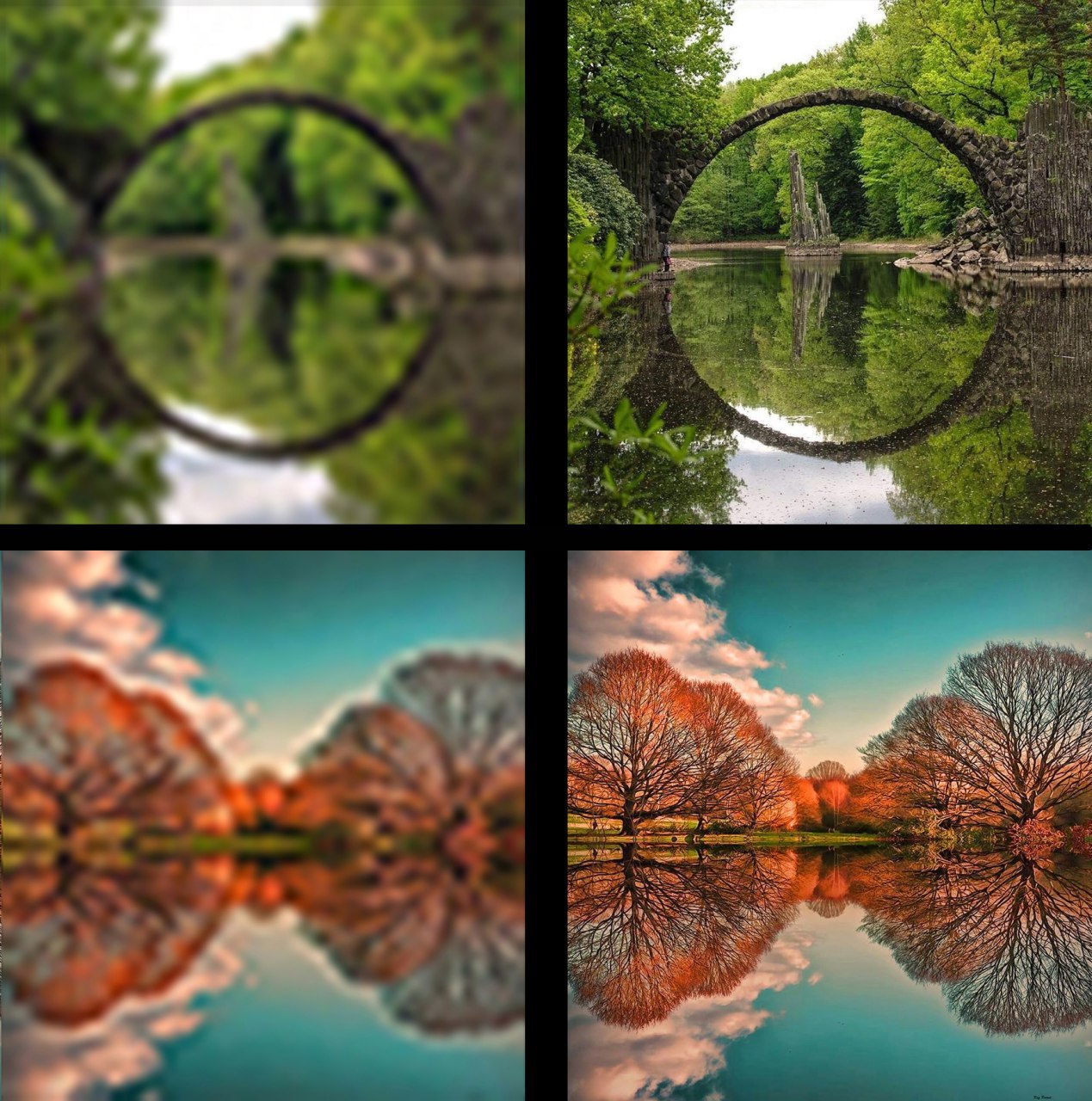
Let Us See the World with Greater Clarity (1)
The young woman sat opposite me with tears in her eyes. She was only nineteen. Two years earlier she had left school and, at seventeen, had left home to begin a new life with a young man she had only recently met.
The outcome of that adolescent love and adventure was daily violence, severe physical and psychological injury, and a serious dependence on methamphetamine and cannabis. Six months earlier, after the young man had finally been arrested for selling drugs and sent to prison, she had managed to escape and return home. She had begun working alongside her mother and father in the family’s small shop, but nightmares still kept her from sleeping and she was afraid to go out alone. She had managed to stop using methamphetamine, but continued to use cannabis heavily every day.
She had come in the hope that antidepressants and sleeping tablets might make the unbearable suffering of living in the world a little more tolerable. Perhaps, at least, she might break fewer things in the house during her daily episodes of uncontrollable anger. Old scars on her arms told the story of all the times she had cut herself over those years. Yet in her bold, intelligent eyes, now filled with tears, one could still see the remnants of a light that seemed close to disappearing.
Lost, anxious, full of anger and resentment, she sat before me asking for help to escape a hell that had become unbearable. She told me that several years earlier, before leaving home, at her mother’s insistence she had spoken with the family doctor and also with a psychologist. But they knew nothing, she said. They understood nothing about love and had no understanding of her; they merely gave her a collection of empty words. In the end, she did not return for later sessions. When she finally left school and her family at seventeen, she had been certain she was doing the right thing.
She asked me very directly whether I had ever lived in hell and whether I understood what she was saying. A direct question of that kind expects an honest answer, and honest answers are not always short or easy. I told her that I, too, had once entered my own hell in my younger years and had asked myself: how did I get here? The road into the hell of life is travelled step by step—so it is better to pay attention to our steps.
Did I understand what she was saying? It was an important question. It could create trust between us or destroy it. It could open a new path or close another door. She had asked the question deliberately, trying to force me into a clichéd affirmative answer—to make me say that I understood, so that her angry and wounded unconscious mind, which had thrown the question at me, could then tell her: “Look at this world in which everyone so openly lies and speaks nonsense.” Deep in her heart she was certain that nobody understood her, and at that moment I was thinking of only one thing: to answer honestly and accurately.
I asked permission to find an image in order to answer her question. There was a welcome curiosity in her assent that I wanted to keep alive, but at the same time I could feel the weight of her distrustful gaze as I searched Google Images for a picture like the one above. Eventually I found two versions of the same image at different resolutions: two images of a flower, one at only 50 dpi and the other at 300 dpi. I asked her which one was a true image of the flower. She answered: both. One simply has lower resolution.
I continued: the main question was not how much I understood her. The question was how certain she was of the resolution of her own image of life. Was it possible that all the images of life she had seen until now had been at 50 dpi? Could there be other images of life at a higher resolution?
After some hesitation, her answer to both questions was yes. I asked her to remember herself at eight years old. She remembered that even then, at eight, she had an image of the world that her child’s mind believed to be a “true image” of the world. And in truth, although that image had been real, its resolution had been far lower—perhaps only 20 dpi. She agreed that the resolution of the image she now had of the world was much greater than it had been even a few years earlier. She could now think more seriously about the question: what is the resolution of the way I see the world today?
Comments
Loading…
Leave a comment