
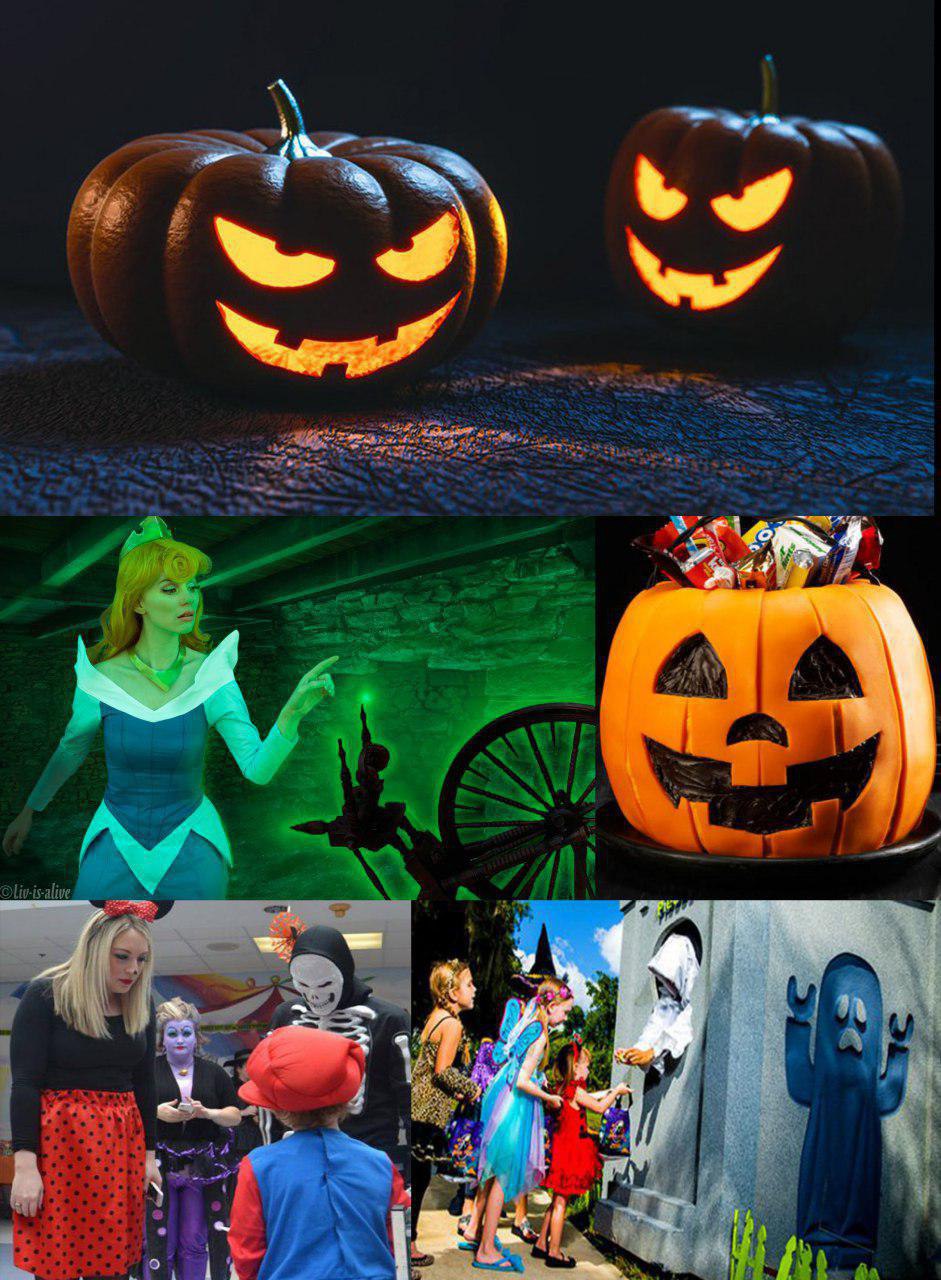
Halloween, Our Children and the Monsters Hidden in the Dark — Part One
Tonight in Australia, as in many other places, many children and families will celebrate Halloween: a strange and frightening festival that most children enjoy and towards which many religious Christian families hold a strongly negative view.
I am not concerned here with the origins of the celebration, with its broader philosophy or meaning, or with why committed Christian families strongly oppose it. I want only to consider its psychology in the small world of children, and what led me not merely to develop a positive view of it but to celebrate it enthusiastically alongside my young son.
Children instinctively fear darkness, and they also fear the monsters they imagine are hidden within it. What do you say when your child tells you that the dark terrifies them? Or that they are afraid of monsters in the darkness? You might say that darkness is nothing to fear and is not dangerous. You might say there are no monsters in the dark. Do you really believe that?
Jordan Peterson, the Canadian psychologist whose thought and work I greatly appreciate, might respond to such an answer by asking, with surprise and criticism: “Is that precisely why you have no fear of allowing your child to walk alone in the dark to the end of the street and back?”
The truth is that darkness is not equivalent to light, and darkness is frightening. Darkness is filled with the unknown, and the unknown may contain anything frightening. Fear of the unknown is not alien to us. Even as adults, many of us would refuse to enter a basement in complete darkness or an abandoned shed at the far end of a garden.
Why are we afraid of darkness? The truth is that, somewhere in our hearts, we still believe in monsters hidden in the dark. In adulthood we may change the monster from a frightening imaginary creature into a thief or dangerous murderer concealed in the night, or perhaps a wild animal hidden in darkness, but the roots of our fear remain far more ancient and powerful than we imagine.
Perhaps, then, it is better not to lie to our children. We should not tell them that darkness is not frightening or that there are no monsters in it. A lie that even we do not believe in the depths of our own hearts will not make a child more courageous. It may instead create an enduring sense of humiliation and guilt: the feeling of being small or defective because one fears something that adults insist is not frightening; the sense that “not only am I cowardly, I am unable even to overcome my fear”—an allegedly irrational fear of something adults say does not exist at all.
As with many other difficult situations, the answer is not simple. It requires honesty, time and a response a child can understand. A better answer might be something like this:
“Darkness is frightening. You are not the only person who is afraid of the dark and of being alone in it, or who fills empty darkness with monsters created by the mind. We all do this. But together we have the strength and courage to overcome this fear and step into the darkness. We even have the power to become the hero of our own story and overcome the monsters.”
Comments
Loading…
Leave a comment