
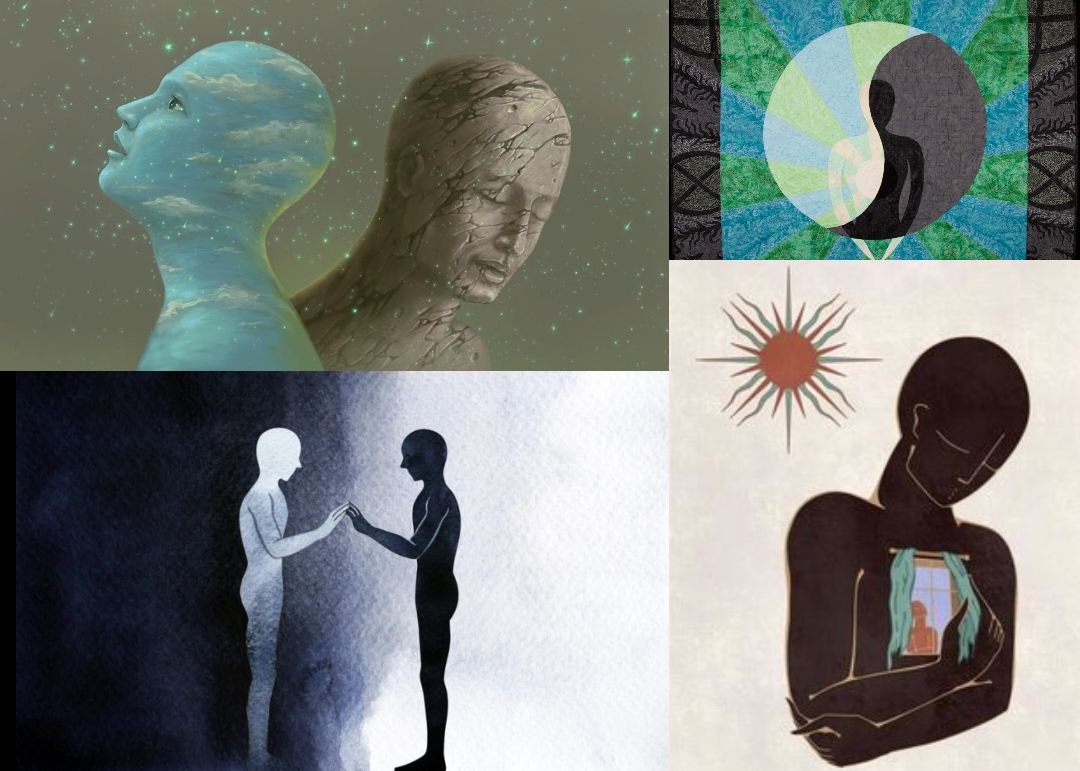
Do we imagine the boundary between darkness and light somewhere outside ourselves?
Jung believed that all of us can understand, to some degree, that there are bad aspects within us. Yet an unmediated, naked confrontation with the depth of the darkness of the unconscious shadow is a crushing experience for any human being—one for which not everyone will find the courage or be able to bear the fear.
The point is not merely that each of us has weaknesses. The point is that there are aspects within every one of us far darker than we can even imagine.
If there is something demonic in the world, that demon is not an alien being: we human beings have built it cell by cell.
Jung believed that this inner darkness—which we try to deny and seek outside ourselves—is precisely where self-knowledge must begin, because the darkness hidden in the unconscious guides a large proportion of our behaviour throughout life without our being conscious of the source of that behaviour. If we do not bring the shadow into consciousness, it will exact a heavy price from us and from others.
However sound the criteria by which we judge, insofar as we see the world in black and white and the person who opposes us as demonic, and insofar as we imagine the demon to exist somewhere outside our own being, we will never understand that the same demon also moves within ourselves.
The idea of the devil as an external being, something not within us, is reassuring. To imagine that there is an “other” who is evil and does evil things means that we are not that other. This dualism also frees us from responsibility.
Many of us regard others as responsible for the calamities of society. Yet as long as we place responsibility only upon others, we will fail to understand that those others flow in our own veins and are distributed throughout society. If this were not so, these problems could never persist with such power within society.
There is within each of us a shadow darker than we have the courage to accept, one that falls across the light that is our inner truth. Until we bring that shadow into consciousness, we will not reach the illumination within ourselves either.
This does not mean that the human spirit is dark. It means only that a part of the path toward the inner light passes through darkness, and must be travelled with acceptance, patience, courage, and honesty—like a tree sending its roots into the depths of darkness in order to rise toward the light of the sky. Illumination is the final gift of passing through this darkness.
Aydin Areta
Comments
Loading…
Leave a comment