
Alchemy and the Process of Individuation
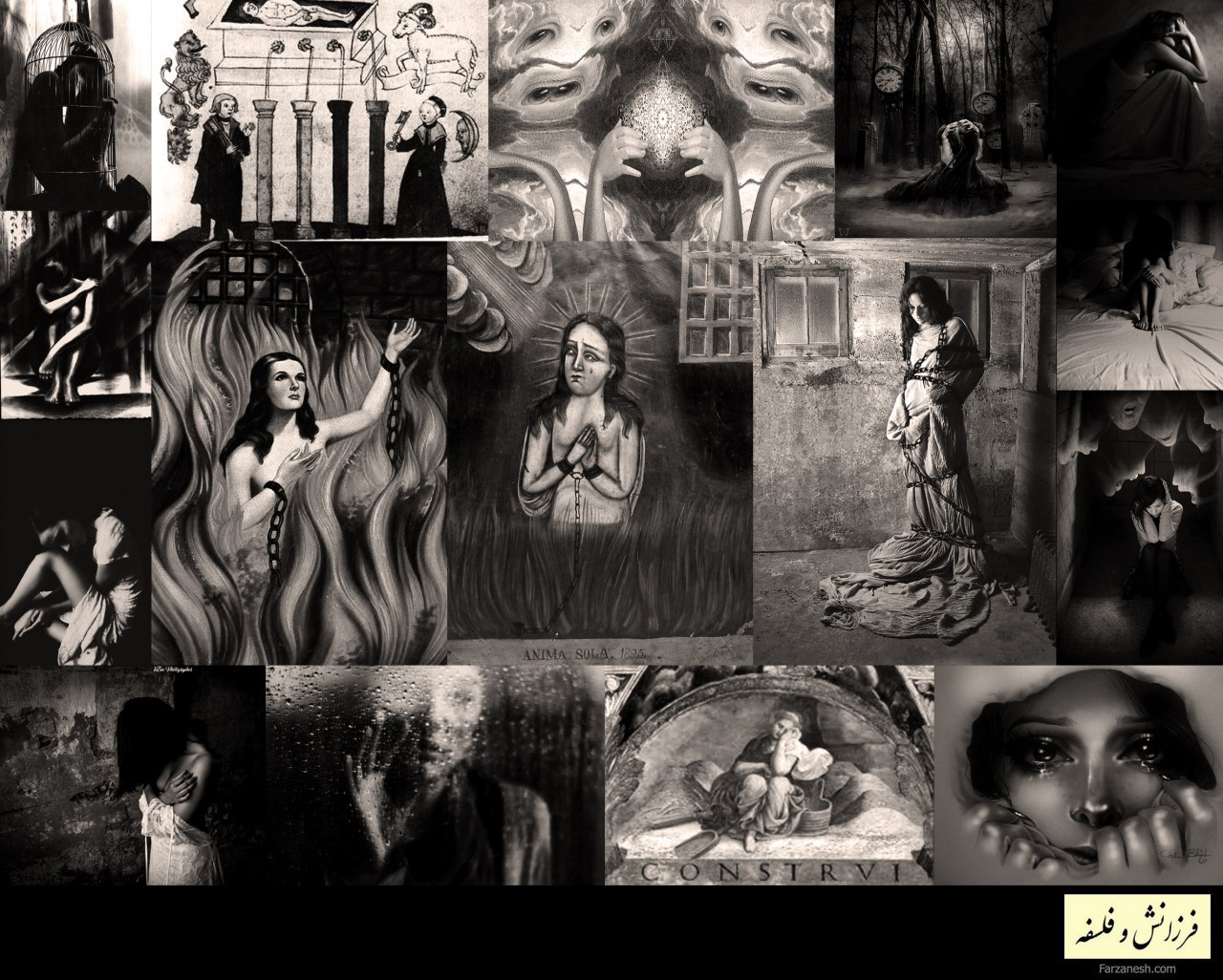
Part One: Anima Solo — the Anima Alone in Chains
For centuries, alchemy was regarded as a powerful and mysterious body of knowledge concerned, on one side, with the world of matter and, on the other, with an esoteric and inward tradition.
On the surface, the aim of alchemy can be understood as purifying and releasing the superior substance—gold—imprisoned within impure matter. This was the initial modern understanding of the ancient tradition.
For centuries, a large group of alchemists believed that in order to liberate the superior element, the alchemist must first obtain the philosopher’s stone, the lapis philosophorum, because only this stone can transform base metals such as mercury and silver into gold.
Carl Jung, one of the two great founders of modern psychoanalysis, and after him a number of his followers such as James Hillman, attempted to reach a deeper psychological understanding of the alchemical process. With the passage of time and the growing interest in understanding the symbolic structure of alchemical traditions over the past quarter-century, this effort has entered a new phase. From Paulo Coelho’s The Alchemist to Harry Potter and the Philosopher’s Stone, attention to alchemical symbolism has entered not only the world of depth psychology but also fantasy and meaning-oriented literature.
In simple terms, alchemy is the transformation of the copper of one’s being into gold; more precisely, it is the liberation of the higher self, the Self within every human being that can be rediscovered and released. Alchemy is the process of attaining individual personality and completing the process of “becoming one person”—individuation.
The power of alchemy lies in its use of metaphor and the archetypes of the unconscious. Alchemy understands well that, for example, lead in the human mind is not merely a metal; it displays qualities that acquire psychological meaning in the human mind.
To think of lead is not merely to think of a metal; it simultaneously conveys an image of limitation, heaviness and slowness. Alchemical symbols and images communicate in a remarkable way with the unconscious part of our mind, speaking to it in meanings deeper than what appears on the surface. Alchemy can therefore be understood above all as a mystical and psychological tradition that uses the material world as only a surface layer through which to reach the archetypal structure of the mind.
The philosophical description of alchemy in Western civilisation can be traced from Empedocles and Anaxagoras to Aristotle, but for centuries the West attributed the beginning of alchemy to Zoroaster. Pliny, although he writes that Zoroaster was known throughout the world as the bringer of magic, also names another Iranian Magus, Ostanes, as the person who first founded alchemy and first introduced the Greeks to alchemy, magic and the rites of the Magi. He also presents Ostanes as linking natural knowledge with astronomy.
Augustine of Hippo, the fifth-century philosopher and bishop, in The City of God quotes the Roman scholar and writer Marcus Terentius Varro, who lived in the first century BCE, as holding that alchemy in ancient Rome and the Pythagorean traditions were derived from the rites of the Iranian Magi.
In my view, the perspective of depth psychology on alchemy can reveal valuable dimensions of the mysteries concealed within the perennial philosophy and disclose them in a new language. For this reason, I intend gradually to examine some of the symbols and processes of alchemy on this page in the language of depth psychology and Transcendental Existentialism.
An important point at the outset is that in alchemy there is no fixed way to begin the process, because the course of alchemy and the attainment of the philosopher’s stone depend entirely on our starting point. The only thing that is always certain and shared is that the alchemical process begins with prima materia, an unformed and indeterminate material regarded as the state closest to chaos and also called massa confusa.
It is interesting that this first matter is generally grey. Ignorance in alchemy is grey, not black. In fact, blackness in alchemy is an achievement—just as, in order to reach profound depression, one must first overcome a stage of primary ignorance.
Comments
Loading…
Leave a comment