
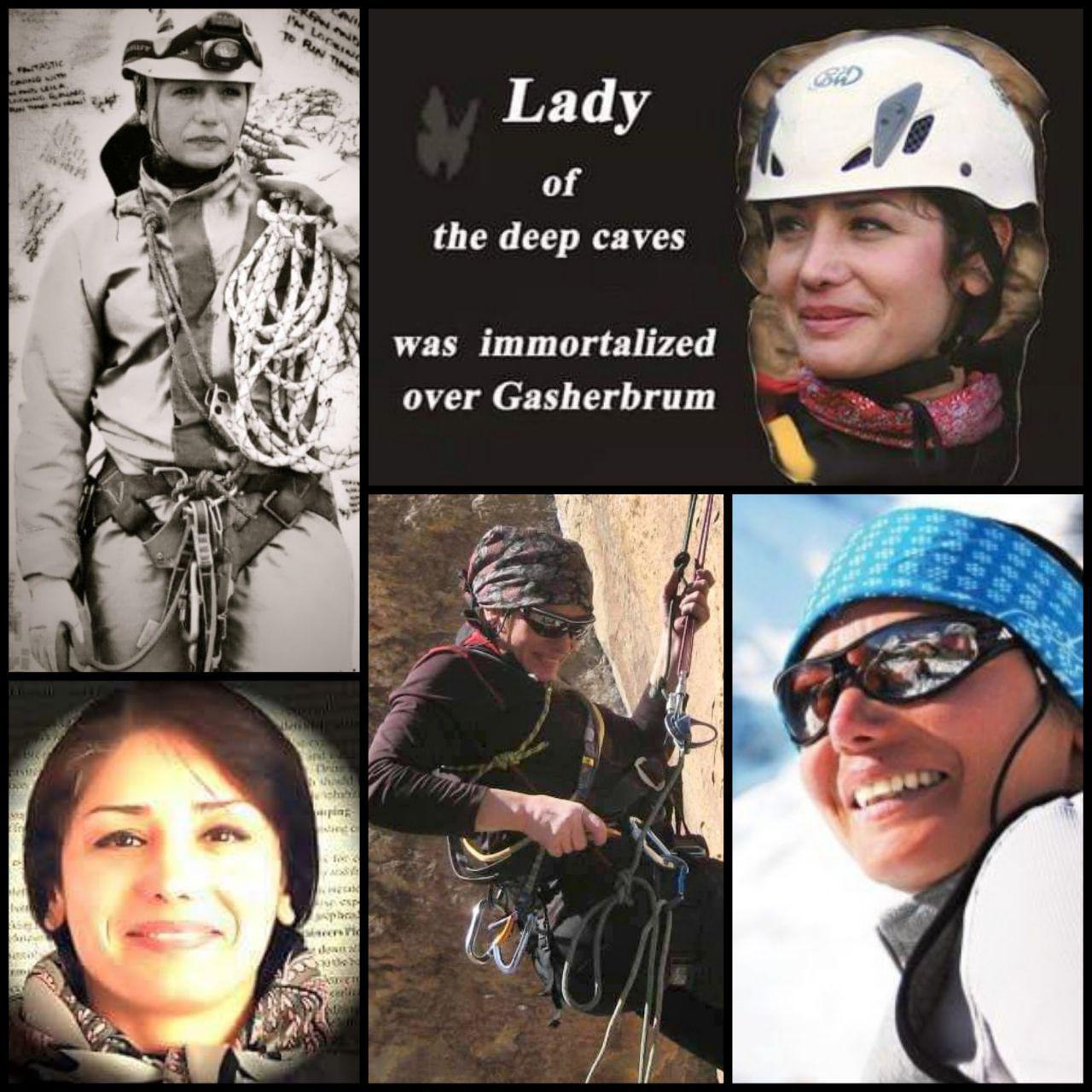
A Poem for Leila Esfandiari
A Magnificent Embodiment of the Warrior Archetype and the Proud Women of My Homeland
The echo of that question,
the resonance of the ridgeline:
This is I, Gasherbrum,
rise and sing again the song of Nanga Parbat.
Pride, upon the summit of resolve,
gave that white embrace an eternal kiss.
Who will sing with me above the clouds?
The carabiner knows the song of liberation, Leila!
To live upon the summit,
to disappear into the mist—
this is your reward for height.
Aydin Areta
Eight years ago around these days, Leila Esfandiari was preparing for her final ascent of K4, or Gasherbrum II, which at 8,036 metres is the thirteenth-highest mountain in the world. About seven weeks before the climb, she began her final preparations. I do not know why, after eight years, I have been thinking of Leila Esfandiari without interruption these past few days. Perhaps because there are only seven weeks until the anniversary of her flight on 22 July; or perhaps because her image has become so closely bound in my mind to the warrior archetype that, while I have been working these days on a text and video about this theme, it has been difficult to remove from my mind her image, her determination and the splendour of her warrior spirit—a splendour for which flight at such a height was the reward. I wrote this poem for Leila that same year. In my eyes, she embodies the splendour of the warrior archetype in the proud women of my homeland.
Note:
Gasherbrum II: recognised as the thirteenth-highest mountain above sea level on Earth, located in the Gilgit region of Baltistan in Pakistan, near the Chinese border. Gasherbrum II is the third-highest mountain of the Gasherbrum massif in the Karakoram range. This is the summit that Leila Esfandiari climbed before losing her life on the descent; in accordance with her wishes, she rests forever in its embrace.
Nanga Parbat: from Hindi, meaning “Naked Mountain,” is a mountain in the Himalayas in Pakistan. At 8,126 metres above sea level, it is the ninth-highest mountain on Earth. It is among the most difficult mountains to climb and, because of the many mountaineers who have died during attempts on it, is known as the “Killer Mountain.” Nanga Parbat, with more than sixty deaths, currently has one of the highest fatality rates relative to successful ascents among the eight-thousanders, after Annapurna. It is the mountain that Leila Esfandiari became the first Iranian woman to summit.
Comments
Loading…
Leave a comment