
The Problems of Literalism in Interpreting Story and Myth
After I published yesterday's text, “The Leap of Faith in Kierkegaard's Philosophy,” several friends rightly questioned the relationship between faith, violence and acting without reflection in light of Kierkegaard's emphasis on the story of Abraham and Ishmael/Isaac. If you have not yet had an opportunity to read the original piece, reading it will probably help you connect more clearly with the further explanation below.
When we turn to interpreting the meaning of myths and stories, in practice we have two principal approaches:
1) Our approach can be Literalism. We take what appears at the level of the story's characters as the object of interpretation. In the story Kierkegaard discusses—the story of Abraham and Ishmael—the manifest elements are Abraham the prophet, his son Ishmael, and the act of sacrifice. All are treated as external and Objective. Interpreting the story through these elements and their motives is a literalist interpretation.
2) In the second approach we can look at myths and stories differently, through a Psychoanalytical method grounded in analytical psychology. In this perspective none of the elements of story and myth exists outside our Psyche; all are internal forces.
Abraham is an embodiment of the Self, Ishmael a symbol of the highest Desire of life, and Sacrifice a symbol of relinquishing this greatest desire.
In a psychoanalytic approach, the narrative moves from “Abraham decided to kill his son Ishmael at God's command” to another level, where interpretation is no longer focused on the characters as external persons but on internal forces and hidden layers of meaning.
In this approach I see in Abraham my own Self; in Isaac/Ishmael, what he represents—the highest and most beloved desire and pleasure of life. Yet the “sacrifice of the child,” in my view, is not an image of faith because it represents religious obedience. Indeed, this act of child-killing is the story's most important point precisely because in its own nature it is not merely non-religious but deeply unethical and indefensible in religious, traditional and social-moral terms. It is placed at the heart of the story in order to put before us a deeper image of faith: an image in which, for the sake of something whose truth and truthfulness we cannot inwardly doubt, we cast ourselves into an unknown that entails killing, with our own hands, the most precious possessions and highest pleasures and desires of life; crossing the boundaries accepted by tradition, public morality and society; and turning away from the duties those accepted forms demand of us.
The image of faith Kierkegaard presents here is not equivalent to obedience and submission. It stands in a striking tension with them. In this psychoanalytic reading, faith may be understood as simultaneously relinquishing the greatest pleasures and desires of life and what society and others regard as indisputably accepted, and leaping into a dark unknown with trust in a greater force capable of returning what is lost at the end of this irrational leap. We accept that there is no guarantee as to how this will happen, yet despite the difficulty of the leap we entrust ourselves to a benevolent and encompassing power greater than ourselves.
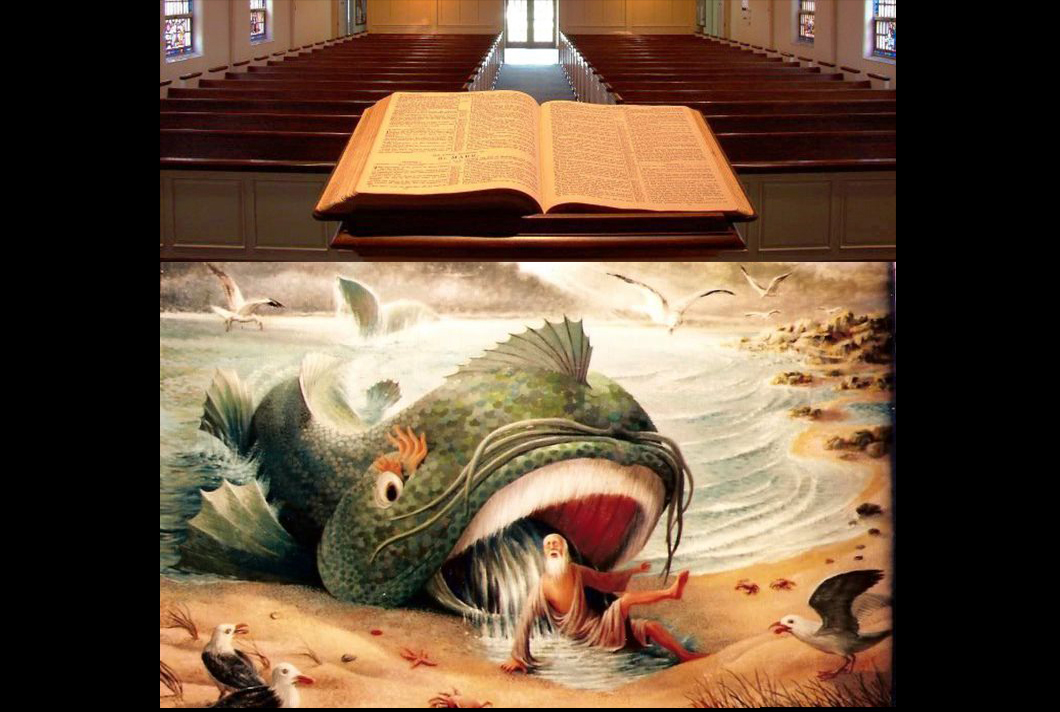
Literalism—surface and formal meaning—is one of the major problems in the interpretation of myth and story. Sometimes moving beyond the literal level is easier, as in the story of “Jonah being swallowed by the fish,” because its elements do not accord easily with everyday logic and only a few readers would take living in a fish for three days and nights as the central point of the story.
In such stories it is easier to move from Literalism to psychological interpretation. In stories such as Abraham and Isaac/Ishmael, however, where the event is imaginable as something that could literally occur and carries profound emotional weight, leaving Literalism is more difficult. Yet, in my view, it is precisely in such stories that avoiding the trap of Literalism and superficial formal interpretation becomes even more important.
The Harms of Literalism in the Interpretation of Myth
A critique of the literalist approach to myth — the reading of mythological narratives as literal historical or scientific accounts — and an argument for the symbolic, depth-psychological interpretation of mythic imagery.
Aydin Areta / آیدین آرتا7 min read
Receive new work
Occasional updates when new work is published.
Comments
Loading…
Leave a comment