
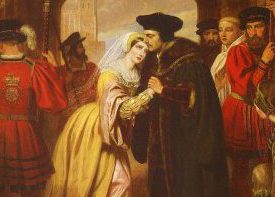
Thomas More stands at one of the great turning points of Western history — the moment when the medieval synthesis of faith and political authority began to fracture, and when the individual conscience first emerged as a power capable of challenging the state. His execution in 1535, ordered by Henry VIII for his refusal to acknowledge the king's supremacy over the Church, was not merely a political event. It was a philosophical and spiritual watershed.
More was, in many ways, a man of his time: a Renaissance humanist, a friend of Erasmus, a brilliant lawyer and statesman who rose to become Lord Chancellor of England. But he was also, in a deeper sense, a man out of time — someone who held to a vision of the world in which the claims of conscience and faith were not merely private matters but public realities that could and must resist political power when that power overstepped its bounds.
What makes More's story so compelling for our own time is precisely this: he understood that there are things more important than survival, more important than political success, more important than the approval of the powerful. His famous last words — "I die the King's good servant, but God's first" — express a hierarchy of loyalties that the modern world has largely forgotten how to articulate.
In calling him "the last man of faith," I do not mean that faith died with him. I mean that he represents the last moment in Western history when faith, in its full public and political dimensions, could stand as an equal and opposing force to secular power. After More, the privatization of faith — its retreat from the public square — became the dominant pattern of Western modernity.
Comments
Loading…
Leave a comment