
Let Us Not Be Cyclopes!
Do you remember the last time you were a one-eyed monster?
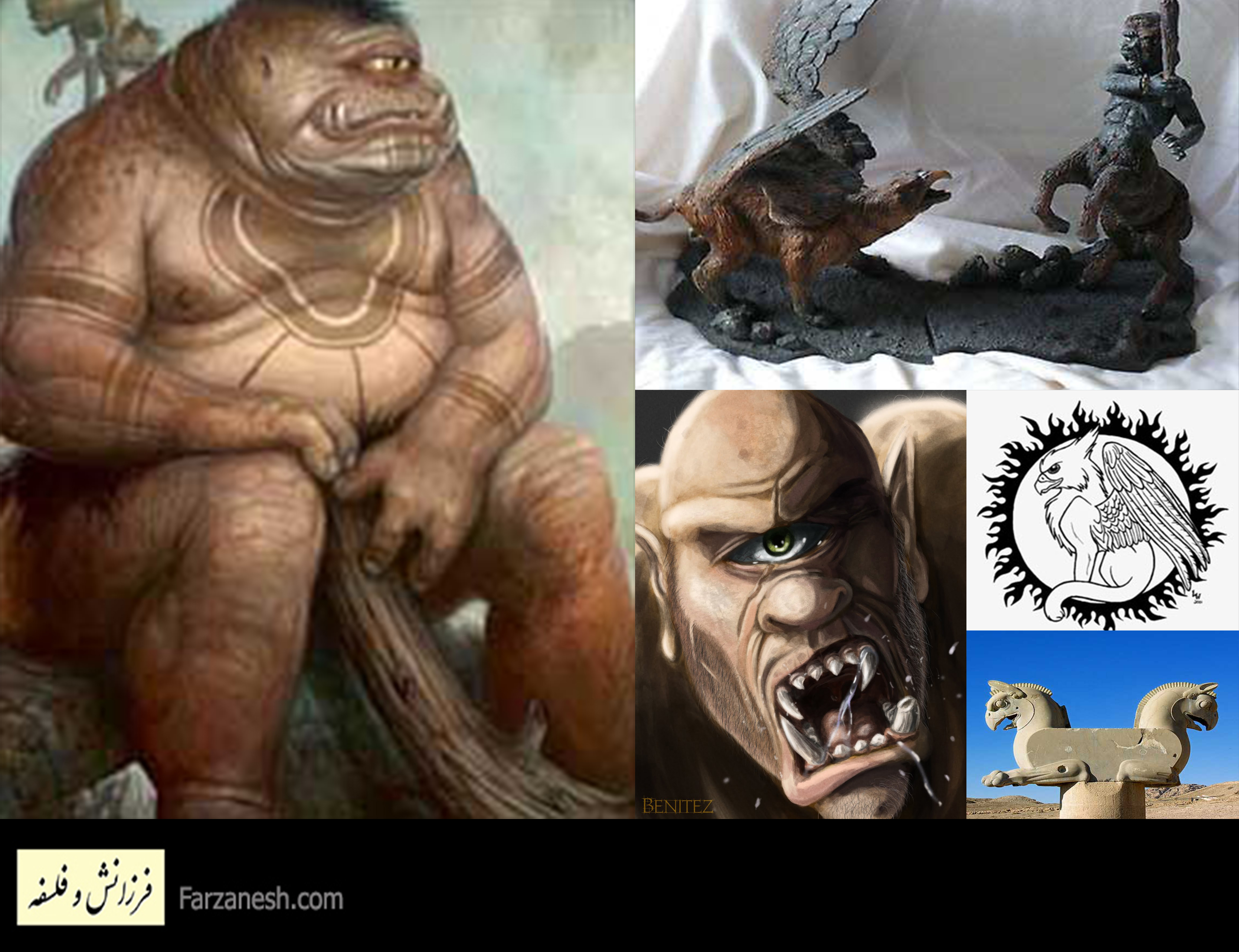
The Cyclops is a one-eyed monster in Greek mythology, but one-eyed monsters also appear in the legends of many peoples and even in religious beliefs throughout the world.
The image of the one-eyed giant is a universal image rooted in the collective unconscious of people across different cultures. Its narrative presence can be found from northern Europe to Africa and from Japan to Brazil; in Jungian analytical psychology, it can therefore be understood as an archetype. Archetypes are not merely narrative images and symbols. They point to a deeply rooted characteristic in the structure of the human psyche that can be studied.
If the Cyclops is an archetype and a symbol of a psychological and mental characteristic present in each of us, what does its one-eyedness mean?
What can we learn about ourselves from the story of the Cyclopes’ origins and their way of life?
In Greek mythology, as narrated by Hesiod, the ancient Greek poet who lived around the eighth century BCE, in his famous Theogony, the genealogy and story of the Cyclopes are marked by the following characteristics. I will first identify these important features and, after each section, try as far as I can to decipher the hidden meaning of this myth:
1) The Cyclopes are one-eyed monsters.
— What does the one-eyedness of the Cyclopes mean? In fact, it can be understood as seeing in one dimension and possessing a closed consciousness. Having only one eye open onto the world signifies a limited understanding and a one-sided, inflexible mind. We know that the eye is a symbol of consciousness, attention and awareness; to have only one eye is to understand only one thing and to fail to see anything beyond it. With one eye, the field of vision narrows, and one thing becomes not merely the focus of attention but the centre of the mind.
Remember the last time you had a heated argument with your partner. At such moments, anger can turn us into a Cyclops, because while arguing we are not seeking to understand the truth or to make things better; we are seeking only to prove that we are right. Anger narrows our angle of vision, and in the moment of anger the only thing we want is to win. When we are angry, something awakens within us that feels it is right and that what it understands and knows is all that is true.
How many times have you argued with Cyclopes? Beneath any article or Twitter post where dozens of people write their opinions, you can see the awakened Cyclopes in people.
Throughout mythological stories, Cyclopes are depicted as half-conscious, unintelligent and minimally attentive to their surroundings, angry and cruel, and lacking feeling, subtlety and complexity of thought.
If we think a little more deeply about this idea, we arrive at an important understanding that may free us from being Cyclopes forever.
The problem with Cyclopes is not that they cannot see, or that what they see does not exist. Their problem is that, because they see nothing beyond what is before their single eye, they possess an extremely limited understanding of truth. This is precisely what ideologies do to human beings.
Many ideologies contain some truth and focus on an important issue. But because, by definition, they present what they understand as the definition and final solution of the whole truth, they turn their followers into one-eyed giants: creatures with an extremely restricted field of vision and enormous anger, capable of a monstrous violence like the cruelty of the Cyclops. It is interesting that in religious traditions—Christianity and Judaism as well as Islam—the Antichrist and the Dajjal are depicted as one-eyed. With the understanding we have developed so far of the archetype of the one-eyed giant, the meaning of this image and the warning concealed within it are not difficult to grasp.
2) The Cyclopes are far older than the gods and are born of the first generation of Titans: Uranus, god of the sky, and Gaia, goddess of the earth. (In Homer’s Odyssey we encounter another Cyclops, Polyphemus, who is the son of Poseidon, god of the sea, and the sea nymph Thoosa.)
What can we learn about the Cyclopes from the story of their birth?
We can ask why the growth of the seed of heaven in the womb of earth, or the growth of the seed of the god of the seas in a sea nymph, could result in the birth of such a demonic creature. The point is that in both stories a very great truth is poured into a small vessel. In these myths, not all the children of heaven and earth, and not all the children of gods and human beings, become Cyclopes. Indeed, many gods and heroes are born from such unions. Yet the emergence of a Cyclops remains an entirely possible outcome. This story is not only understandable; it is deeply familiar to people across cultures.
We can see this in the way a heavenly idea descending upon an earthly prophet can give birth to Cyclopes such as the believing torturers of the medieval Church or ISIS, and in the way the entry of any great philosophy into small minds can generate dangerous and insane ideologies, of which history offers no shortage of examples.
3) Cyclopes are cannibals. They live in the darkness of caves and, in Hesiod’s account, after they are born to the god of earth and the god of sky, Cronus—the god of time, the firstborn of sky and earth and father of Zeus—imprisons them in a dungeon in Tartarus. In these stories, Cyclopes always close the mouth of their cave with a great stone so that no light can enter.
The cannibalism of the Cyclops, in light of what has already been said, seems understandable and entirely consonant with the being of this one-eyed monster. The Cyclops is one of the most ancient Titans, fallen from the greatness of a Titan into a destructive creature of limited intelligence. The Cyclops has killed its own divinity and reduced the vast consciousness of being a god to the narrow vision of a one-eyed monster.
The cannibalism of the Cyclopes is not merely a sign of the monster’s violence. It is a symbol of how Cyclopes can destroy human beings and how nakedly their hostility and violence against human beings resemble the cannibalism of one-eyed giants. Fascist Cyclopes, communist Cyclopes, atheist Cyclopes, religious Cyclopes, liberal Cyclopes... If you look carefully, you will see them everywhere, and you will see the bloody trail of their cannibalism across human history.
To realise the Cyclops within yourself fully, it is enough to feel that you know so much that your one eye is sufficient for seeing the truth, and to become angry enough that you can find within yourself a justification for destroying other human beings.
In Homer’s story, Polyphemus, a Cyclops, has an unrequited love for Galatea, the beautiful goddess of the sea, without understanding not only that she does not love him but that the two of them belong to different worlds: he to the caverns of the earth, Galatea to the sea. In the madness of this love, the Cyclops kills the young Acis, son of the god of the forest and a river nymph, and Galatea’s beloved. This tragedy once again points to an important feature of the Cyclops within us: this one-eyed giant, who neither sees nor understands anything beyond what his single eye perceives, can commit crimes in the name of anything—even love—because one of the constant characteristics of being a Cyclops is always believing oneself to be right and seeing nothing beyond oneself.
The Cyclopes’ life in darkness signifies their aversion to light, because seeing and vision are not, in principle, desirable to one-eyed giants. Cronus’s sending of the Cyclopes to Tartarus, into the deepest darkness, expresses the truth that if we become Cyclopes, the hand of time will ultimately carry us into the darkest darkness. This is not punishment but the destiny of a being that prefers darkness to light and limited consciousness to the expansion of its vision.
How can we fight this Cyclops? If you know that you cannot easily banish the Cyclops to Tartarus, then before it can bring the golden age of your relationships to an end and forge the weapons for the rest of life’s endless wars, end the argument, go to your room, and allow yourself to be alone.
At such a moment, the Cyclops within you wants with all its being to continue the argument, and it is not easy to exile yourself to your room. But make an agreement with your spouse or friend that after half an hour of reflection you will return and tell them what you yourself may have done wrong, or where they may have been right. You can ask them to do the same. During that half hour, think honestly: what is the Cyclops within me failing to see?
Call upon the Homa within you, so that with its courage and light it can open the doors of a treasure better than the Cyclops’s cave. If you honestly ask yourself where you may be wrong, or genuinely wish to discover where your spouse may be right, you can be certain that a voice within will tell you the truth—something you may already have known but did not want to accept. Who does not always want to be right? Not being right is difficult. It is difficult to accept and admit that there is something about which you may previously have been wrong.
This is a difficult road, but we have only two paths in life: either to remain what we are, or to become something better than what we are. If we choose the second road, then the person we are today is no longer our true Self; the person we can become is our true Self. To be reborn as the person we can become, we must always have the courage to die to the person we are today.
A dear friend wrote to me a definition of hell a few days ago that I would like to share with you:
“Hell is the day, at the end of life, when the person we could have become meets the person we are.” Perhaps heaven, too, is the day at the end of life when the Self—the Homa within us in whom we have been resurrected—meets the one-eyed giant we overcame through courage and insight on our hero’s journey.
Aydin Areta
Let Us Not Be Cyclops
A depth-psychological reflection on the Cyclops as an archetype of one-eyed, one-dimensional thinking — the refusal to see the full complexity of reality — and its dangers in personal and collective life.
Aydin Areta / آیدین آرتا17 min read
Receive new work
Occasional updates when new work is published.
Comments
Loading…
Leave a comment