
A Look at the Life and Philosophical Legacy of Henry Corbin
A Traveller of Iranian Thought and Wisdom
Aydin Areta
“The philosopher’s ideal is the transformation and change of the self, expressing a spiritual rebirth. The initiatory journey of a mystic-philosopher is an advance toward ‘light.’”
(Henry Corbin)
“For me, Iran is not merely a nation or an ancient empire. Iran is a spiritual world at the heart of the history of thought and religions.”
(Henry Corbin)
Many human lives have been transformed by the study of a single book. This happened to the young Henry Corbin when Louis Massignon, the great French scholar of mysticism and author of The Passion of al-Hallaj, gave him Suhrawardi’s Hikmat al-Ishraq and asked him to read it.
Reading that book—which Corbin later translated into French—profoundly affected the young scholar and awakened in him such an unusual passion that he decided to travel east, not only to read the other works of the Shaykh al-Ishraq but also to become acquainted with the culture that had been the source of such wisdom and had made such thought possible.
Before beginning the journey that became the spiritual path of his entire life, Corbin had already had the opportunity to learn Western philosophy from figures such as Étienne Gilson, described here as perhaps the greatest modern authority on medieval European philosophy in the past two centuries. He also obtained his doctorate in philosophy from the Sorbonne in Paris, where he later held a professorial chair.
During his philosophical studies Corbin had become deeply attracted to the phenomenology of Edmund Husserl and continued to describe himself as a phenomenologist until the end of his life. He was the first to translate works by Karl Barth from German into French. By translating three important works attributed in the source to Martin Heidegger—Being and Time, “The Phenomenology of Death,” and What Is Metaphysics?—he also introduced the German philosopher to French readers.
In translating Heidegger’s works, Corbin consulted Heidegger himself at every stage over the rendering of key terms, making his French translations distinctive and valuable. The source further states that Jean-Paul Sartre encountered Being and Time through Corbin’s translation and, inspired by Heidegger’s masterpiece but also in criticism of it, wrote Being and Nothingness, which became a turning point in existentialist philosophy. Henry Corbin remained interested in Heidegger’s philosophy until the end of his life, although after his encounter with the philosophy and wisdom of the Iranian lands he said that he had moved beyond the boundaries of Heidegger’s philosophy.
Daryush Shayegan wrote a valuable book about Corbin’s life and ideas, which I have used in reviewing the chronology of Corbin’s life for this brief account. Shayegan, who was a close friend of Corbin for years, quotes him as saying, in relation to Heidegger, that he learned from him that “philosophy means ta'vil,” or hermeneutic interpretation. This phenomenological understanding of philosophy in Corbin arose from the inspiration he found in Heidegger.
The difference, however, was that if Heidegger ended his philosophy with the human condition of “being-toward-death,” Corbin believed that through Mulla Sadra he had reached the idea that “the human being is an existence beyond death,” and that the interpretation of what a human being is must pass beyond the boundaries of “being-toward-death.”
Perhaps centuries will pass before someone from the West, possessing Corbin’s depth of philosophical insight and breadth of knowledge, again decides to choose Iran as a second homeland and devote themselves to the wisdom of this land. Henry Corbin was also a linguist who knew French, German, Arabic, and Persian, as well as Sanskrit and Pahlavi. If he was an Orientalist, he simultaneously felt a deep affinity with the German philosophical tradition; if he became a scholar of Islam, before that he had acquired deep knowledge of Christianity and the Zoroastrian tradition and, through his familiarity with Sanskrit, of Buddhism.
He travelled an unusual road from the West to becoming a seeker of perennial wisdom. What he learned of medieval philosophy from Étienne Gilson; his knowledge of Christian Protestantism and mythology; the understanding Massignon gave him of Oriental studies and Eastern mysticism; his studies of Plotinus and the Neoplatonists, Hermeticism, and the Upanishads; and his familiarity with the phenomenology of Husserl, Swedenborg, Barth, Cassirer, Heidegger, the German philosophical tradition, and finally his discovery of Suhrawardi—all came together in a distinctive synthesis of the subtlety of French thought, the depth of German philosophy, and the mysterious world of Iranian wisdom and mysticism.
A Look at the Life and Philosophical Legacy of Henry Corbin — Continued (2)
Corbin believed that Iran and Germany were not merely two lands on the surface of the earth but the latitude and longitude of a spiritual thought in an imaginal world for which no trace can be found on earthly geographical maps. He believed that his journey from Paris to Freiburg and from Istanbul to Tehran and Isfahan had not been a journey through geographical cities; these cities were symbolic stations on an initiatory path through another world, which he travelled as a spiritual journey.
He was never a rationalist, and perhaps this was one reason for his interest in Karl Barth. With his friends he published a journal called “Here and Now,” and in the introduction to its first issue, inspired by the Irish idealist philosopher George Berkeley, they wrote: “It is time to declare that human reason is not the reason for our existence. It is not ‘I think, therefore I am’; the truth is: I am thought, therefore I am.”
Corbin heard the cry of the Simurgh of Shaykh al-Ishraq: a cry which, in Suhrawardi’s promise, has its nest in the East but is not absent from the West; a cry that will finally awaken those who have slept for a thousand years. Following this enduring call, and in search of the wisdom of Illumination and the thought of Suhrawardi—whom he called the Imam of the Persian Platonists—Corbin came east. He went to Istanbul to recover rare and unpublished manuscripts of the Shaykh al-Ishraq preserved in the city’s museums and spent six years studying them amid the years of the World War. At the end of this period of research he published Suhrawardi’s collected works and, on returning to France, succeeded Louis Massignon’s chair at the Sorbonne—the mystic-philosopher who had first opened for him the gates of the East and Iranian thought by introducing him to Suhrawardi’s Hikmat al-Ishraq.
During these years, and for more than a quarter of a century, Corbin was also a member of a study circle of some of the most remarkable minds of his age, Eranos, which met annually in Switzerland. Among its well-known participants were Carl Gustav Jung, Mircea Eliade, Heinrich Zimmer, Erich Neumann, Alfonso Rosenberg, Karl Kerényi, Adolf Portmann, and Joseph Campbell. Their studies focused on mythology, psychology, religion, and symbolism. Corbin had an especially close friendship with Jung, beginning with an interpretation Corbin wrote of Jung’s Answer to Job. Whenever Corbin travelled to Switzerland, the source says, his meetings with Jung at Jung’s famous home sometimes lasted for hours.
In Iran too, and along the path through which his understanding of perennial wisdom developed, Corbin established relationships with a wide range of prominent Iranologists, philosophers, and scholars of Islam: Ebrahim Pourdavoud, Badi' al-Zaman Forouzanfar, Seyyed Hossein Nasr, Seyyed Jalal al-Din Ashtiani, Mahdi Elahi Qomshei, and Allameh Mohammad Hossein Tabataba'i, among others, with whom he maintained sustained scholarly cooperation for years.
The insight he gained through this path, the view of Iran that formed within him, and the deep understanding of this land that he developed will feel familiar to anyone who has fallen in love with the heritage of its wisdom. He believed that Iran was a land where earth and heaven meet, and that manifestations of Iranian art, from architecture to Persian miniature painting, express this suspension between earth and heaven: a suspension in an intermediate world between thought and feeling, reason and intuition. In his book on Henry Corbin and his ideas, Shayegan sets out several axes of Corbin’s understanding of Iran:
1. Iran is an intermediate and mediating land, looking in two directions toward West and East. Within the Eastern world it is also a centre where ideas arising from the Far East and Mesopotamia meet and interact. This gives Iranian thought a distinctive position and an understanding that transcends territory.
2. Iran is the world of imagination. Within this suspended world between heaven and earth, and reason and intuition, the imaginal realm and the world of Platonic Forms find a real bridge to this world through capacities latent in Iranian thought and philosophy.
3. Iran is a world between two times. Throughout history it has been a land of waiting, a world in which our worldly time is transformed into an intermediate realm awaiting the promised resurrection and humanity’s final salvation.
A Look at the Life and Philosophical Legacy of Henry Corbin — Continued (3)
Henry Corbin’s understanding of Iran’s historical role in the development of human consciousness and thought was distinctive. It is regrettable that even today, years later, some of his works have still not been translated into Persian. Many Iranians remain unaware of the major role he played in opening the gates of Iranian wisdom to the Western world; perhaps his name is known to them only as the name of a street in central Tehran. Yet I have no doubt that one day he will be recognized anew in Iran’s future. Future generations of Iranians will rediscover him and understand how, through his writings, one can enter the world of Iranian thought—a world whose pleasure of passage, in the source’s formulation, only Platonists can fully understand. Corbin believed that Suhrawardi took him by the hand and led him into a different world of spirituality and wisdom. Undoubtedly, he too can become a guide for thirsty souls around the world toward the mediating world of Iranian thought.
The fact that a student of philosophy trained in the Western tradition at Corbin’s level, after becoming acquainted with the sphere of Iranian thought, could come to believe that all Western philosophy from Descartes to the present was, in comparison with the depth of the wisdom of thinkers of the Iranian lands—from Mazdayasnian thought through the mystical literature of Iran—little more than a preliminary effort to discover the horizons of human existence: does this not awaken a question in us about the unrecognized value of the history of Iranian thought?
The truth is that we greatly need figures such as Corbin in order to rediscover our culture and precious intellectual inheritance. Many of our pre-Islamic historical works were destroyed in successive invasions, while post-Islamic works were written either in Arabic or in a highly difficult Persian. Those who reread Iranian philosophy have often emerged from religious seminaries, and their intratextual readings continue in the same difficult language, now taking on a seminary form. On the other hand, because of this group’s estrangement from the language of Western philosophy, even these traditional seminary-trained scholars often cannot move beyond the closed boundaries of the language within which they are confined.
In the poverty created by the absence of a coherent and contemporary school capable of presenting the authentic foundations of Iranian thought in the present language of world philosophy, young people interested in philosophy find Western philosophy more attractive, easier, clearer, more coherent, possessed of a more explicit history, and equipped with more tangible foundations for the construction of culture and civilization. It is therefore unsurprising that the heritage of Iranian thought and wisdom, and its capacity to generate a dynamic culture and civilization oriented toward the future, should remain neglected.
The history of our past hundred years has been the history of our rising from the heavy sleep of history. But to stand on our own feet we need thinkers who can connect the precious heritage of Iranian thought and wisdom with a global language, and make visible the brilliance of this thought and the distinctive qualities of Iranian wisdom. The path travelled by Corbin is a path seldom taken, but the effect of what he did remains an inspiration to everyone who grasps the essence of his message and looks toward the light to which he points.
Henry Corbin: Pilgrim of Iranian Wisdom
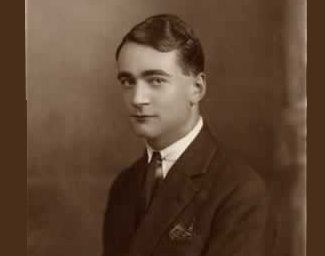
A portrait of the French philosopher Henry Corbin and his lifelong dedication to recovering and transmitting the living tradition of Iranian philosophical mysticism to the Western world.
Aydin Areta / آیدین آرتا9 min read
Receive new work
Occasional updates when new work is published.
Comments
Loading…
Leave a comment