
The secret of our resilience and continuity through history lies in the vast forces hidden within our culture, forces that remain unknown and not yet understood even by us, and it falls to us to discover and cultivate them. For thousands of years, our national traditions as Iranians have played a key role in our historical life. Periods of invasion and occupation have separated us from one another for years at a time and pushed our historical rituals into the back rooms of the cultural memory of Iranian civilisation. Yet whenever we have had the opportunity, we have gathered again and remembered our Iranian identity. We have rediscovered the cultural elements, myths, and historical ideas—in a word, the unifying national identity—wrapped within these traditions, and through them we have kept the dream of Iran alive. At Nowruz and Mehregan, when all Iranian peoples, even beyond the borders that today surround the Iranian lands, celebrate their Iranian identity, we suddenly remember that Iran is more than a country enclosed by geographical borders: it is a cultural realm that, beyond the political borders of Iran, connects the peoples of the Iranian plateau. Understanding the importance of this bond is the key to the recurring rebirth of Iranian cultural power by the children of a land that never accepts the setting of its sun.
Whether we kneel or rise depends less on the strength of our knees than on our will to stand, and throughout our history we have practised this will many times. Plato, in his Laws, is presented here as praising that will in the following words:
“It is true that from the time of Cyrus, when the Persians stood midway between freedom and servitude, they made a decision and began to become free. They carried this freedom to every land in which they set foot, raised those peoples to their own level, and their progress was indebted to freedom, friendship, and cooperation.”
Professor Arthur John Arberry, the Iranologist, writes in the introduction to The Legacy of Persia in praise of the importance a culture assigns to preserving its historical traditions:
“What are the distinguishing marks and structure of a strong culture? Some of the clearest signs are precious and ancient traditions, dignity and confidence, contentment and a sense of tranquillity. The dignity and composure of a culture consist in the delicate balance of forces acting in opposing directions within that culture, while contentment and tranquillity consist in freedom from internal destruction.”
Among all our national traditions, Mehregan is a festival that has endured for as long as the history of our land. I believe that the reason for this endurance lies not only in the festival’s relation to the deity Mithra or in its status as a national ritual, but in a much higher meaning at its heart: the fact that, in the light of Mehr, Iranians on this day regained the independence of their land.
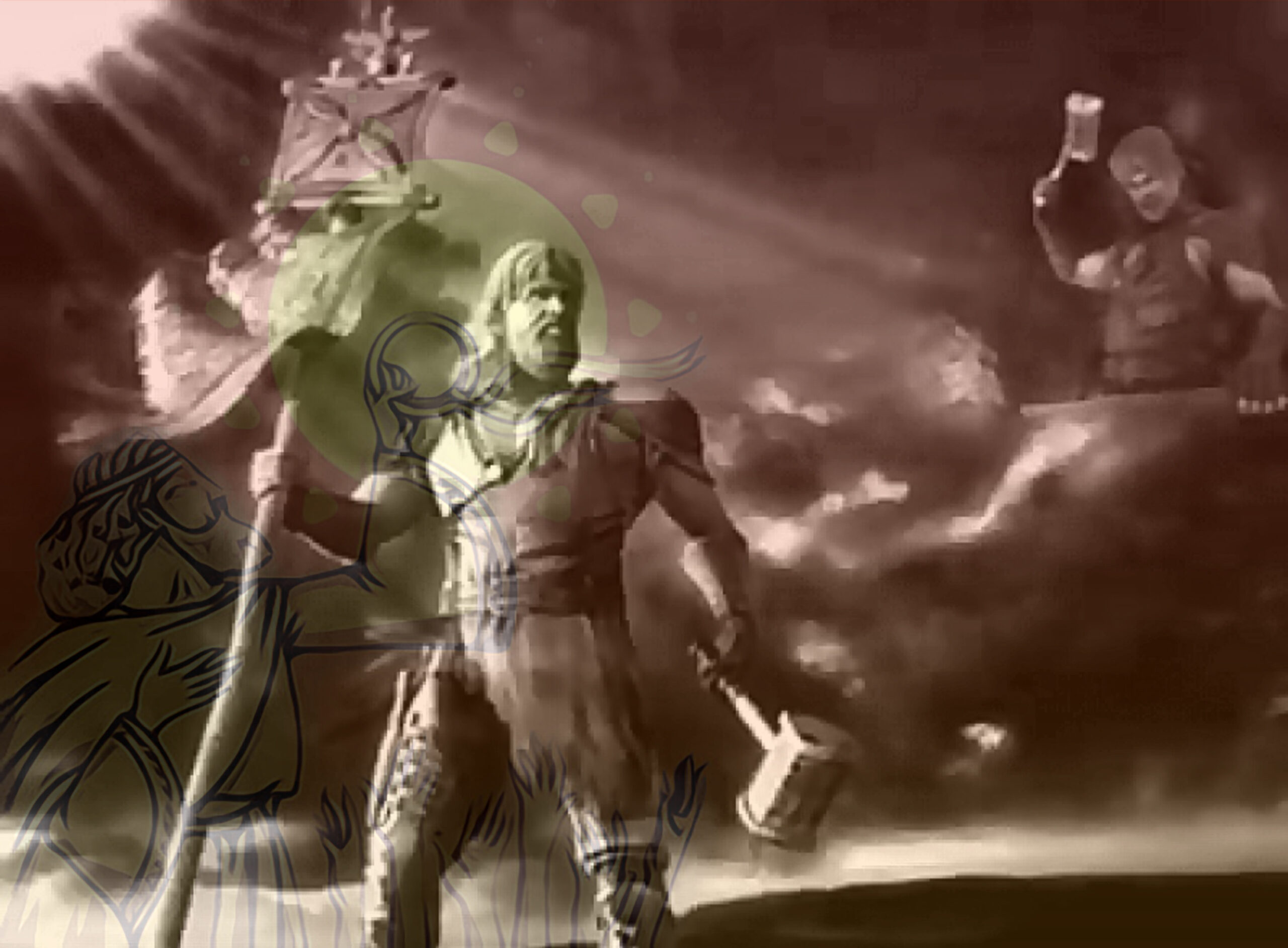
Mehregan has been an enduring reminder to Iranians of the promise that even if the occupation of the Iranian lands by a foreign Ahriman lasts a thousand years, Iranians will eventually reclaim their land themselves, as the generation of Kaveh did. The fact that Zahhak was not killed because he was immortal, but was instead bound in Mount Damavand, gives clear expression to this historical warning: he is never far away. The volcano itself is an eloquent symbol in this myth, for a volcano is a doorway into the depths of the earth and the fire hidden within it. It is a gate between the worlds of life and death, and a boundary between the worlds of light and darkness. From this perspective it also symbolises the mediating role of Mehr. Perhaps Damavand itself can be understood as an image of the deity Mithra, both standing between the two worlds of light and darkness.
Damavand, as an image of Mithra, binds Azi Dahaka and prevents his assault upon the world of light and Airyanem Vaejah, and Iranians celebrate this victory. But we can think even more broadly. We should remember that, in Iranian mythology, Fereydun was king of the entire world, and Azi Dahaka was the demonic usurper of that world. Fereydun’s victory, together with Kaveh’s uprising, represents the universal ideal of the victory of good over evil and the liberation of human beings from the bondage of Ahriman—an ideal that throughout Iranian history has cast its shadow not only over myths but also over Iranian worldviews and political imagination. Beyond the Iranian lands, then, if Nowruz has been called the festival of the “earth,” Mehregan may be called the day of “freedom”: the day on which human beings regained their freedom under the protection of justice and Mehr. It is a myth arising from historical unconsciousness to sustain the ideal of freedom.
May Mehregan, the festival of freedom, be joyful for all Iranians.
Aydin Areta
Mehregan: The Festival of Freedom and the Unity of Iran
A reflection on the ancient Iranian festival of Mehregan — the autumn festival of Mithra — as a celebration of the values of justice, covenant, and the unity of the Iranian world.
Aydin Areta / آیدین آرتا8 min read
Receive new work
Occasional updates when new work is published.
Comments
Loading…
Leave a comment