
Older People and the Coronavirus Vaccine
Where We Must Not Remain Silent
Aydin Areta
The tireless philosopher and social activist Howard Zinn once wrote, in the Persian rendering preserved here:
“A good and effective political system always ensures that its people have access to food, medicine and healthcare, clean air, safe water, protected nature, a pleasant home in which to live, work suited to their abilities, and leisure hours greater than their hours of labour. A good and effective political system never asks who deserves these things, because they are not special privileges but natural social and human rights.”
It is difficult to read these words without arriving at a painful comparison between this standard and the difficult social and economic conditions of Iran today, and without asking ourselves why we, as a nation, have come to such circumstances.
Notice that these are only criteria of effective economic and social administration. They do not include any political rights or political freedoms; they focus only upon the effectiveness of a society’s social and economic management.
Iran is not a poor country lacking natural or human resources. With only a small distance behind Canada, Iran has been described here as the fifth-richest country in the world in terms of natural resources and national wealth. According to the World Bank figures cited in the source, Iran possesses the world’s second-largest gas reserves and fourth-largest oil reserves, but Iran’s wealth is not limited to these resources.
Iran is home to approximately one per cent of the world’s population and, despite the underdevelopment of mineral discovery and extraction, possesses seven per cent of the world’s known mineral and metal resources.
Iran is described here as possessing the world’s largest zinc reserves, the second-largest reserves of molybdenum—a metal widely used in military and aerospace industries—and gypsum, ninth-largest copper reserves, tenth-largest uranium reserves, and eleventh-largest reserves of iron and lead. Nearly twenty other important minerals present in Iran are said to place the country among the twenty nations with the largest reserves in the world.
In agricultural capacity, Iran is described as the fifteenth-largest country in the world by area of agricultural land. In environmental resources it is described as eleventh in the world for biodiversity. According to data cited here from World Atlas, with a civilisation said to extend 3,200 years before the Common Era, it is described as older than Egypt, the oldest known civilisation in the world, and one of the ten countries with the greatest number of historical tourism attractions.
Perhaps the most painful question that cannot be avoided when looking at these figures is this: what could a land and a nation wish to possess in order to move toward progress and success that this land does not already have?
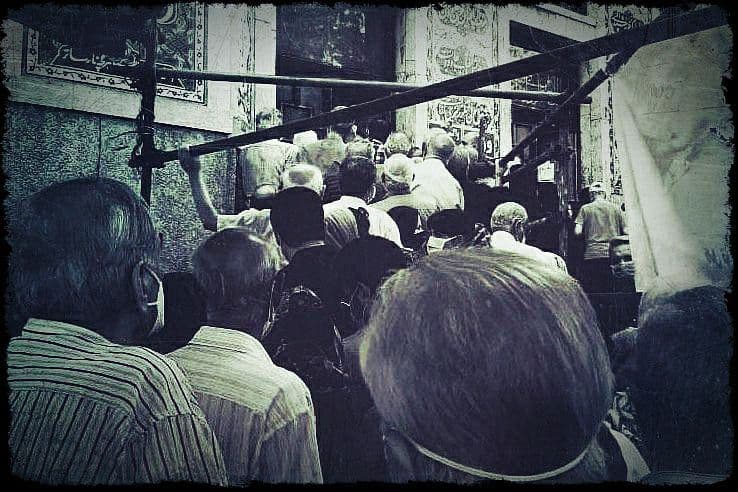
The most basic indicator of a nation’s wellbeing is access to an effective healthcare system. It is difficult to hear the complaints of exhausted older people who sleep overnight in long queues to receive a COVID vaccine, only to return home without receiving one, and not ask how, with such natural, historical and cultural wealth, citizens who have worked and laboured their whole lives in this country should receive this degree of disrespect.
How can a country with such national wealth reach a point where, according to the figures cited in this text, healthy life expectancy at birth ranks 119th among 192 countries, healthcare system efficiency ranks 93rd, and hospital beds per thousand population rank 133rd?
How is it that a country described as the fifth-richest in natural resources has one of the world’s least valuable currencies, a large black market, and a much lower ranking in national wealth distributed across the population? How is it that a country described as eleventh in biodiversity ranks far lower in environmental sustainability and protection, while also being listed among major polluters of water by industrial waste, producers of carbon monoxide and atmospheric pollutants, and countries with weak management of waste and environmental contamination?
Older People and the Coronavirus Vaccine — Aydin Areta / Continued
Iran today is described here as ranking seventy-fifth in the world in human wealth, below countries such as Kyrgyzstan, Kazakhstan, Oman and Bahrain. Who does not know that the reason is not poverty of human talent but the departure, over previous years, of five million Iranians, hundreds of thousands of them highly educated?
The most recent figure available in the source for the total wealth of Iranians outside Iran dates from fifteen years earlier and gives the striking estimate of 1.3 trillion dollars. According to a 2008 Iran Daily report cited here, nearly two hundred billion dollars of that was invested in Dubai, immediately beside Iran. A Stanford University study titled Iran 2040, published in 2020, is cited as estimating that more than 110,000 highly educated Iranian migrants were working with universities and research centres around the world, representing an unprecedented tenfold growth in the departure of highly skilled Iranians since 2000.
What compelled me to write these painful lines was a conversation several days ago with a dear elderly, white-haired person in Iran who told me of the hurt and suppressed anger endured while trying to receive a second dose of a coronavirus vaccine. At seventy-five years old, this person spent the entire night waiting in a vaccination queue and eventually returned home empty-handed. On the same day, news and videos circulating on social media showed older people being insulted while standing for hours in long lines with walking sticks, walkers and wheelchairs, only for many to return home without vaccination after an exhausting, risky, humiliating and fruitless wait. While reviewing the news I encountered a report that the police had apologised after footage showed mistreatment of an older person in a vaccination queue.
In countries where citizens’ rights are established, older people are treated as senior citizens and accorded high social respect. The minimum place where that respect should be evident, in recognition of the years they have contributed to the country in which they live, is the health system. Such treatment of older members of society is not merely a management disaster; it represents, in my view, the ultimate ethical collapse of the system responsible for managing public health.
The question is: in such circumstances, what can each of us do as a citizen? When falsehood penetrates the fabric of a society, it becomes important that the individuals within that society make an honest effort to live within the sphere of truth. None of us may be able to do everything, but there remains something each person can do in respect for truth. I have always believed in the precedence of culture and individuation over politics, and I still believe that a political system is not separate from the individual people who compose society.
What we dislike and condemn undoubtedly has roots in the psychological structures and behavioural patterns of our society. We will not reach positive transformation by ignoring these fundamental cultural problems and constructing only a simple binary separation between nation and state. At the same time, whatever our political beliefs, whether we are loyal to a political system or opposed to it, committed to change, inclined toward reform, or supportive of continuity, we must never remain silent before what endangers truth and honesty in our society.
Several days ago a dear friend, responding to something I had written earlier, sent me sentences referring to Václav Havel and his work The Power of the Powerless. I want to end this piece with my friend’s words:
“When I speak of living within the sphere of truth, naturally I do not have only conceptual intellectual products in mind, such as protests or collective letters by intellectuals. Any person or group who in any way rebels against being reduced to a plaything has, in fact, entered the sphere of living in truth.”
This rebellion against making truth into a plaything can be anything except silence: from letters written by intellectuals, to a citizen’s public speech at an official congress, to a representative speaking in parliament, or even artistic protest through painting, music or story. It does not matter how different citizens are in their political preferences. They can and should remain united in one thing: refusing silence before what needs to change.
The Elderly and the COVID Vaccine: Where We Must Not Be Silent
A personal and ethical reflection on the treatment of the elderly during the COVID-19 pandemic — arguing that the systematic deprioritization of older people in vaccine distribution and medical care represents a moral failure that demands a public response.
Aydin Areta / آیدین آرتا7 min read
Receive new work
Occasional updates when new work is published.
Comments
Loading…
Leave a comment