
Part One
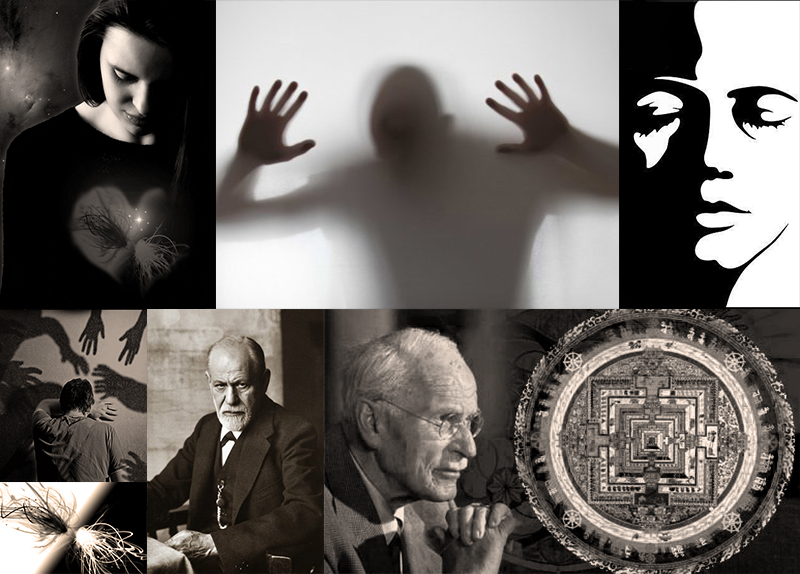
Carl Jung, the distinguished Swiss psychologist whose school of psychoanalysis took a different path from the dominant Freudian psychology of the twentieth century, divided the structure of the mind into several fundamental parts.
At the first level of Jung’s division of personality structure, we have the conscious and the unconscious. The conscious is the aware part of our mind and is itself divided into two parts: the persona, or mask, and the ego. The unconscious is likewise divided into the personal unconscious, or shadow, and the collective unconscious.
The persona is the most superficial layer of personality and, in fact, the mask each of us wears in our encounters with the outside world. This mask or persona is shaped by two forces. The first is internal, formed according to our ideal image of ourselves in society and the way we would like and want to appear to others. The second rests on external forces such as culture and social rules, with which we are compelled to bring our mask into alignment. The persona is therefore the product of the interaction between inner and outer forces, presenting to the world the visible shell of who we are.
The ego is a mediator between the personal unconscious or shadow, the collective unconscious, and the outer shell of personality—the persona. The ego is what we experience as the “I.” It is an inner organising force that coordinates thoughts and feelings and is an embodiment of conscious awareness.
The personal unconscious, which in this account is the shadow, is a part of our personality that the ego, or “I,” does not see or accept as part of itself. Everything that we are at a semi-conscious or unconscious level without being aware of it belongs to the shadow: a dark part of our being that we are unable to comprehend consciously.
Because our conscious mind does not like to become aware of negative aspects of personality, or aspects that conflict with it, these dimensions remain important parts of our personality yet are not consciously recognised. Awareness of them may damage our self-confidence, our sense of self-acceptance, or the way we face the outside world.
Jung believed that everyone has a shadow, and that the less conscious we are of that shadow, the denser and darker it becomes.
By Jung’s definition, the shadow consists primarily of the darkest and most negative aspects of our personality of which we are unaware. These lower aspects of personality are shaped in our unconscious by our repressed wishes, our interactions with the outer environment, our childhood upbringing, society and the traditions in which we live, working on us from both outside and within. It is like a monster that slowly begins to grow inside us in childhood and makes its home somewhere in the dark dungeons of the psyche; at times flashes of its fire burst out of us and engulf others. Yet this is not the whole shadow. Part of it also contains our repressed talents and capacities, and part of the individuality that society has suppressed.
The shadow is repressed by consciousness as far as possible, but we are never conscious of it in its entirety. What is remarkable is that other people sometimes see our shadow and even try to show it to us while we ourselves remain unaware of it. The truth is that most of us are able to see other people’s shadows while they themselves cannot, just as we are unable to see our own.
In a brief comparison between Jung and Freud up to this point, one of the very important differences between their perspectives can first be seen in the fact that Freud divides the conscious mind into the ego and the superego, and regards the entire domain of the unconscious as the id; from this perspective, unlike Jung, he does not believe in the existence of a collective unconscious.
In Freud’s thought, the id is with us from birth and contains all our sexual instincts, aggression, drive towards pleasure, and flight from pain and suffering, with which we struggle throughout life. The superego—morality and supra-individual social rules—compels us to repress these instincts, while the ego attempts to satisfy the id rationally and within the framework accepted by the superego.
Part Two
In the Freudian view, the human being is a social animal in conflict with the animality within. The only real forces in the understanding of the human being are sex and aggression, while morality means little more than the will to power of social forces seeking to repress the two.
In Jung’s perspective, the human being is depicted as a more complex being than in Freud’s conception. The unconscious contains not only basic instincts but also repressed and undiscovered beliefs and talents, and beyond them the vast world of humanity’s collective unconscious and the history of the evolution of consciousness present within every human being.
Freudian psychology portrays the human being as a puppet of instincts and social laws, whose ultimate psychological health consists in establishing a balance between these forces: a puppet whose movements are smoother and less conflicted and who is therefore more satisfied with life. In the Jungian view, the human being is on a journey towards the development of individuation. Along this path, one must enter the darkness of the unconscious, become aware of it, and illuminate it with the light of consciousness in order to complete the continuity of personality and the process of individuation. On this journey, our beliefs, religion, collective unconscious, symbols and unconscious convictions are all brought before the test of consciousness.
The ultimate aim in Jungian psychology is what Jung calls individuation. Individuation means the final union of conscious and unconscious and the attainment of what Jung calls the Self. This Self is fundamentally different from the “I,” or ego. The Self can be understood as an “I” that is not limited in space and time; it contains not only what we are, but also all that we can be and are not yet. In Jung’s view, this Self sits at the heart of our being, much like the light or the Buddha at the centre of a mandala.
Where Should We Look for Our Shadow?
Each of us likes to think of ourselves as possessing valuable virtues. What are the values you respect and hold as great? Now imagine their opposites. Is it possible that somewhere in your life you have expressed those opposites, or acted under their control?
Do you admire honesty, courage and freedom? Can you remember places where you were dishonest, fearful or cowardly, or behaved like a slave? Where has this happened to you, and how many times? Where have you acted against your own values?
The shadow can be found in our evasions and avoidances, in fixed and similar events that repeat themselves in our relationships and behaviour, in our repetitive actions, and in moments of anger.
More precisely, our core anxieties; our anger, especially when it tends towards violence; our feelings of shame and inner humiliation; our apparently inexplicable resistance to change and to other people; self-harming behaviour directed towards either body or psyche; places where even we do not know why we are so easily provoked and inflexible; and, conversely, moments of inexplicable softness and flexibility—all can reveal a shadow within us of which we are unaware.
Do we end our friendships in the same way? Do our relationships repeatedly run into difficulty through the same pattern? Do we encounter the same problems at work? Do we repeatedly disrupt the balance of our lives? By thinking about and honestly facing these recurring events, we can see the footprints of our shadow.
Another place requiring reflection is wherever we insist intensely that we are right and where being right assumes vital importance for us. At such moments and in such situations, we should look for the shadow.
Another important area is where we behave in conditioned ways—what is called conditioning. Our ordinary, spontaneous, everyday behaviours, which we perform throughout the day without thinking about them, also lie in the darkness of the shadow. Likewise, wherever we live life unexamined and unthought, we can find traces of our shadow. We do not want to repeat ourselves every day, yet we do so; this is one of the places where the shadow makes its nest.
Jung believes this darkness is precisely where self-knowledge must begin, because the darkness concealed in the unconscious directs a large part of our behaviour throughout life without our being conscious of the source of those behaviours.
Part Three
In truth, our story and this hidden, dark part of our unconscious closely resemble the famous tale of Mulla Nasruddin searching the ground beneath a street lamp. A passer-by asked what he was looking for. Mulla replied that he had lost the key to his house. The passer-by asked where he had lost it. Mulla said: in the darkness—but I am searching here because this is the only place with light!
We, too, have lost the key to our individuation and the development of our personality in the darkness of our unconscious, yet most often we search for it in the light of consciousness, where we will never find it.
The key lies in our shadow and unconscious, where we must find the courage to confront and search for it. It is hidden somewhere in our darkest darkness.
Confronting the Shadow
Jung believed that all of us can, to some degree, understand that there are bad aspects within us; but an unmediated and naked encounter with the depth of the unconscious shadow is a crushing experience for any human being, one for which not everyone will find the courage or be able to withstand the fear. The experience is something like staring into the eyes of Ahriman and then realising, in terror, that we are looking at ourselves in a mirror.
This does not mean that there is a devil within us. It means that in each of us there is a shadow darker than we have the courage to accept, a shadow cast over the light that is our inner truth. Until we stand before it and overcome it, we will not reach our inner light either. The shadow continually tries to take control of our thoughts, feelings, actions and choices. Shadow can be another name for everything that lies behind our mind yet of which we are not directly aware. It is often filled with what we wish we were not, but unconsciously are.
In a lecture at Yale University in 1937, Jung said in substance:
We are often certain that we know what other people think and what their true character is. We judge others constantly on that basis. We are certain that we know bad people whose negative qualities are absent in us. In my view, we must be extremely careful about unconsciously projecting our shadow onto others. If someone were courageous enough to stop all his projections, he could no longer say: they did this or that, others are wrong and I am right. Such a person knows that whatever darkness and difficulty exists in the world also exists within himself; and if he learns how to deal with the darkness and unconscious errors within himself and bring them into consciousness, he will then have succeeded in resolving an essential part of the world’s immense and apparently insoluble problem.
We all have weaknesses. There are aspects in each of us much darker than we can even imagine. We all like to imagine that we are good people with good motives. At the very least, we assume that we are harmless. For that reason, accepting that part of our being is so dark that, in the words attributed to Jung, its roots reach all the way into hell is frightening.
Accepting the concept of the shadow means believing and then admitting the bitter truth that we human beings are less good than we imagine ourselves to be, and that in each of us there is a hellish darkness. Remaining unconscious of its existence and depth can not only prevent us from reaching the light within, but can allow that darkness to govern the lives of other people—even those we love—and ultimately the world outside us, perpetuating its dominance from generation to generation.
Believing that we are harmless and underestimating the depth of our own shadow is extremely dangerous. Consider how mothers and fathers, despite all their love for their children, can underestimate the importance of their own negative characteristics and pass them on to the next generation.
Ordinary Men tells the story of a group of ordinary policemen in Nazi Germany who, before the war, were good fathers and husbands within their families and harmless men in society. All of them were already adults when the war began. This is important because becoming deeply ideological and being thoroughly indoctrinated usually requires that one be younger than thirty. This is why soldiers are trained from a very young age and why influence over the mind must begin early if one is to bring another person’s beliefs deeply under control. During the war, these ordinary and, under normal circumstances, harmless men were sent to Poland. The book tells how we harmless human beings can become the most hard-hearted killers, and how an ordinary person can move step by step to the point where he is able to drag a pregnant woman across the snow and shoot her in the back of the head.
Part Four
The point is that the road into hell is travelled step by step. If we do not take each step of our lives consciously and look at where we are placing our feet, one day we may find ourselves on a level of our inner hell towards which we have walked half-consciously, like sleepwalkers.
Accepting the existence of a shadow in the unconscious means accepting that if something called darkness, evil or Ahriman exists in the external world, this darkness and evil are not alien beings. They begin within each of us and take form in the world outside. We human beings have built the existence of this Ahriman cell by cell, and we sustain its life.
The word Buddha itself means one who has seen truth through all these spectres of truth, whose gaze has passed through every darkness. In the story of the Buddha’s awakening, he first confronts kama, or human desires, and passes beyond them. He then confronts Mara, the embodiment of fear, and passes beyond that as well. Finally he confronts the ultimate temptation, the moral duty towards others, and does not submit to that either. The Buddha’s journey towards enlightenment can be understood as a journey through darkness—like the lotus, which in order to reach the light must pass through the heart of the swamp before turning towards the light and attaining the splendour of blossoming.
Most of us think we know what is wrong with other people and what must be corrected. We think we know what is wrong “out there” and what must be fought. Jung believes this battle must be carried inward, because only by winning this war will the wars outside come to an end. It begins when, for a moment, we stop and accept that everything we see in the outside world and dislike also exists within us—and that this is precisely why we are able to see it.
Our most dangerous error is the projection of our own shadow onto others. This lies at the root of all the violence and wars of our history. That is why the person whose cry rises to the sky—“Ahriman is out there; seize him and kill him”—carries within himself an even larger and more bloodthirsty Ahriman. The person who cannot see his own dark side considers himself the most innocent. Like the Cyclops, the one-eyed monster, he is always certain that he is right and always points the accusing finger towards other people and the enemies of the outside world.
During the trial of Adolf Eichmann, one of the Nazi German commanders and among the principal organisers of the killings and atrocities at Auschwitz during the Second World War, the British writer, philosopher and scholar of Eastern thought Alan Watts, referring to what he had learned from Jung, said:
I will certainly fight until my last breath against the darkness of the thought that Eichmann represents, but I will never accept that he is the devil or the embodiment of darkness; for I learned from Jung that if I imagine my enemy as the absolute embodiment of darkness and as wholly demonic, I prevent myself from seeing the darkness within myself.
Calling the person who stands against us false inevitably creates the dangerous belief that we are wholly right; and calling the person against whom we fight the devil ultimately leads us into the dangerous delusion that we ourselves are the truth—a delusion that is itself at the root of the fall of people such as Eichmann.
When Eichmann and his commanders called Jews the embodiment of evil and the devil, they opened the way to believing that they themselves embodied light and the struggle against evil. With the clear conscience produced by this self-deception, they told their young soldiers that their ideal was to purify the world of everything impure and demonic, thereby allowing themselves to justify the most horrific crimes.
If we, too, are incapable of seeing the Eichmann and Hitler within ourselves, and doubt that any one of us, in the right time and place for the emergence of our darkness, might become Eichmann, an Auschwitz guard, or an SS soldier carrying out his orders, then the only thing we lack in order to become them is an opportunity to exercise power and violence.
People such as Hitler and Eichmann are caught in the grip of their shadow without knowing anything of their captivity in the hands of this darkness. Hitler believed himself to be the exalted leader of a superior people and race; whatever was separate from him was the darkness that had to be destroyed.
He was able to awaken the shadow of his nation and summon from the depths of the hell of their psyches an immense Ahriman composed of the dark side of each individual among his people. Every nation has a dark side. Leaders who are themselves imprisoned by their inner darkness can awaken that shadow and, through it, deepen the hell of the outer world and strengthen the destructive forces that govern it, without even being aware of what they are doing.
Where Should We Search for Our Shadow?
A practical depth-psychological guide to recognizing and engaging with the Shadow — the rejected and unconscious dimensions of the psyche — in everyday life, relationships, and cultural experience.
Aydin Areta / آیدین آرتا20 min read
Receive new work
Occasional updates when new work is published.
Comments
Loading…
Leave a comment