
Black Mirror and the hell of likes in the virtual world
What is the real value of the likes we receive from other people on social media? How much importance do we give to these likes and numbers?
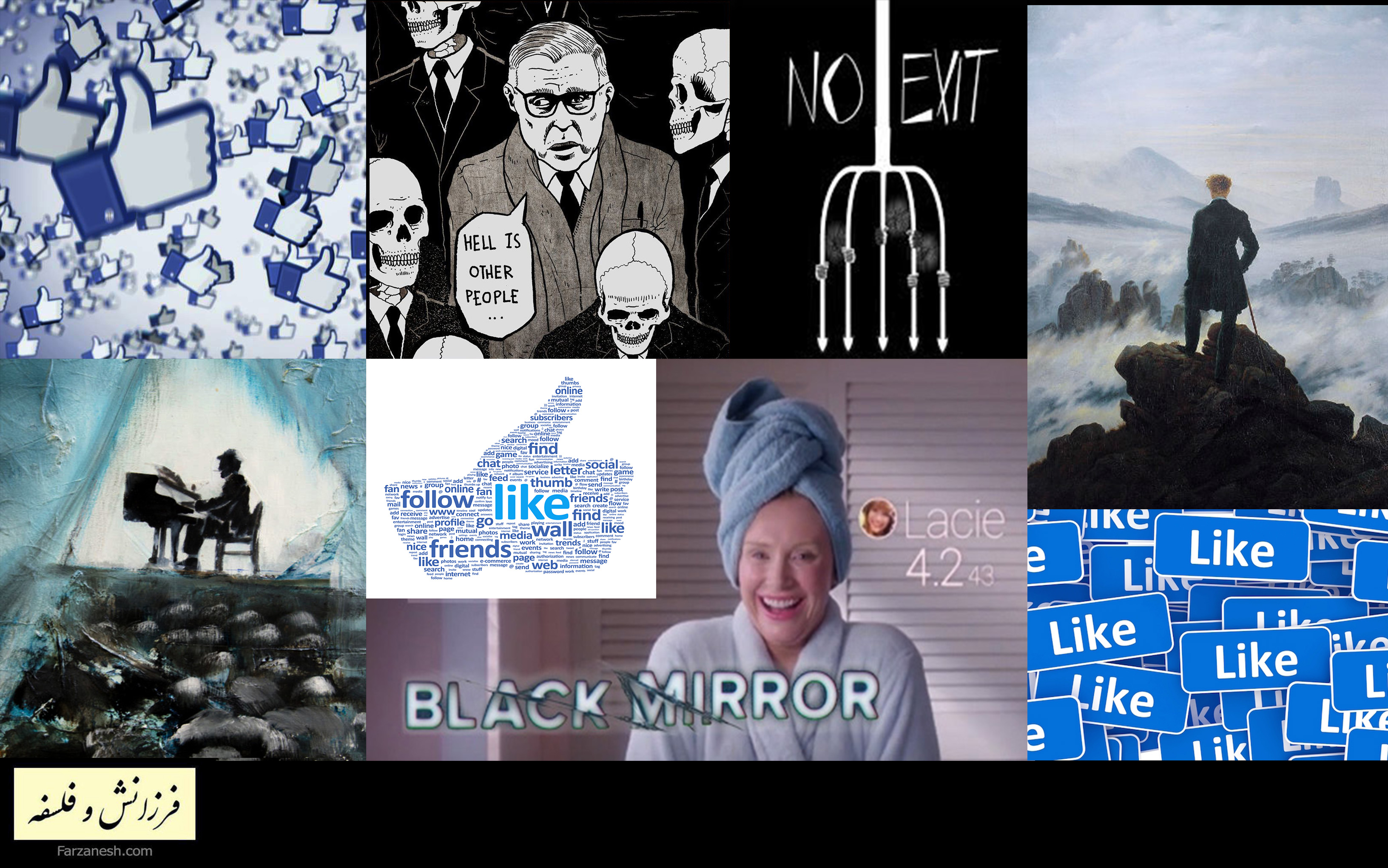
Black Mirror is a television series in which each episode tells a separate story, often through dark satire, about technology and its complex consequences for modern human life. Each story takes place in a parallel world resembling our own or in a near future, inviting us to think about our relationship with ourselves, with other people and with technology.
Because of the distinctive structure of the series, I have decided that whenever I have the opportunity I will share parts of its stories and some of the important questions they place before us. One episode, “Nosedive”, takes us into a world in which social position and class, income, access to services, the home one can live in and even the car one can rent are determined by a social score calculated from the ratings one receives from others.
Everyone can see the score of other people, between zero and five, through a special lens worn in the eye. In everyday encounters people rate one another from one to five. In such a society everyone must guard the persona—the mask and outer shell of personality—with extreme care. Each person’s public profile is visible and available to everyone. When a taxi driver takes you to your destination, for example, you can rate each other. The same occurs when you shop, ride in a lift, encounter someone you dislike, or are bumped by a passer-by in the street.
In this world, people do not merely share the most attractive and carefully selected photographs of themselves and constantly search for the most photogenic food or the most amusing cats. They also wear large smiles in every daily encounter and try to be so pleasant to everyone they meet that nothing less than a five-star rating will come back to them.
Yet each person remains largely confined to their circle of friends, colleagues, service providers and customers—people mostly within a similar social class. To move upward requires gathering large numbers of high ratings from strangers, who usually have little incentive to rate you highly because they have no direct relationship with you, or, more importantly, receiving high scores from people whose own rating exceeds 4.6. Such people do not easily give high scores: they want to keep their social class relatively closed and, because of their popularity and access to wider networks, can easily ignore the efforts of people below them who seek recognition.
The protagonist of this episode is a young woman named Lacie. Her dream is to buy a house that requires a social rating above 4.5, while her own score remains just above four. In order to increase it she carefully manages every aspect of her public life. She posts images of foods whose taste she does not even like, gives five-star ratings to other people’s relevant and irrelevant posts in the hope that they will return the favour, and constructs an increasingly artificial performance of herself.
In the street and at work she offers everyone an exaggerated, artificial smile. She pretends to like whoever everyone else likes and gives lower ratings to people others dislike, all to keep her score above four. Yet even this manufactured life is not enough to bring her within reach of her dream.
2) Eventually Lacie succeeds in attracting the attention of a childhood friend with a rating of 4.8. The friend invites her to the wedding and asks her to speak for several minutes as the bride’s closest childhood friend before hundreds of guests, all rated above 4.6. This is an exceptional opportunity for Lacie: a sudden flood of high ratings could lift her into the social position needed to buy her dream home. It does not even matter to her that this supposed childhood friend had been involved with Lacie’s partner and that Lacie knew it. She knows many unpleasant truths about this friend, yet intends to give a speech praising her goodness because the valuable likes from that elite audience can make Lacie more important and wealthier.
On the journey to the wedding, Lacie encounters a series of unforeseen events that send her social rating into free fall. The problems begin with a cancelled flight and an angry argument with an airline employee, and they continue throughout her difficult journey until her score falls to 2.1.
When she is close to the wedding venue, her friend Naomi telephones and tells her, to Lacie’s disbelief, that she should no longer attend. With a social rating of 2.1, Naomi says, Lacie’s presence would only embarrass her before the guests. The story continues until Lacie’s score falls to zero and she is imprisoned. Only then does the persona finally fall away and a face long concealed behind her social mask become visible.
At one point in the story, an older woman with a rating of 1.4, who drives a truck, gives Lacie a lift and has a deep and interesting conversation with her. She tells Lacie that she once had a score of 4.6. Her husband had a score of 4.3 and developed cancer. He died partly because their rating did not give him access to resources reserved for people above 4.4. The experience forced her to reconsider seriously how she was living. She decided to become honest with herself and others, removed her mask, and quickly discovered that in a world that measures human worth through ratings, almost no one cares about honesty.
The people who had seemed to be her friends began to disappear, because the real relationship between them had been little more than an exchange of ratings. Yet as they fell away she felt gradually lighter and freer from lies, like taking off a pair of shoes that had always been too tight.
The older woman asks Lacie what she actually wants, what she is trying to reach and what she is fighting for. Lacie answers: happiness—to be able to take a deep breath and feel content. But she believes she has to keep playing the absurd rating game until she reaches that point because this is how the world has been designed: a world in which the importance of people, ideas and almost everything else is determined by public opinion and social ratings.
This Black Mirror episode offers a caricatured and exaggerated but recognisable image of our own world. It asks: what is the relationship between our value and our likes? What is our relationship to other people, to the world around us and to what appears before us? What place do honesty and truthfulness towards ourselves and others have in this world? How much depth remains behind our social mask?
It is often said that in ordinary free conversation people spend around forty per cent of their speaking time talking about themselves. Perhaps a similar proportion of our social-media posts are usually about ourselves: our thoughts, photographs, places we visit and matters connected directly with us. One might therefore imagine a simple division: people whose social-media content is more than forty per cent self-referential and those whose content is less. Now consider the question: what percentage of the posts you share and then wait for others to like are about you personally? I leave the judgement of what this distinction means, and where you place yourself within it, to you. But I would like to make two further points: one about the likes we personally receive, and another about the likes received by non-personal material that we share because we regard it as valuable.
Black Mirror and the Hell of Likes in the Virtual World
A depth-psychological analysis of social media's like economy — drawing on the television series Black Mirror — as a system that exploits fundamental human needs for recognition and belonging while producing narcissistic pathology.
Aydin Areta / آیدین آرتا15 min read
Receive new work
Occasional updates when new work is published.
Comments
Loading…
Leave a comment