
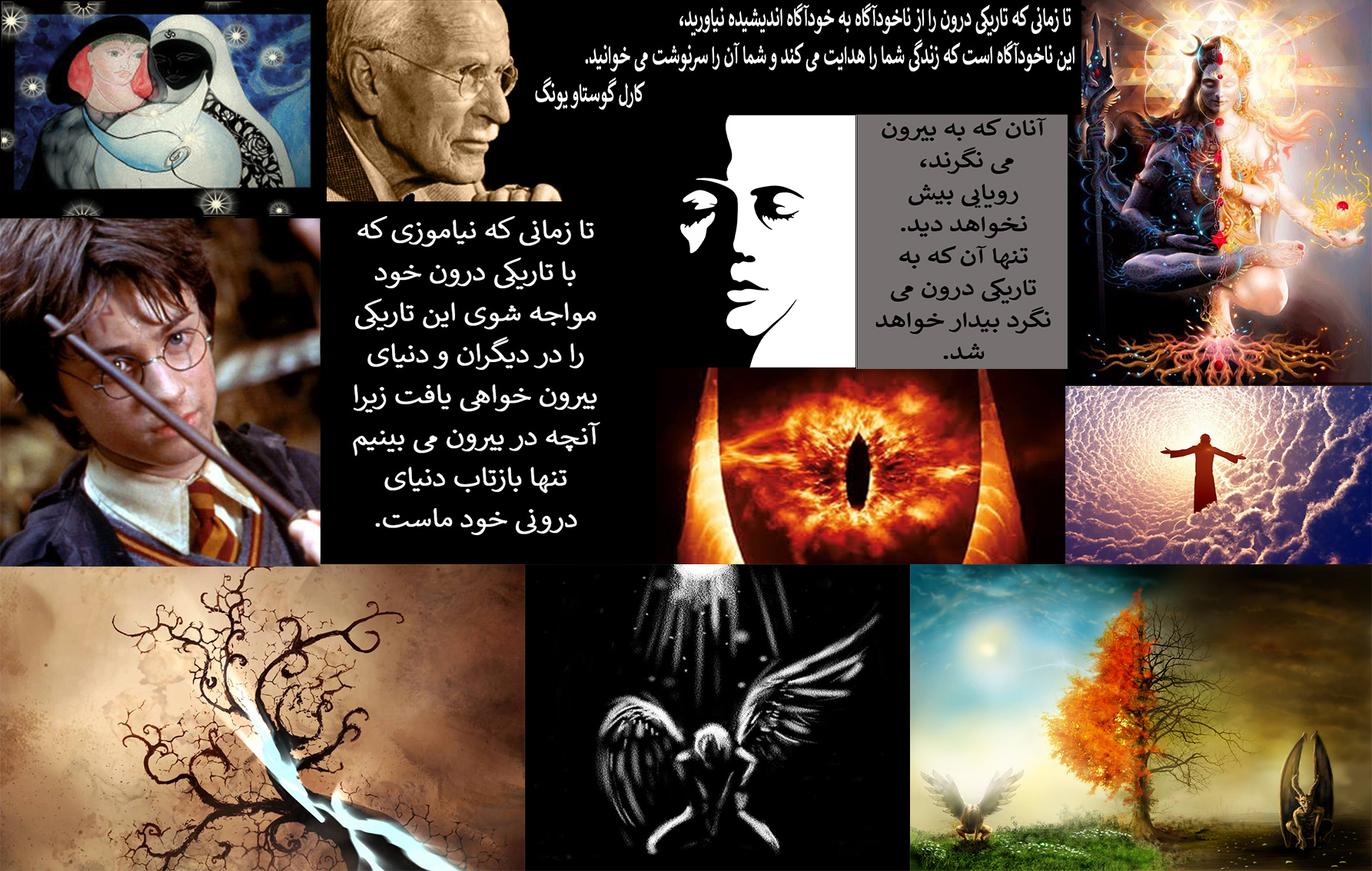
In the Zoroastrian cosmology, Ahriman is the principle of darkness, destruction, and evil — the eternal adversary of Ahura Mazda, the lord of wisdom and light. This ancient Iranian concept has a remarkable resonance with one of the central insights of depth psychology: the recognition that the human psyche contains within itself a principle of darkness that must be confronted, not suppressed, if genuine wholeness is to be achieved.
Jung's concept of the Shadow — the repository of everything that the conscious personality has rejected or refused to acknowledge — is in many ways a psychological translation of the Zoroastrian Ahriman. Like Ahriman, the Shadow is not simply evil; it is the dark twin of the light, the necessary counterpart without which the light itself cannot be fully understood or appreciated.
The crucial insight of both traditions is that the darkness cannot be defeated by being ignored or suppressed. Ahriman, in the Zoroastrian vision, must be confronted and ultimately overcome — but this overcoming requires a genuine engagement, a willingness to enter the darkness and struggle with it. Similarly, in Jungian psychology, the integration of the Shadow requires a conscious encounter with the rejected dimensions of the psyche.
What does it mean, in practical terms, to "defeat Ahriman" in one's own life? It means becoming conscious of the ways in which the darkness operates within us — the destructive impulses, the self-deceptions, the projections onto others of what we cannot accept in ourselves. It means bringing these dimensions of the psyche into the light of consciousness, not to eliminate them, but to transform them into sources of energy and wisdom.
Comments
Loading…
Leave a comment