
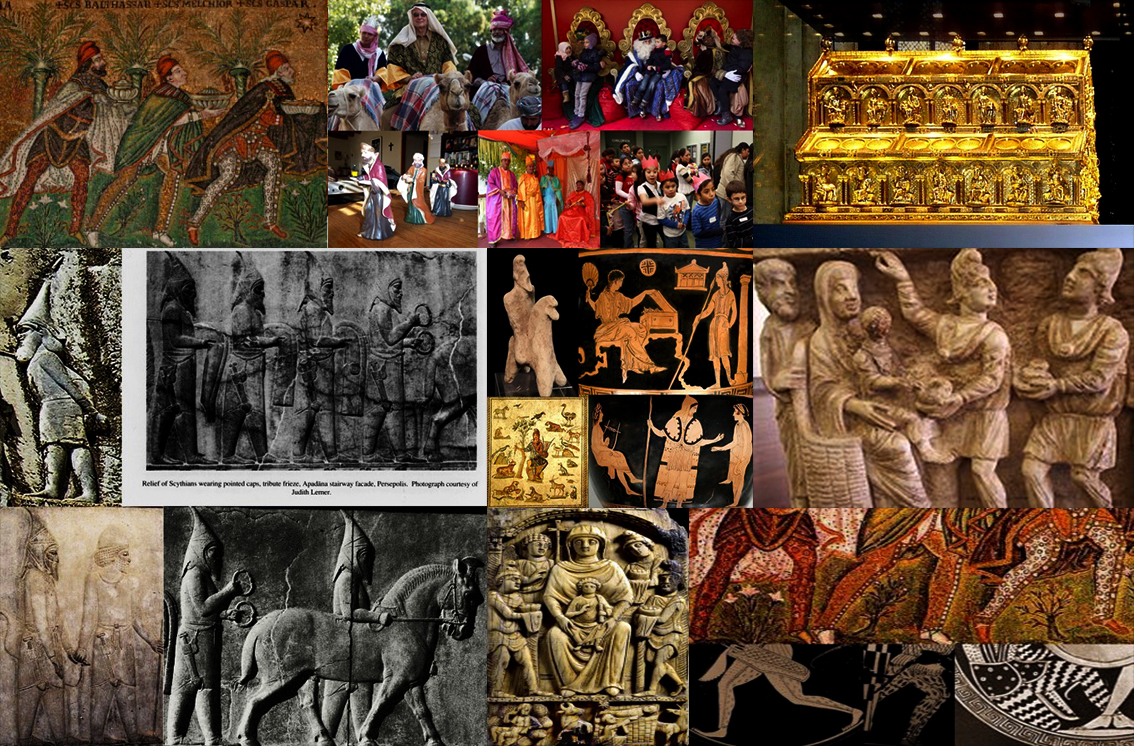
Among the most intriguing elements of the Christian nativity narrative is the presence of the Magi — the wise men from the East who follow a star to Bethlehem and bring gifts to the newborn Christ. The Gospel of Matthew, which alone among the gospels mentions them, does not specify their number, their names, or their precise origin. But the tradition that has developed around them — three kings, bearing gold, frankincense, and myrrh — is one of the most enduring images in Western religious art and imagination.
From an Iranian perspective, the Magi are a fascinating figure. The word "magi" (Greek magoi) derives directly from the Old Persian magu, the term for the Zoroastrian priestly class. The Magi were the custodians of the Zoroastrian religious tradition — scholars, astronomers, and philosophers who combined religious knowledge with what we would today call scientific inquiry.
The tradition that the Magi came from Persia — from the Iranian world — is not merely a pious legend. It reflects a historical reality: that in the ancient world, the Iranian Magi were renowned throughout the Near East and Mediterranean world for their wisdom, their astronomical knowledge, and their ability to read the signs of the times. It would have been entirely natural for early Christians to imagine that the birth of their savior would have been recognized by these renowned Iranian sages.
What is theologically and culturally significant about this tradition is what it implies about the relationship between Iranian wisdom and the emerging Christian tradition. The presence of the Magi at the nativity suggests that the wisdom of Iran — the Zoroastrian tradition of cosmic struggle between light and darkness, of the divine spark in the human soul, of the coming of a savior — was understood by early Christians as a preparation for and a recognition of the Christ event.
Comments
Loading…
Leave a comment